


 Canada Grants C$7 Million to Greenland Molybdenum Mine to Strengthen Critical Minerals Supply
  Yen Falls to 40-Year Low as Markets Watch Japan Intervention and U.S. Jobs Report
  Gold Price Hits Annual Low as Fed Rate Hike Bets and Sticky Inflation Weigh on Bullion
  Australia Plans Higher Fines for Social Media Firms Failing to Block Underage Users
  China Manufacturing PMI Edges Higher in June as Exports and AI Investment Boost Growth
  Trump Urges Gasoline Retailers to Cut Prices to $2.50 Per Gallon, Warns of Legal Action
  Ukraine Strikes Russian Titan-Barrikady Plant With Long-Range FP-5 Flamingo Missile
  Oil Prices Slip as U.S.-Iran Peace Talks and Strait of Hormuz Risks Keep Markets on Edge
  Gold Price Falls as Fed Rate Hike Fears and U.S.-Iran Tensions Weigh on Bullion
  Sheinbaum Says No One Is Above the Law After Abuse Video of Ex-Pemex Chief Emerges
  Economic pessimism has set in – but there are reasons for Australians to be hopeful
  Serbia President Aleksandar Vucic to Resign, Calls Early Elections After Months of Protests
  World Bank Approves $1.1 Billion Emergency Funding for Bangladesh Amid Food and Energy Price Pressures
  Russian Attacks on Dnipro, Zaporizhzhia, and Kharkiv Kill 10 as Ukraine Vows Response
  US Strikes Iran Again After Strait of Hormuz Tanker Attack Escalates Ceasefire Tensions
  Maria Corina Machado’s Return to Venezuela Faces U.S. Hesitation After Deadly Earthquakes
  Trump Signs Memorandum Backing Americans’ Right to Repair Their Own Vehicles


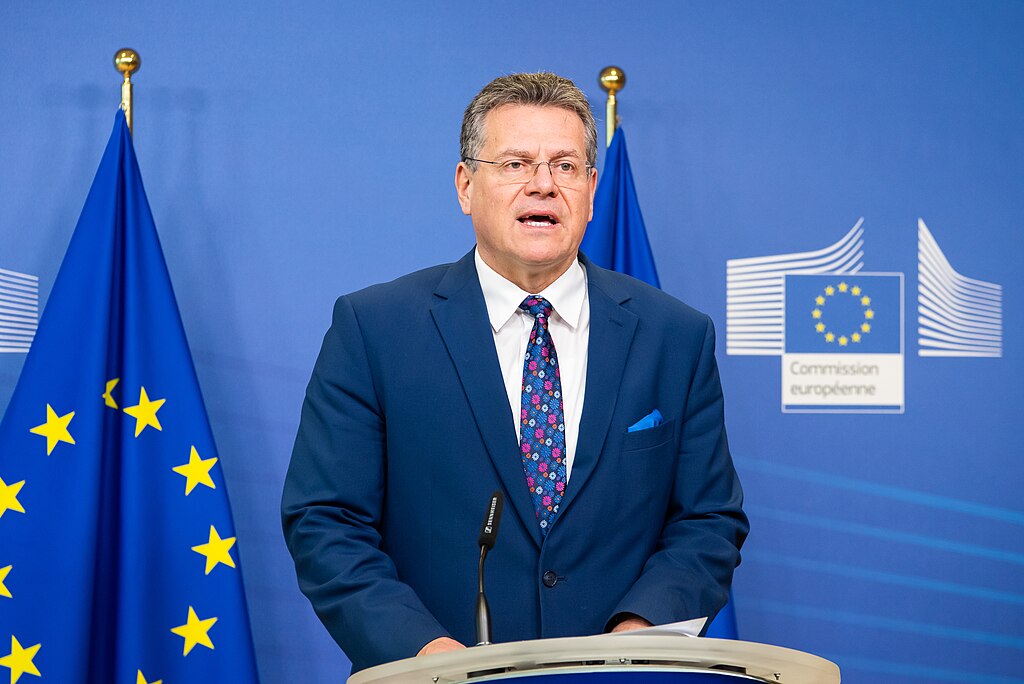
The United States and the European Union have taken a major step toward strengthening their supply chains for critical minerals, aiming to reduce reliance on China and boost advanced manufacturing capabilities. On Friday, U.S. Secretary of State Marco Rubio and EU Trade Commissioner Maros Sefcovic signed a memorandum of understanding (MOU) focused on securing and producing essential raw materials used in industries such as semiconductors, electric vehicles, and defense technologies.
The agreement highlights growing concerns among Western economies about supply chain vulnerabilities and the risks posed by overdependence on a limited number of suppliers. While China was not directly mentioned in Rubio’s remarks, the move reflects a broader strategy to counterbalance its dominance in mineral processing and global supply networks.
China has historically leveraged its control over critical minerals by adjusting exports, influencing prices, and limiting other nations’ ability to diversify sourcing. This has raised alarms among the U.S. and EU, prompting coordinated efforts to create more resilient and diversified supply chains. Rubio emphasized that excessive concentration of these resources presents a significant economic and security risk, making diversification essential.
In parallel, U.S. Trade Representative Jamieson Greer announced a joint action plan with the EU to align trade policies and address what both parties described as “non-market practices” that distort global supply chains. Proposed measures include border-adjusted price floors, standards-based trading systems, subsidies to close pricing gaps, and long-term offtake agreements for selected minerals.
Sefcovic noted that the success of the initiative will depend on execution, with pilot projects expected to launch before year-end. The partnership also opens the door for broader cooperation with like-minded countries, building a plurilateral framework to enhance supply chain resilience worldwide.
Additional areas of collaboration include mining standards, recycling practices, investment screening, and emergency response mechanisms to prevent disruptions. The agreement underscores a unified transatlantic effort to secure critical minerals and support future-focused industries.







