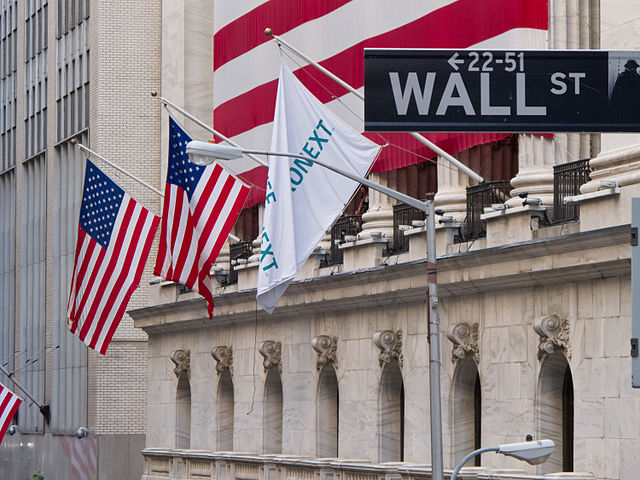
U.S. stocks closed lower Tuesday in a volatile session as conflicting reports about potential U.S.-Iran peace negotiations left investors on edge. The S&P 500 dropped 0.3% to 5,559.62, the Dow Jones fell 0.2% to 46,123.72, and the Nasdaq slid 0.8% to 21,761.89, reversing much of the previous session's strong rally.
President Trump stated that Iran had agreed to never pursue nuclear weapons and confirmed that Secretary of State Marco Rubio and Vice President JD Vance were involved in ongoing negotiations. However, conflicting accounts quickly emerged. CNN reported that while Washington had made overtures, no formal talks were underway. The Wall Street Journal added that roughly 3,000 troops from the elite 82nd Airborne Division were being deployed to the region, deepening uncertainty across financial markets.
Oil prices surged back toward $100 a barrel, with Brent crude futures rising 4% to $99.71, as missile strikes hit Tel Aviv, Kuwait, and Saudi Arabia. The near-shutdown of the Strait of Hormuz — a critical shipping lane carrying one-fifth of the world's oil supply — continues to tighten global energy markets, particularly affecting Asia's heavy energy importers.
Economic data added to investor concerns. The U.S. composite PMI fell to an 11-month low of 51.4 in March, signaling slowing growth alongside rising inflation — a classic stagflation warning sign. Fed Chair Jerome Powell previously noted that elevated energy prices would likely push inflation higher in the near term.
Technology stocks also came under pressure amid renewed fears that Amazon's AWS-developed AI agents could displace traditional enterprise software providers. Meanwhile, private credit firms Apollo Global and Ares Management saw share pressure after limiting fund withdrawals amid a surge in redemption requests. With geopolitical tensions dominating sentiment, market volatility is expected to persist.