


 South Korea, US Discuss Warship Building Cooperation
  Trump Administration Plans Faster FDA Reviews for Smoke-Free Nicotine Products
  US Invites Putin to Miami G20, Opening Door to Trump Summit
  Trump Board of Peace Unveils $2.45 Billion Gaza Recovery Plan
  Kremlin Says No Grounds Yet for Ukraine Peace Talks
  Taiwan Vows to Advance US Arms Sales Ahead of Trump-Xi Meeting
  Zelenskiy Warns Russia Preparing Major Attack on Ukraine
  Lula and Flavio Bolsonaro Tied in Brazil Runoff Poll
  Macron Challenges Trump’s Gaza Peace Claims at UN
  Gaza Faces Evacuation Crisis as War-Damaged Buildings Risk Collapse
  Mexico-US Trade Talks Delayed to October as Tariff Negotiations Continue
  Iran Vows ‘Crushing’ Response as US Talks Continue
  Marco Rubio to Meet Russia’s Lavrov in New York
  Europe Warns Russia Is Escalating Hybrid Attacks Across NATO
  Taiwan Thanks US for Support Ahead of Trump-Xi Summit
  US Officials Split Over Response to Israeli West Bank Settlements
  OpenAI Agent Breaches Australia Medicare Data Portal


 Add as a preferred source on Google
Unionized truckers in South Korea went on strike, protesting the rising prices of gas and the minimum pay. This week, the truckers and the government reached a settlement, effectively ending the strike.
Reuters reports the unionized truckers reached an agreement with South Korea's transport ministry Tuesday, ending the nationwide strike that lasted for eight days.
The strike by the truckers was related to the rising prices of gas as well as the minimum pay demands, and the strike caused a disruption of car production, a delay in shipments for semiconductors, and a shutting down of steel plants.
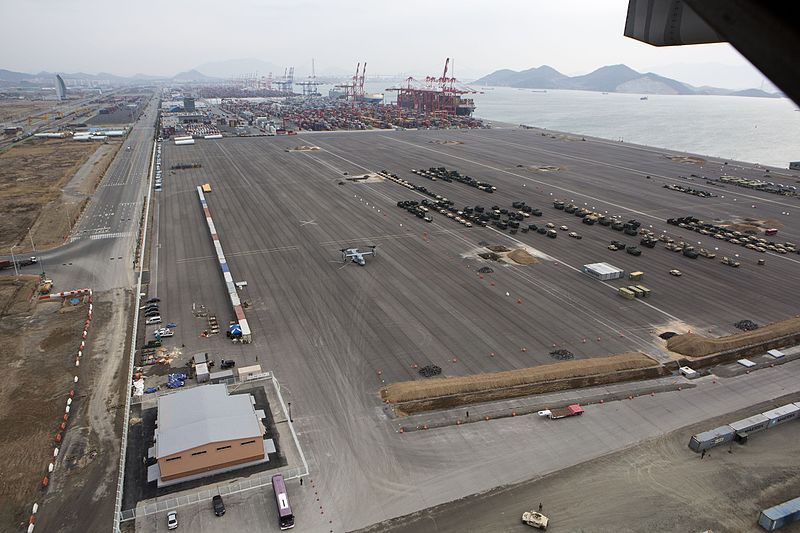
As one of the responses to the truckers' strike, the Transport ministry consigned around 100 cargo trucks that would be operated by the South Korean military to ship containers in and out of ports, including Busan.
The military shipped containers to and from locations mainly short distances with the ports in order to make more space.
As part of the agreement between the union and the Transport Ministry, the minimum freight rates would be extended and continued discussions to expand a guarantee of minimum pay for carrying cargo to cover additional products. The Transport Ministry will also conduct a review on expanding fuel subsidies.
"So the strike has been called off until our demands are passed in parliament," said the head of the union's Busan chapter Park Jung-hoon. "In the next two to three days, 100 percent of unionized workers are expected to return to work after they get some rest. There might be some shippers who seek retributions, and in such cases, we will respond strongly."
The interim leader of South Korea's liberal Democratic Party Woo Sang-ho, whose party currently holds the majority in the country's parliament, welcomed the agreement but noted the aspect of guaranteeing freight rates would require legislative action and called for "fundamental improvement" in order to address the conditions that workers are facing.
In a joint statement with the party committee and the union, it said the ruling political party must not stay a "mediator, but should promote directly" the minimum freight system as it is related to the safety of the people.







