


 Michelle Bachelet Withdraws From UN Secretary-General Race
  UK Home Asking Prices Rise for First Time Since May
  Trump-Xi Summit Puts Trade Truce and Taiwan in Focus
  United Russia Leads Russia Election as Ukraine Drones Hit Moscow
  US, Japan and South Korea Back Taiwan Ahead of Trump-Xi Summit
  Synthetic data could ease people’s concerns about privacy breaches. But who gets to create it?
  Trump Bans CNN, MS NOW and Politico From White House
  Wall Street Mixed as Treasury Yields Rise After Fed Hike
  S&P 500 Historically Rallies After Midterm Elections, UBS Says
  Strait of Hormuz Oil Shipments Hit Six-Month High as U.S. Clears Mines
  FCC Approves Foreign Investment in $110B Paramount-Warner Bros. Deal
  US Bans Canadian Alcohol, Motorcycles as Trade War Escalates
  White House Bars CNN, MS NOW and Politico Reporters
  FDA Weighs Safety Standards for Psychedelic Therapies
  Mexico Pushes for US Trade Deal Before Midterms
  Nvidia-Groq AI Chip Deal Faces U.S. Antitrust Probe


 Add as a preferred source on Google
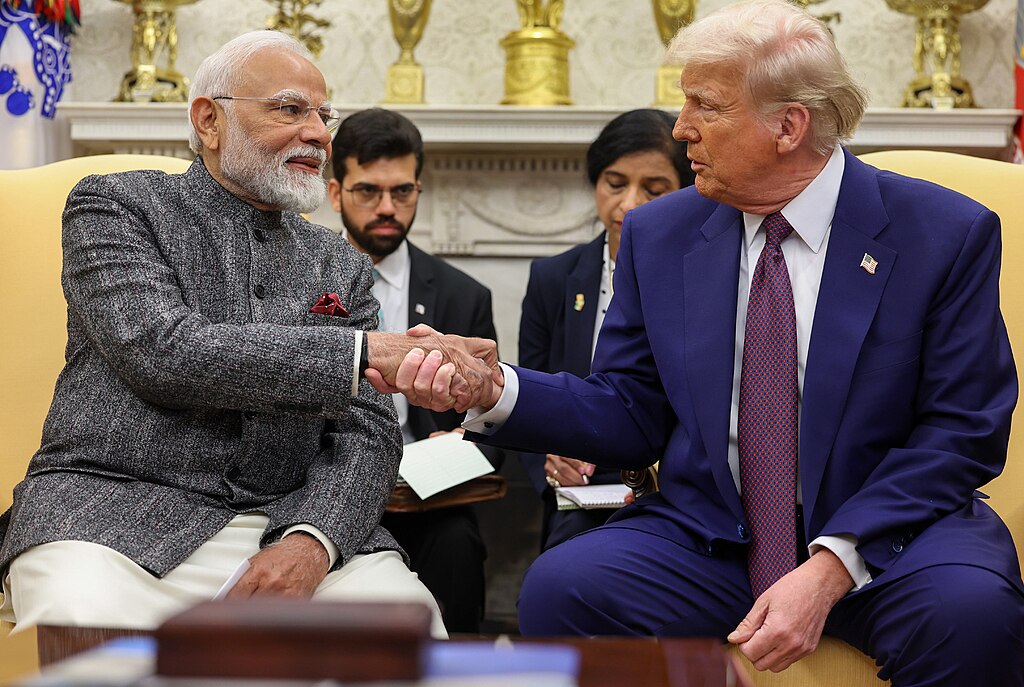
President Donald Trump has signed a landmark executive order removing the 25% penalty tariff on Indian goods, signaling a major shift in U.S.–India trade relations and global geopolitical alignment. The move functions as the core enforcement mechanism of a broader trade framework aimed at reducing India’s economic reliance on the Russian Federation while strengthening ties with the United States in energy, defense, and technology.
In the executive order, Trump stated that India has committed to ending both direct and indirect imports of Russian oil and will instead prioritize the purchase of U.S. energy products. India has also agreed to a long-term framework to expand defense cooperation with the United States over the next decade. Central to the agreement is India’s pledge to purchase approximately $500 billion worth of American energy, aircraft, and advanced technology over the next five years, a move expected to significantly benefit U.S. exporters and manufacturers.
While the Russia-related 25% surcharge has been eliminated, the deal introduces a new reciprocal tariff structure. A baseline levy of 18% will apply to selected Indian exports such as textiles, leather products, and organic chemicals. At the same time, the United States has agreed to remove additional duties on strategically important sectors, including generic pharmaceuticals, gems, and aircraft parts, easing access for Indian exporters in critical industries.
U.S. agricultural and industrial sectors are positioned to gain immediate advantages as India has committed to lowering or eliminating tariffs on a range of American products. These include soybean oil, distilled spirits, dried distillers’ grains, and fresh fruit, opening new opportunities for U.S. farmers and food exporters. The agreement also addresses long-standing non-tariff barriers that have affected U.S. medical device and information and communications technology companies operating in India.
Beyond trade, the framework emphasizes economic security and supply chain resilience. Both nations have agreed to coordinate efforts to counter non-market policies of third parties and promote innovation through closer alignment. The removal of the 25% tariff officially takes effect at 12:01 a.m. Washington time on February 7, marking what both governments describe as an interim step toward a comprehensive Bilateral Trade Agreement designed to establish a durable economic and security partnership.







