


 NASA and SpaceX Target Crew-11 Undocking From ISS Amid Medical Concern
  Cogent Biosciences Soars 120% on Breakthrough Phase 3 Results for Bezuclastinib in GIST Treatment
  Blue Origin’s New Glenn Achieves Breakthrough Success With First NASA Mission
  Neuralink Plans High-Volume Brain Implant Production and Fully Automated Surgery by 2026
  Blue Origin New Glenn Rocket Explodes During Launch Pad Test, Delaying Space Ambitions
  Trump Administration to Launch Autism Initiatives Targeting Acetaminophen Use and New Treatment Options
  NASA Artemis II: First Crewed Moon Mission Since Apollo Takes Four Astronauts on 10-Day Lunar Journey
  Tabletop particle accelerator could transform medicine and materials science
  FDA Pilot Program Eases Rules for Nicotine Pouch Makers
  SpaceX Delays Starship V3 Launch Ahead of Potential Record IPO


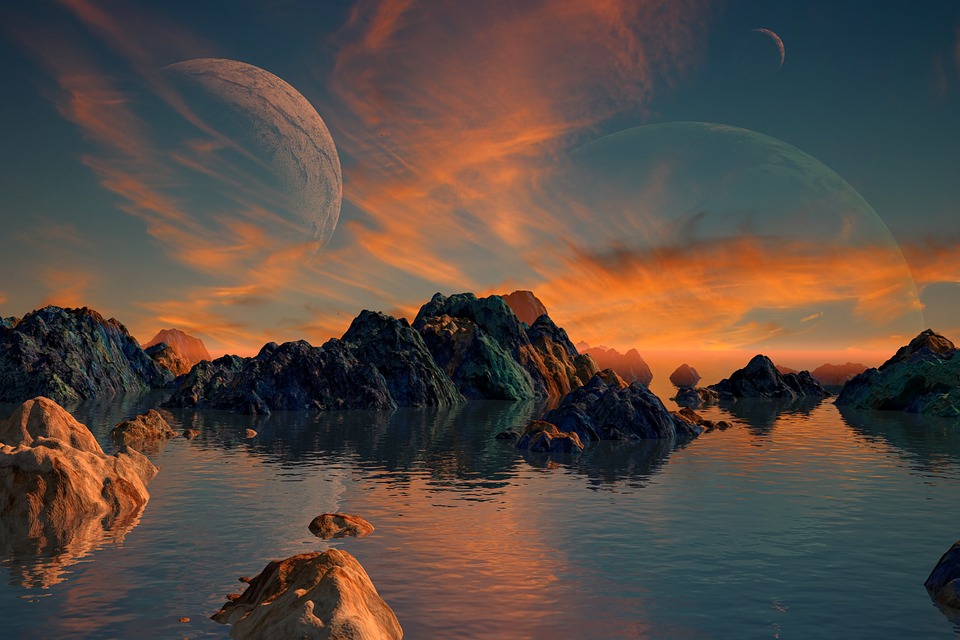
There are nine planets in the Solar System, including the smallest of which that is Pluto, but scientists believed in the possibility of the Solar System actually having a 10th planet, more known as Planet Nine. However, a new study that was conducted suggests that this mysterious planet may not have existed at all.
Planet Nine is believed to be five times bigger than Earth and 20 times farther from the Sun like Neptune. Planet Nine is also believed to explain a lot about the Solar System, once scientists are able to find it, that is. Should this mysterious planet actually exist, then it might lead scientists to answer why the Solar System is thought to be a little off-balance.
But according to the latest research surrounding this Planet Nine, there is hardly any evidence of such a planet past Neptune’s orbit. Researchers from the University of Pennsylvania analyzed the data from the Dark Energy Survey, collected from an observatory in Chile, where they found very little evidence. According to Pedro Bernardinelli, one of the researchers who conducted the study, “We would not have formulated the Planet Nine idea if our data was the only data that existed.”
At the same time, Dr. Bernardinelli also led another study in March where they found 139 objects much farther from Neptune’s orbit. However, the objects they found were not large enough to be considered a planet. If they were found close by to each other, then they would collectively have the same gravitational force as a planet.
According to Samantha Lawler from the University of Regina, Canada, the possibility of Planet Nine actually existing cannot be entirely ruled out. “The only way to prove it’s not there is to search every square centimeter of the sky and not find it.”
One of the theories surrounding Planet Nine was that it was a black hole that was leftover from the Big Bang billions of years ago. As primordial holes were formed a little after the Big Bang, these are much smaller compared to the black holes that have been spotted in later or more recent years.
According to one research, this primordial black hole may be as small as a wallet, but still have a mass 10 times than that of the Earth.







