


 U.S. Budget Airlines Seek $2.5 Billion Government Aid Amid Rising Jet Fuel Costs
  U.S. Warns Allies Over Alleged Chinese AI IP Theft Linked to DeepSeek
  Australia Targets Meta, Google, and TikTok With New News Payment Tax Proposal
  U.S. Raises Alarm Over Chinese AI Firms’ Alleged IP Theft Through Model Distillation
  Elon Musk Signals Intel 14A Chips for Tesla’s Terafab AI Semiconductor Venture
  Nippon Express Stock Jumps as Elliott Investment Signals Strong Foreign Interest in Japan Logistics Sector
  FDA Adds Fatal Risk Warning to J&J and Legend Biotech’s Carvykti Cancer Therapy
  SpaceX Pivots Toward Moon City as Musk Reframes Long-Term Space Vision
  Is space worth the cost? Accounting experts say its value can’t be found in spreadsheets
  Tesla Earnings Beat Expectations as EV Growth Holds Amid Robotics and AI Shift
  Florida Launches Criminal Probe Into OpenAI Over FSU Shooting Incident
  SMC Corp Stock Surges as Palliser Capital Pushes for Major Share Buyback
  Chinese Chip Stocks Surge on AI Boom and Domestic Tech Push
  Astronomers have discovered another puzzling interstellar object − this third one is big, bright and fast
  Nvidia Pushes 800V Data Center Power Systems to Boost Efficiency and Cut Costs


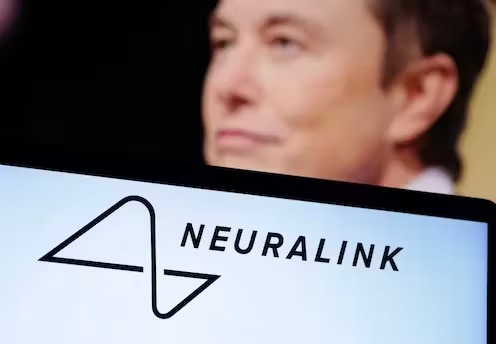
Elon Musk’s brain-computer interface company Neuralink is preparing for a major expansion, announcing plans to begin high-volume production of its brain implant devices and transition to a fully automated surgical procedure by 2026. The announcement was made by Musk in a post on the social media platform X, highlighting the company’s long-term vision to scale its neurotechnology and make implantation faster, safer, and more accessible.
Neuralink’s brain implant technology is designed to help people with severe neurological conditions, including spinal cord injuries and paralysis, by enabling direct communication between the brain and external devices. The implant allows users to control digital tools using their thoughts, opening new possibilities for restoring independence and improving quality of life. According to previously shared updates, the first patient implanted with the device has successfully used it to play video games, browse the internet, post on social media, and control a laptop cursor without physical movement.
The company began human trials of its brain-computer interface in 2024 after resolving safety concerns raised by the U.S. Food and Drug Administration. The FDA had initially rejected Neuralink’s application in 2022, citing potential risks, but later approved the trials after additional safeguards were implemented. This marked a significant milestone for the company and the broader neurotechnology industry.
In September, Neuralink revealed that 12 people worldwide with severe paralysis had already received its brain implants. These individuals were reportedly using the technology to control both digital and physical tools purely through thought, demonstrating the real-world potential of brain-computer interfaces. The company has also attracted strong investor interest, securing $650 million in a funding round completed in June, further supporting its research, development, and manufacturing goals.
While Neuralink did not immediately respond to a request for comment, Musk’s statement suggests the company is moving toward large-scale deployment. If successful, high-volume production and fully automated surgical implantation could significantly accelerate adoption of brain implant technology, positioning Neuralink as a leader in the rapidly evolving field of neural interfaces and medical innovation.







