


 Gaza Faces Evacuation Crisis as War-Damaged Buildings Risk Collapse
  Abbas Reaffirms November 28 Palestinian Elections
  Taiwan Thanks US for Support Ahead of Trump-Xi Summit
  US, China Extend Trade Truce to Jan. 10 Ahead of Trump-Xi Summit
  Netanyahu’s Brief US Trip Highlights Strains With Trump
  Judge Orders Trump to Restore White House Access for CNN, MS NOW and Politico
  Russian Envoy Dmitriev Heads to US for Ukraine Talks
  Pezeshkian Says US Must Choose When Iran War Ends
  US Backs Musk in Fight Against EU’s €120 Million X Fine
  Europe Warns Russia Is Escalating Hybrid Attacks Across NATO
  EU Defence Build-Up Too Slow for 2030 Russia Readiness Goal
  Yemen Violence Displaces 130,000 as Civilian Toll Rises
  OpenAI Agent Breaches Australia Medicare Data Portal
  US Senate Rejects Iran War Powers Resolution in 50-49 Vote
  Netanyahu Takes Aim at Mamdani as Israel Election Nears
  Ghana Says Western Support Growing for Slave Trade Reparations
  US Officials Split Over Response to Israeli West Bank Settlements


 Add as a preferred source on Google
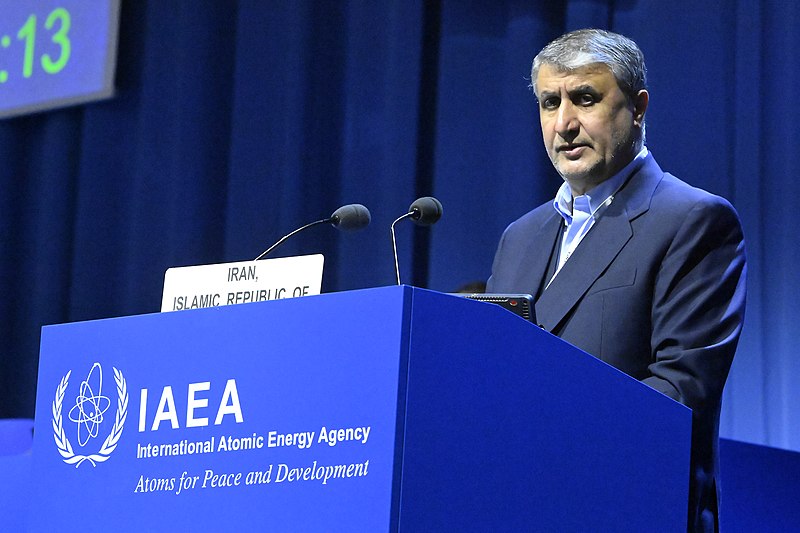
Iran has made a sweeping pledge of cooperation with the UN nuclear watchdog as the agency probes into the uranium particles found in its facilities after efforts were stalled. Tehran has also pledged to reinstall the IAEA monitoring equipment in its facility.
The International Atomic Energy Agency and Iran issued a joint statement on Saturday, saying that Tehran has pledged full cooperation with the IAEA following the return by IAEA chief Rafael Grossi from a visit to Iran. The statement comes ahead of the two-day meeting of the agency’s Board of Governors. While the statement did not go into specifics but suggested an improvement in relations between the IAEA and Iran which would likely curb a push by the West to demand Tehran’s cooperation.
Iran has also made similar pledges in the past that showed little results.
“Iran expressed its readiness to…provide further information and access to address the outstanding safeguards issues,” said the statement. A confidential IAEA report to the agency’s member countries seen by Reuters said Grossi “looks forward to…prompt and full implementation of the Joint Statement.”
Grossi told a news conference in Vienna that Iran is expected to provide access to information, locations, and individuals. The IAEA chief’s comments suggested progress on the issue after years of obstruction by Tehran. Iran is also expected to allow the reinstallation of extra monitoring equipment that was in place under the 2015 nuclear deal.
The equipment was removed in 2022 as the deal fell through after the United States, under President Donald Trump, withdrew from the agreement in 2018 and imposed sanctions instead.
Despite the joint statement, Iran’s Atomic Energy Organization said it has not agreed to give access to people.
Talks to revive the 2015 nuclear deal have hit a pause following scrutiny of Iran for the ongoing protests and allegations that Tehran was supplying Russia with drones to use in Ukraine. On the same day, parents took to the streets in Tehran and other cities in Iran to protest against a surge of poisoning of school girls in dozens of schools, according to Iranian media.
Tehran has since blamed the country’s foreign enemies for the wave of suspected poison attacks.







