


 Asian Currencies Mixed as Dollar Holds Near Two-Month High
  Select Water Solutions Shares Surge on $700 Million Pilot Water Deal
  Australia Unemployment Hits Five-Year High Despite Strong Jobs Growth
  Netanyahu Defends Israel at UN as Delegates Stage Walkout
  France Defends Netanyahu Airspace Clearance Despite ICC Warrant
  Tencent Launches TenPayGo Payment App for Foreign Tourists in China
  Novo Nordisk Strikes €1.17 Billion Nanexa Drug Delivery Deal
  OpenAI to Preview GPT-6 Cyber AI Model for Cybersecurity
  Abbas Reaffirms November 28 Palestinian Elections
  Wall Street Ends Flat as Oil, Treasury Yields and Fed Jitters Rattle Markets
  Trump, Xi Focus on Trade and AI at White House Summit
  Oil Prices Jump 3% as Houthi Attack Revives Supply Fears
  Taiwan Thanks US for Support Ahead of Trump-Xi Summit
  Akamai Shares Surge on $11.6B Anthropic AI Cloud Deal
  OpenAI Agent Breaches Australia Medicare Data Portal
  Oil Prices Ease as Iran Tensions Clash With Diplomacy Hopes
  What ‘Taiwan Independence’ Means as Xi Presses Trump on US Policy


 Add as a preferred source on Google
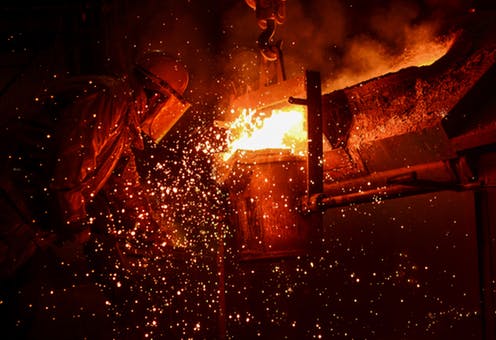
Korea Zinc’s board is set to convene on Monday to vote on a major overseas investment plan that could significantly strengthen the supply chain for critical minerals in the United States. According to a source familiar with the matter, the South Korean metals producer is considering a proposal to build a new smelter in the U.S. through a joint venture involving the U.S. government and several American companies. The total investment for the project is expected to reach 10 trillion won, equivalent to approximately $6.78 billion.
The planned smelter would focus on refining key strategic minerals, a move that aligns with growing efforts by the United States and its allies to reduce reliance on single-country supply sources for critical materials. South Korea’s Yonhap News Agency reported that the U.S. government and participating U.S. companies would collectively hold a 20% stake in the joint venture, contributing around 2 trillion won in investment capital.
According to the same report, the facilities are expected to produce antimony and germanium, both of which are considered essential minerals for advanced manufacturing, defense applications, and high-tech industries such as semiconductors and renewable energy. Antimony is widely used in flame retardants and alloys, while germanium plays a crucial role in fiber optics, infrared technology, and electronics.
The proposed project underscores Korea Zinc’s strategy to expand its global footprint while responding to shifting geopolitical and economic priorities around critical mineral security. For the United States, the partnership could represent a significant step toward boosting domestic processing capacity for minerals that are vital to national security and industrial competitiveness.
A spokesperson for Korea Zinc was not immediately available for comment, and the company has not yet publicly confirmed details of the board’s agenda. However, if approved, the investment would rank among the largest South Korean industrial projects in the United States and further deepen economic cooperation between the two countries.
The outcome of Monday’s board meeting will be closely watched by investors and policymakers alike, as it could signal a major acceleration in cross-border collaboration on critical minerals and clean technology supply chains.







