


 China vs. NASA: The New Moon Race and What's at Stake by 2030
  Trump and Merck KGaA Partner to Slash IVF Drug Costs and Expand Fertility Coverage
  Cogent Biosciences Soars 120% on Breakthrough Phase 3 Results for Bezuclastinib in GIST Treatment
  Neuralink Expands Brain Implant Trials with 12 Global Patients
  FDA Adds Fatal Risk Warning to J&J and Legend Biotech’s Carvykti Cancer Therapy
  Blue Origin New Glenn Explosion Could Delay Launch Operations Until 2028
  NASA Cuts Boeing Starliner Missions as SpaceX Pulls Ahead
  Eli Lilly’s Inluriyo Gains FDA Approval for Advanced Breast Cancer Treatment
  Blue Origin’s New Glenn Achieves Breakthrough Success With First NASA Mission
  SpaceX Delays Starship V3 Launch Ahead of Potential Record IPO


 Add as a preferred source on Google
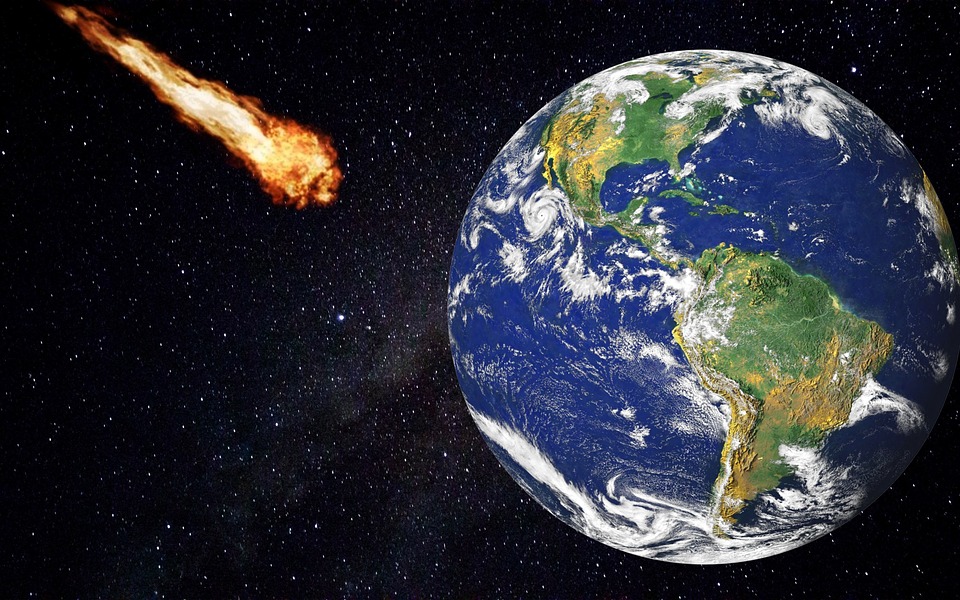
Asteroids are believed to have caused the extinction of the dinosaurs millions of years ago, but it bears wondering if the Earth today could be affected in the same manner. NASA tracked down an asteroid that could potentially bring disastrous effects on the planet if it collided.
Express reports that the agency’s asteroid trackers caught sight of an asteroid that is on its way towards the Earth’s orbit. Named 2002 PZ39, the rock is classified as a Near-Earth Object or NEO, but due to its estimated size ranging up to 3,280 feet in diameter, NASA has classified this as a Potentially Hazardous Object or PHO. It is predicted that PZ39 will be approaching Earth over the weekend at a speed of 35, 500 miles per hour or 57, 240 kilometers per hour. Given how fast it is going, PZ39 will be approaching Earth on Saturday, the 15th of February.
As PZ39 is classified as a PHO, if it ever collides with Earth, making it past the atmosphere, it can potentially destroy a whole continent. For reference, the asteroid that caused the extinction of the dinosaurs measured 10 kilometers in diameter. These PHOs have an impact equivalent to over 60 megatons of TNT, which is more powerful than the most powerful nuclear weapon created so far. Fortunately, because of their size, they are much easier to track down or spot.
So, this brings up the question of whether or not PZ39 be coming towards Earth, the astronomers at the agency predicted that the asteroid would get as close as 0.03860 astronomical units from the Earth. This is equivalent to 5.77 million kilometers away.
Previously, another asteroid has approached and flown by Earth. The asteroid known as 2020 CH flew by the other day. It measured around 75.4 feet to 179.6 feet in diameter, making it a relatively small space rock. It flew by Earth, getting as close as 0.02975 astronomical units or 4.45 million kilometers from the atmosphere. Asteroids this small, if in case it should collide with Earth, would most likely burn up upon contact with the atmosphere. However, some asteroids of a similar size may still cause a lot of damage, based on the 2013 Chelyabinsk incident.







