


 Taiwan Vows to Advance US Arms Sales Ahead of Trump-Xi Meeting
  Trump Says ‘Freedom’ Is Coming to Cuba
  Ghana Says Western Support Growing for Slave Trade Reparations
  US Officials Split Over Response to Israeli West Bank Settlements
  Trump Meets Venezuela’s Delcy Rodriguez at UN Assembly
  Scott Bessent Eyed as Trump’s New AI Czar
  Trump to Press Xi on Release of US Nuclear Expert Held in China
  Burnham Eyes UK Leadership Role in AI Ahead of Trump Meeting
  China Tightens Fentanyl Rules Ahead of Trump-Xi Summit
  Zelenskiy Warns Russia Preparing Major Attack on Ukraine
  US Invites Putin to Miami G20, Opening Door to Trump Summit
  Europe Warns Russia Is Escalating Hybrid Attacks Across NATO
  Venezuela Promises Elections as Delcy Rodriguez Pledges Democratic Transition
  Macron Challenges Trump’s Gaza Peace Claims at UN
  Vietnam, US Trade Deal Could Be Signed Soon, To Lam Says
  US, China Extend Trade Truce to Jan. 10 Ahead of Trump-Xi Summit
  South Korea, US Discuss Warship Building Cooperation


 Add as a preferred source on Google
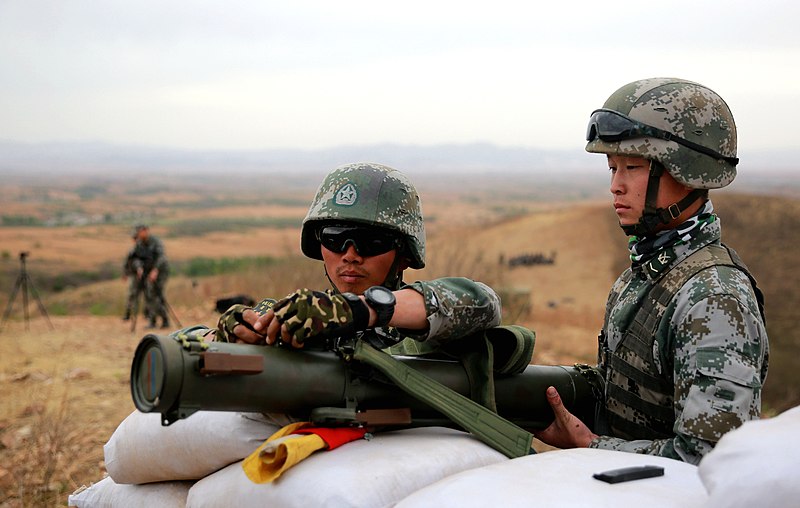
Relations between China and Taiwan have not been at its best as of late, as China grows increasingly aggressive over the island nation in its plans for reunification. As tensions escalate in the South China Sea, a report revealed that China has a four-part plan to invade the island nation, which also includes military actions taken against US soldiers.
WION obtained a copy of China’s “invasion playbook” detailing China’s plans in a possible military confrontation as Beijing considers taking over Taiwan through military means. Chinese military planners have come up with four military campaigns for possibly invading Taiwan. Included in the plans are airstrikes on US military forces.
The first phase, according to the outlet, involves disarming Taiwanese forces with the use of China’s Air Force in a possible crackdown of the island nation’s government, military, and civilians. Through this possible crackdown, China would hope to get Taipei to submit to its authority, according to the report.
The second phase involved a blockade operation, where China would isolate Taiwan from the rest of the world. This would include cutting off communication and blocking key supplies from reaching Taiwan. The targeting of US troops by the People’s Liberation Army would make up the third phase.
“The People’s Liberation Army would conduct air strikes on US forces deployed near Taiwan to weaken the Taiwanese defense. That will leave Taiwan open to ground attack,” said the report. The fourth phase would be carrying out an amphibious assault on the island nation, targeting all branches of Taiwan’s military from the army, navy, and air force.
While China appears determined to take over Taiwan in a plan to reunify both nations, an expert has warned that Beijing may receive backlash from its own citizens and trigger internal conflicts should an invasion take place. Catherine McGregor of Sky News Australia suggested that an invasion of Taiwan by China would have serious consequences for Beijing, triggering an economic crisis. This is because of the societal impact from Chinese President Xi Jinping’s “one-child policy.”
“With a nation that has had a one child policy privileging sons,” said McGregor. “You start sending those single sons of families home in body bags. Let’s see what happens internally.”







