


 Kremlin Says No Grounds Yet for Ukraine Peace Talks
  Ghana Says Western Support Growing for Slave Trade Reparations
  Vietnam, US Trade Deal Could Be Signed Soon, To Lam Says
  Europe Warns Russia Is Escalating Hybrid Attacks Across NATO
  Venezuela Promises Elections as Delcy Rodriguez Pledges Democratic Transition
  Trump Says U.S.-Iran Peace Deal Near After UN Talks
  US, China Extend Trade Truce to Jan. 10 Ahead of Trump-Xi Summit
  Gaza Faces Evacuation Crisis as War-Damaged Buildings Risk Collapse
  South Korea, US Discuss Warship Building Cooperation
  US Officials Split Over Response to Israeli West Bank Settlements
  Taiwan Vows to Advance US Arms Sales Ahead of Trump-Xi Meeting
  Scott Bessent Eyed as Trump’s New AI Czar
  Canada Unveils Bill to Fast-Track Major Resource Projects
  Trump Meets Venezuela’s Delcy Rodriguez at UN Assembly
  Zelenskiy Warns Russia Preparing Major Attack on Ukraine
  Russian Strikes Kill Eight Across Ukraine as Energy Sites Hit
  Macron Challenges Trump’s Gaza Peace Claims at UN


 Add as a preferred source on Google
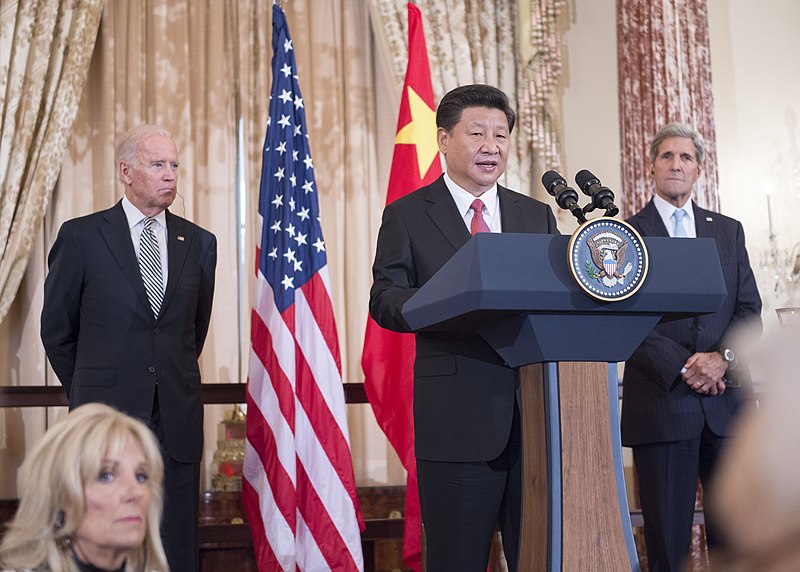
In the midst of conflicts over the South China Sea, there is also the matter of China’s plans to reunite Taiwan with the mainland. Following a recent speech by Chinese President Xi Jinping, an expert has said that the Chinese leader is concerned regarding the US and its support for the island nation.
China expert Isabel Hilton told BBC Radio 4 that a full-scale invasion of Taiwan by China is held back as China likely fears how the US would respond should an attack be carried out on the island nation. This follows Xi’s recent speech where he vowed to have a peaceful reunification between Taiwan and the mainland. China regards the island nation as a breakaway province and has pressured Taiwan and its democratic government to accept Chinese sovereignty.
Hilton explained that the final decision on whether China would launch a full-scale military invasion on the island nation is based on the defense capabilities of the US and its military relationship with Taiwan. Hilton also added that it is also based on how hard the US will retaliate and possibly stop the invasion from succeeding.
“It rests on a strategic ambiguity which has been maintained ever since the United States switched its democratic recognition from Taiwan to the People’s Republic,” said Hilton, who also suggested that a part of the ambiguity stems from the US being committed to the treaty of providing Taiwan with arms as it builds its own defense capabilities in the midst of rising threats from China.
Taiwanese President Tsai Ing-wen commemorated Taiwan’s National Day over the weekend, where she formally took a stand against the reunification with China. Tsai who was re-elected in 2020 for her pledge to push back against Beijing. During her speech for this year’s celebration, Tsai said that the island nation would ramp up its defenses in order to make sure that “nobody can force Taiwan to take the path China has laid out for us.”
“The more we achieve, the greater the pressure we face from China,” said Tsai, who also mentioned the recent incursions made by Chinese warplanes into Taiwan’s airspace and how it is affecting national security.







