


 Bill Gates Warns Governments Are Unprepared for AI Disruption
  Nvidia CEO Jensen Huang Expected at Trump-Xi State Dinner
  China’s Global Times Slams Anthropic CEO’s AI Slowdown Plan as ‘Cold War’ Strategy
  Houthis Escalate Saudi Attacks as Red Sea Oil Risks Grow
  Ukraine Races to Counter Russia’s Faster Jet-Powered Drones
  Philippines Holds Historic Bangsamoro Election Amid Tight Security
  Sweden Election: Centre-Left Holds Narrow Lead
  What is Zionism? The different meanings of a contested term
  U.S. Imposes New Visa Restrictions Over South Africa Policies
  Vietnam, U.S. Firms Plan 29 Deals Across Energy, Tech and Aviation
  Saudi Arabia Raises Security Alerts as Houthi Attacks Threaten Oil Routes
  UK PM Andy Burnham Set for First Trump Meeting in New York
  Mahmoud Khalil Sues Columbia Over Alleged Pro-Palestinian Harassment
  South Korea’s Cho Hyun to Meet Rubio in Washington
  Global Poll Shows Rising Trust in Institutions as US-China Leadership Support Falls
  Trump Rejects Calls for Tougher AI Regulation
  Kim Jong Un Pledges Deeper Russia Cooperation


 Add as a preferred source on Google
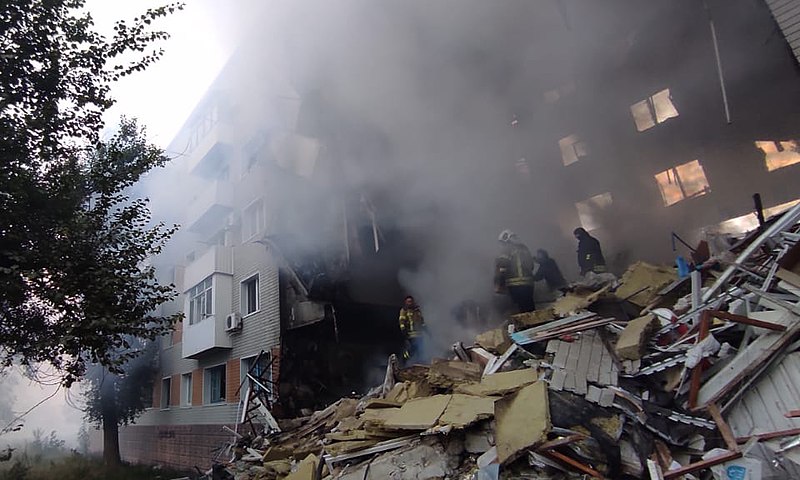
The heaviest fighting in the war in Ukraine has been taking place in the key city of Bakhmut. A senior Ukrainian commander said Russian forces have been using “scorched earth” tactics in reducing buildings in the city to rubble.
On Monday, Ukrainian Colonel General Oleksandr Syrskyi, who leads Ukraine’s ground forces, said that Russian forces are using Syria’s “scorched earth” tactics to destroy Bakhmut’s buildings and positions in Bakhmut with air strikes and artillery. Syrskyi added that Ukrainian forces are still holding onto their defensive positions.
“The enemy switched to so-called scorched earth tactics from Syria. It is destroying buildings and positions with air strikes and artillery fire,” said Syrskyi, who visited the front line areas in Bakhmut on Sunday, according to Ukraine’s Military Media Center.
“The situation is difficult but uncontrollable,” said Syrskyi.
Syrskyi also said that Moscow was bringing in special forces and airborne assault units to continue their onslaught of the city as members of the Russian Wagner mercenary group were “exhausted.” The Wagner paramilitary members have been leading the assaults on Bakhmut.
Ukrainian forces have held the defenses in Bakhmut, where fighting has been taking place for months. Kyiv has since accused Russia of using the same tactics in capturing the Ukrainian city of Severodonetsk in the eastern Luhansk region. Ukrainian forces were forced to withdraw back in July.
Ukraine said its defense of Bakhmut is an effort to buy time for its forces to prepare for an upcoming counterattack that would inflict more losses on the Russian side. Despite holding the defenses, Russian forces have been making gains in Bakhmut. A potential capture of Bakhmut by Russia would mark the first territorial gain by Moscow in months.
Last week, Russian media reported that there was a transfer of multiple launch rocket systems to Russian airborne forces, also known as VDV, according to the intelligence bulletin of the British defense ministry on Tuesday. The multiple-launch rocket system, the TOS-1A model in particular, is described by Moscow as a “heavy flamethrower” and is usually operated by a unit that specializes in Chemical, Biological, and Radiological Protection.
“The transfer likely indicates a future role for the VDV in offensive operations in Ukraine. It is likely part of efforts to reconstitute the VDV after it suffered heavy casualties in the first nine months of the war,” said the ministry.







