


 Pezeshkian Says US Must Choose When Iran War Ends
  What ‘Taiwan Independence’ Means as Xi Presses Trump on US Policy
  Ukrainian Drone Attacks Hit Russian Regions, Injuring at Least 12
  EU Defence Build-Up Too Slow for 2030 Russia Readiness Goal
  US Backs Musk in Fight Against EU’s €120 Million X Fine
  Netanyahu’s Brief US Trip Highlights Strains With Trump
  Trump, Xi Focus on Trade and AI at White House Summit
  Judge Orders Trump to Restore White House Access for CNN, MS NOW and Politico
  US Senate Rejects Iran War Powers Resolution in 50-49 Vote
  NATO Boosts Intelligence Sharing Amid Russia Hybrid Threats
  OpenAI Agent Breaches Australia Medicare Data Portal
  Ghana Says Western Support Growing for Slave Trade Reparations
  North Korea Rejects Nuclear Test Warning, Calls Nuclear Status Irreversible
  Netanyahu Defends Israel at UN as Delegates Stage Walkout
  France Defends Netanyahu Airspace Clearance Despite ICC Warrant
  Xi Calls for Deeper U.S.-China AI Cooperation in Trump Talks
  North Korea Warns South Korea Over US-Led Defense Role


 Add as a preferred source on Google
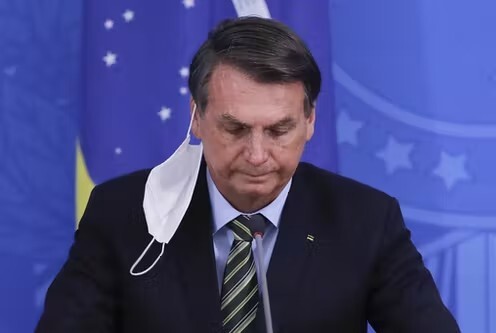
Thousands of Brazilians took to the streets on Sunday in major cities to protest a controversial legislative effort aimed at reducing the prison sentence of former President Jair Bolsonaro and his supporters for plotting to undermine democracy after the 2022 election. The demonstrations highlighted growing public anger over attempts by lawmakers to ease punishment for those involved in the alleged coup attempt following Bolsonaro’s electoral defeat.
The protests, organized by social movements, artists, and political parties, marked the first large-scale demonstrations since Bolsonaro began serving his 27-year prison sentence last month. The former president, whose far-right movement significantly reshaped Brazilian politics, is being held in a specially prepared cell at a federal police facility in Brasília. Protesters accused Congress of betraying democratic values by seeking leniency for Bolsonaro and his allies, many of whom were convicted for storming government buildings in January 2023.
In São Paulo, Brazil’s largest city, researchers from the University of São Paulo estimated that around 15,000 people attended the rally, a smaller turnout compared to similar protests held in September. Meanwhile, approximately 20,000 demonstrators gathered on Copacabana Beach in Rio de Janeiro, where participants emphasized that accountability for attacks on democracy must not be weakened. Among them was teacher Claudio Pfeil, who said Brazilians would not tolerate any rollback of justice for crimes against democratic institutions.
The protests gained additional visibility due to the involvement of prominent cultural figures, including legendary Brazilian singer Caetano Veloso, known for his opposition to Brazil’s military dictatorship in the 1970s. Demonstrators viewed the Supreme Court’s conviction of Bolsonaro and several military officers as a historic moment, marking the first time Brazil has punished members of the armed forces for attempting to overthrow democracy.
The controversy centers on a bill recently approved by Brazil’s lower house of Congress that could reduce Bolsonaro’s sentence to just over two years. The proposal still requires Senate approval and would also lessen penalties for Bolsonaro supporters involved in the Brasília riots. Although Bolsonaro would remain barred from public office for 30 years, critics argue the bill sends a dangerous signal.
President Luiz Inácio Lula da Silva is expected to veto the legislation if it reaches his desk, though Congress could override the veto, potentially setting the stage for further Supreme Court challenges.







