


 Trump Signs Executive Order to Boost AI Research in Childhood Cancer
  NASA Resumes Cygnus XL Cargo Docking with Space Station After Software Fix
  SpaceX’s Starship Completes 11th Test Flight, Paving Way for Moon and Mars Missions
  Blue Origin New Glenn Explosion Could Delay Launch Operations Until 2028
  Tabletop particle accelerator could transform medicine and materials science
  China vs. NASA: The New Moon Race and What's at Stake by 2030
  Blue Origin’s New Glenn Achieves Breakthrough Success With First NASA Mission
  Eli Lilly’s Inluriyo Gains FDA Approval for Advanced Breast Cancer Treatment
  SpaceX Prioritizes Moon Mission Before Mars as Starship Development Accelerates
  SpaceX Pivots Toward Moon City as Musk Reframes Long-Term Space Vision
  Cogent Biosciences Soars 120% on Breakthrough Phase 3 Results for Bezuclastinib in GIST Treatment
  Is space worth the cost? Accounting experts say its value can’t be found in spreadsheets


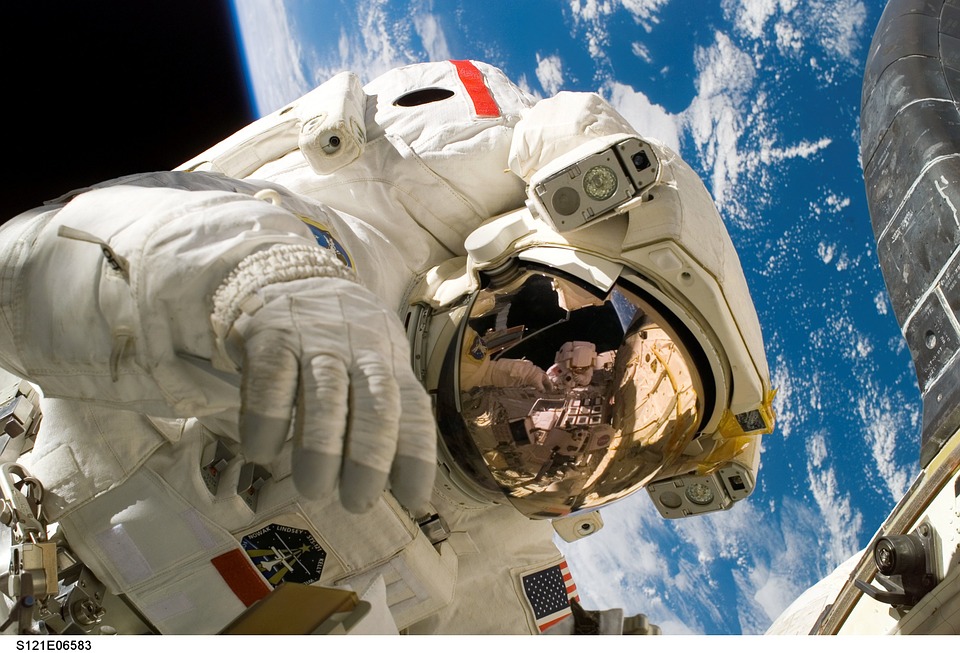
US space agency NASA is currently preparing for the upcoming Mars mission alongside their other space exploration projects. However, despite the agency’s hopes of being able to reach the Red Planet, a scientist claims that Elon Musk’s SpaceX program will beat them to it.
Express reports that Dr. Robert Zubrin, a mathematician and aerospace engineer weighed in on who he thinks would be able to reach Mars first over the coming years. Speaking to Polish publication WP Magazyn, Dr. Zubrin said that the first humans to land on Mars will be from Elon Musk’s SpaceX program, due to Musk’s determination regarding the program alone. “I have no doubt about it. Even if one of his projects has a two or three-year delay, it will eventually be realized. His determination is enormous,” said Dr. Zubrin.
Zubrin continued to predict what the race to Mars would look like between the SpaceX program and NASA. SpaceX was started with the objective to make human life interplanetary by establishing an outpost on the Red Planet. Musk hopes that this would launch by 2023. In preparation for the upcoming missions, Musk and the SpaceX program are developing the spacecraft that could transport the first humans to Mars.
SpaceX has already announced their goals in their privately funded space trips. Their spacecraft referred to as a Starship, will be designed as a reusable transport system that can bring humans from Earth to the moon, and to Mars and possibly even beyond that. By 2022, SpaceX hopes to carry out its first space cargo mission, where they will confirm water sources and resources, spot potential hazards, and establish the initial infrastructure of power, mining, and life support. Their second mission is scheduled for a 2024 launch, where they can further layout the foundation of human civilization on the Red Planet.
Speaking of water sources, NASA’s Juno spacecraft discovered that 0.25 percent of Jupiter’s atmosphere is made up of water. This was a significant discovery considering that the gas giant was believed to be very dry when the agency was able to get a closer look at the planet through the Galileo mission back in 1995. This discovery would also shed more light as to how the Solar System was formed and would suggest that Jupiter was among the first, if not the first planet that formed and orbited around the Sun.







