


 Trump Signs Executive Order to Boost AI Research in Childhood Cancer
  Trump Administration to Launch Autism Initiatives Targeting Acetaminophen Use and New Treatment Options
  Eli Lilly’s Inluriyo Gains FDA Approval for Advanced Breast Cancer Treatment
  Neuralink Expands Brain Implant Trials with 12 Global Patients
  Senate Sets December 8 Vote on Trump’s NASA Nominee Jared Isaacman
  SpaceX Prioritizes Moon Mission Before Mars as Starship Development Accelerates
  Trump Administration Releases New UFO Files and Apollo Mission Records
  Is space worth the cost? Accounting experts say its value can’t be found in spreadsheets
  Blue Origin’s New Glenn Achieves Breakthrough Success With First NASA Mission
  Cogent Biosciences Soars 120% on Breakthrough Phase 3 Results for Bezuclastinib in GIST Treatment


 Add as a preferred source on Google
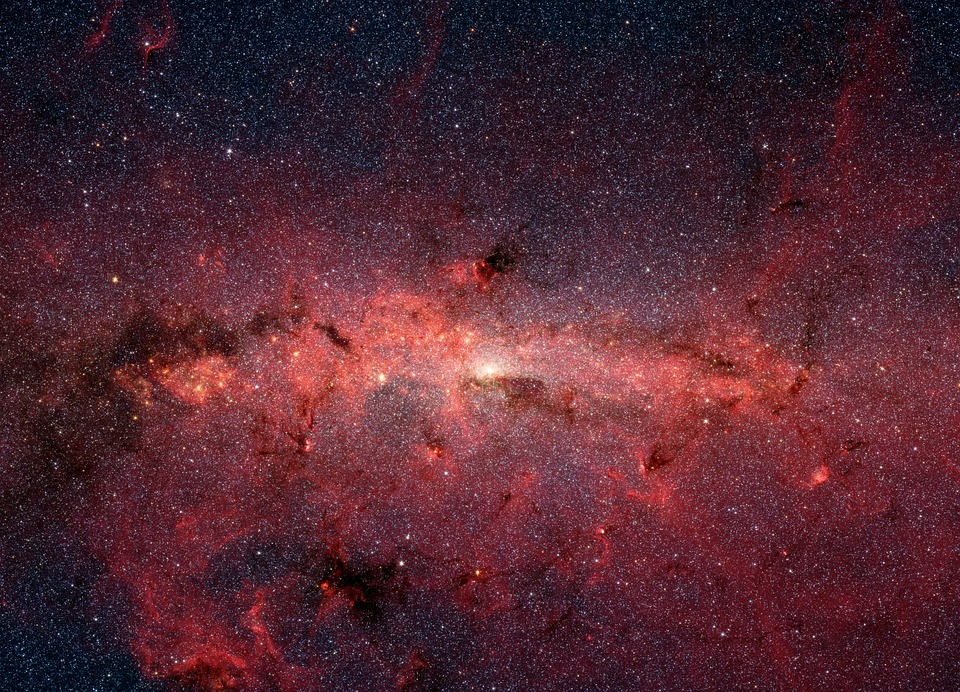
Astronauts and scientists are the only ones who have been able to hear the sounds of space and the universe. Now, everyone can be able to hear what the Milky Way sounds like thanks to NASA’s Chandra X-Ray Observatory.
The Chandra scientists at Harvard University were able to translate images of our Milky Way galaxy into sound using a process called sonification. The digital and visual cues were turned into audio signals. Budding astronomers and space enthusiasts can now be able to hear the galaxy, the varying sounds representing the position and brightness of the cosmic objects that could be found in the middle of the galaxy. The volume is also controlled by the brightness of the objects. This audio visualization project is part of the agency’s Universe of Learning Program.
“Stars and compact sources are converted to individual notes while extended clouds of gas and dust produce an evolving drone. The crescendo happens when we reach the bright region to the lower right of the image,” said the scientists from Chandra.
The astronomers have also translated images of the famed Pillars of Creation into audio visualizations as well as Cassiopeia A. When it comes to the supernova remnant, the astronomers explained that the sounds in their audio visualization of the remnant were mapped to the four elements that are found in the debris from the star and other high-energy data. The soundwaves in the Pillars of Creation are listened to from left to right, generated from both invisible and X-Ray light.
Meanwhile, NASA has also released an image of a distant galaxy taken by the Hubble Space Telescope. The image snapped by the Hubble was of the galaxy cluster Abell 2744, found millions of light-years away from Earth. The galaxies shown in the image may look close together, but they are actually millions of light-years apart, showing just how big the universe is.
The image is also combined with x-rays from the Chandra X-ray Observatory and optical light data from the Hubble.
2020 marks the Hubble’s last year of roaming through space as it will retire in 2021. It will then be replaced by the James Webb Space Telescope.







