


 NASA Artemis II: First Crewed Moon Mission Since Apollo Takes Four Astronauts on 10-Day Lunar Journey
  Senate Sets December 8 Vote on Trump’s NASA Nominee Jared Isaacman
  FDA Pilot Program Eases Rules for Nicotine Pouch Makers
  Is space worth the cost? Accounting experts say its value can’t be found in spreadsheets
  Cogent Biosciences Soars 120% on Breakthrough Phase 3 Results for Bezuclastinib in GIST Treatment
  Trump Signs Executive Order to Boost AI Research in Childhood Cancer
  Blue Origin’s New Glenn Achieves Breakthrough Success With First NASA Mission
  SpaceX Pivots Toward Moon City as Musk Reframes Long-Term Space Vision
  Trump Administration to Launch Autism Initiatives Targeting Acetaminophen Use and New Treatment Options
  SpaceX Delays Starship V3 Launch Ahead of Potential Record IPO
  SpaceX Prioritizes Moon Mission Before Mars as Starship Development Accelerates


 Add as a preferred source on Google
NASA has spotted many exoplanets over time, but its recent finding was a first. For the first time, the agency has detected a giant planet orbiting a much smaller corpse of a star.
The data from NASA’s Spitzer Space Telescope and the Transiting Exoplanet Survey Satellite or TESS revealed a white dwarf star 80 found 80 light-years away from Earth. The star is formally referred to as WD 1856+534 and is thought to be unusually small for a star, only 40 percent bigger than Earth. However, that was not what surprised astronomers at the agency, as they found that the white dwarf star is being orbited by an exoplanet the size of Jupiter, which looks to be perfectly intact.
The exoplanet is formally known as WD 1856b and according to the data from TESS, the exoplanet orbits the white dwarf every 34 hours. This is over 60 times faster than Mercury’s orbiting of the Sun.
According to Andrew Vanderburg of the University of Wisconsin-Madison who also helped analyze the data from the Spitzer telescope and TESS, “WD 1856b somehow got very close to its white dwarf and managed to stay in one piece. The white dwarf creation process destroys nearby planets, and anything that later gets too close is usually torn apart by the star’s immense gravity. We still have many questions about how WD 1856b arrived at its current location without meeting one of those fates”
The astronomers believe that the exoplanet was once 50 times farther than it is now from the white dwarf star. This might explain why the planet was still intact despite the destructive explosion that occurred before.
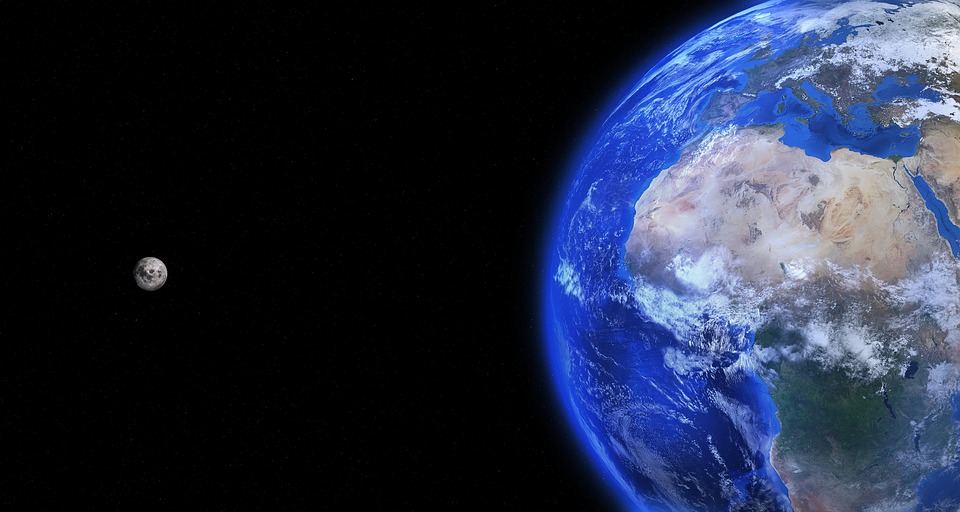
Meanwhile, the agency has also presented a new theory that could explain how the Moon was formed. The theory presented was known as the Giant Impact theory, which suggests that the early days of Earth, it collided with another planet known as Theia. This collision of the planets resulted in an explosion of gas, magma, and chemical elements before reforming into the Earth and Moon we now know.
The researchers have conducted a study that could provide more weight to this theory. They analyzed chemical discrepancies in the rocks of Earth and the rocks found on the Moon. They analyzed the amount of chlorine that may be present and found that lunar rocks have a higher concentration of heavy chlorine while Earth rocks have more light chlorine.







