


 Trump, Xi Focus on Trade and AI at White House Summit
  Dollar Holds Near Two-Month High as Yen Approaches 160
  Fed Unveils Stablecoin Rules Under GENIUS Act
  Oil Prices Ease as Iran Tensions Clash With Diplomacy Hopes
  US Stock Futures Fall as Treasury Yields Surge Ahead of Trump-Xi Summit
  Gold Prices Fall as Treasury Yields Rise on Fed Rate Hike Bets
  Wall Street Falls as Treasury Yields Surge, Oil Rebounds on Iran Tensions
  US, China Extend Trade Truce to Jan. 10 Ahead of Trump-Xi Summit
  Japan Private-Sector Growth Slows as Domestic Demand Weakens
  Mexico-US Trade Talks Delayed to October as Tariff Negotiations Continue
  Soybean Futures Slip as Traders Await Trump-Xi Trade Signals
  Asian Stocks Fall as Bond Yields Surge Ahead of Trump-Xi Summit
  Asian Stocks Fall as Surging Bond Yields Rattle Markets
  U.S. Dollar Hits Two-Month High as Oil, Treasury Yields Surge
  Japanese Bank Stocks Surge as Bond Yields Fuel Rate Hike Bets
  Fed Unveils Stablecoin Rules Under GENIUS Act
  China’s ‘Lipstick King’ Says AI Won’t Replace Livestream Hosts


 Add as a preferred source on Google
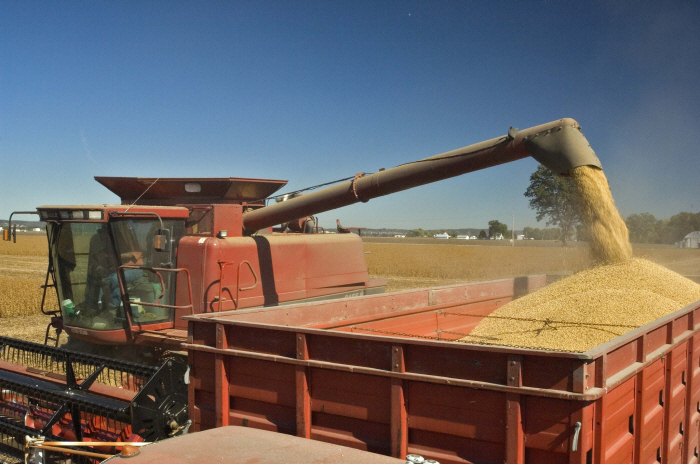
China is rapidly scaling up the use of fermented animal feed as part of a broader strategy to reduce its reliance on imported soybeans — a shift driven equally by trade tensions with the United States and long-term food security goals.
At pig farms across Taizhou's expansive floodplains, farmers like 47-year-old Gao Qinshan are already making the switch. By fermenting locally sourced ingredients such as brans, pumpkin vines, and wine lees, these farmers can cut soybean use in feed by up to 50%. The fermentation process breaks down proteins for easier digestion, reducing the need for costly high-quality soy. For Gao, the math is straightforward — feed makes up 70% of pig rearing costs, and soybean prices have surged due to U.S.-China trade tensions and Middle East instability.
China imported a record 111.8 million metric tons of soybeans in 2024, spending roughly $52.7 billion globally, with $12 billion flowing to the U.S. alone. Beijing accelerated its soymeal reduction program in early 2025 as trade friction escalated, treating agricultural self-sufficiency the same way it approaches semiconductor independence — as a national security priority.
The results are emerging across the entire supply chain. Muyuan Foods, the world's largest pig producer, has reduced soymeal content in feed from 10% to 7.3%. Dairy giants Yili and Mengniu have cut soymeal in cattle feed by 20%. Agribusiness firm New Hope Liuhe has even developed soy-free poultry feeds using fermented duckweed. Meanwhile, Dutch trading house Louis Dreyfus is building its first fermented feed facility in Tianjin, signaling growing international confidence in China's market.
Fermented feed now represents 8% of China's industrial feed — up from 3% in 2022 — and is projected to reach 15% by 2030. If achieved, that could reduce soybean imports by over 6%, reshaping global agricultural trade while challenging whether cost-cutting can coexist with quality meat production.







