


 Wall Street Ends Flat as Oil, Treasury Yields and Fed Jitters Rattle Markets
  Trump, Xi Focus on Trade and AI at White House Summit
  Oil Prices Ease as Iran Tensions Clash With Diplomacy Hopes
  U.S. 10-Year Treasury Yield Hits 2007 High as Fed Rate Hike Bets Rise
  Dollar Hits Two-Month High as Fed Rate Hike Bets Rise
  US Dollar Hits Two-Month High as Fed Rate Hike Bets Rise
  Oil Prices Jump 3% as Houthi Attack Revives Supply Fears
  China’s ‘Lipstick King’ Says AI Won’t Replace Livestream Hosts
  US, China Extend Trade Truce to Jan. 10 Ahead of Trump-Xi Summit
  Japan Private-Sector Growth Slows as Domestic Demand Weakens
  Gold Drops Over 1% as Dollar, Treasury Yields Surge on Fed Rate Hike Bets
  US 10-Year Treasury Yield at 6% Emerges as New Market Risk Threshold
  Gold Prices Fall as Treasury Yields Rise on Fed Rate Hike Bets
  European Stocks Slip as Iran Tensions Offset Strong Eurozone Data
  Asian Currencies Mixed as Dollar Holds Near Two-Month High
  Fed Unveils Stablecoin Rules Under GENIUS Act
  Russian Envoy Dmitriev Heads to US for Ukraine Talks


 Add as a preferred source on Google
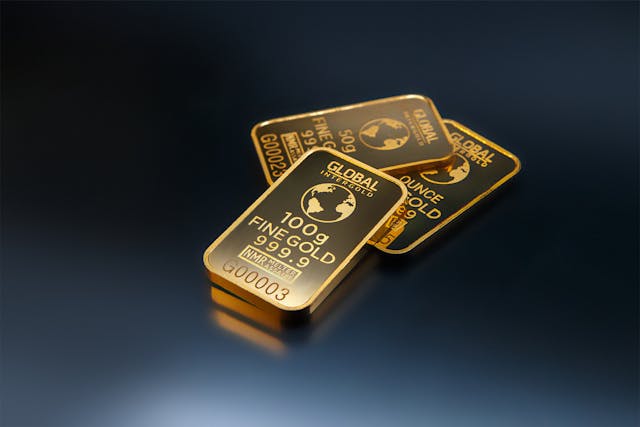
Gold prices continued their downward trend during Asian trading on Thursday, falling to their lowest level in more than seven months as a stronger U.S. dollar and growing expectations of additional Federal Reserve interest rate hikes reduced investor demand for the precious metal.
Spot gold declined 0.7% to $3,970.47 per ounce, while U.S. gold futures slipped 0.5% to $3,990.90. The decline pushed gold below the significant $4,000-per-ounce level for the first time since November 2025, marking another milestone in the metal’s recent weakness.
Since reaching an all-time high of $5,595.46 per ounce in January, gold has lost nearly 30% of its value. The sharp correction reflects changing market sentiment as investors increasingly favor the U.S. dollar amid expectations of tighter monetary policy.
The U.S. dollar remained near a 13-month high after recording six consecutive sessions of gains. Market participants are now pricing in roughly a one-third chance of a Federal Reserve rate increase in July and a 66% probability of another hike by September, according to CME FedWatch data. Higher interest rates typically weigh on gold prices because the metal does not generate interest or dividend income, making yield-bearing assets more attractive.
Analysts noted that investor attention has shifted away from traditional safe-haven assets and toward the impact of elevated interest rates and tighter financial conditions. At the same time, easing geopolitical tensions, including progress in U.S.-Iran peace discussions and weaker oil prices, have reduced demand for defensive assets such as gold.
Investors are now closely monitoring the upcoming U.S. Personal Consumption Expenditures (PCE) inflation report, the Federal Reserve’s preferred inflation gauge, for additional clues about future monetary policy.
Other precious metals also traded lower. Silver fell 1.7% to $56.44 per ounce after suffering a decline of more than 6% in the previous session. Despite an expected supply deficit, analysts believe some of silver’s strongest demand drivers are beginning to weaken. Platinum also extended losses, dropping 1.5% to $1,561.60 per ounce following a 4.5% decline in the previous trading session.
With the U.S. dollar remaining strong and expectations for further Fed tightening continuing to build, precious metals may remain under pressure until investors receive clearer signals on inflation and the future direction of interest rates.







