


 South Korea, US Discuss Warship Building Cooperation
  US 10-Year Treasury Yield at 6% Emerges as New Market Risk Threshold
  Wall Street Falls as Treasury Yields Surge, Oil Rebounds on Iran Tensions
  Netanyahu Defends Israel at UN as Delegates Stage Walkout
  Netanyahu Takes Aim at Mamdani as Israel Election Nears
  U.S. Dollar Hits Two-Month High as Oil, Treasury Yields Surge
  Netanyahu’s Brief US Trip Highlights Strains With Trump
  North Korea Rejects Nuclear Test Warning, Calls Nuclear Status Irreversible
  Oil Prices Ease as Iran Tensions Clash With Diplomacy Hopes
  US Officials Split Over Response to Israeli West Bank Settlements
  US Stock Futures Fall as Treasury Yields Surge Ahead of Trump-Xi Summit
  Asian Currencies Mixed as Dollar Holds Near Two-Month High
  US Invites Putin to Miami G20, Opening Door to Trump Summit
  Ghana Says Western Support Growing for Slave Trade Reparations
  European Stocks Slip as Iran Tensions Offset Strong Eurozone Data
  U.S. 10-Year Treasury Yield Hits 2007 High as Fed Rate Hike Bets Rise


 Add as a preferred source on Google
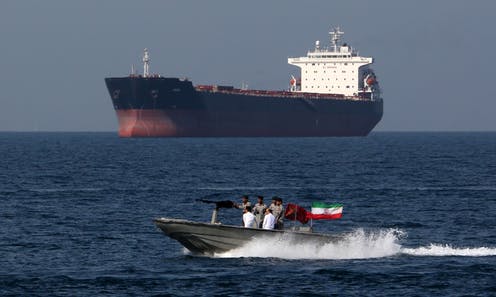
Global oil prices climbed on Thursday after Iran’s Islamic Revolutionary Guard Corps (IRGC) reportedly attacked a Singapore-flagged cargo vessel in the Strait of Hormuz, reigniting concerns over Middle East tensions and global energy supplies. The incident surprised investors who had anticipated a period of stability following a recent diplomatic agreement between the United States and Iran aimed at restoring peace and securing one of the world’s busiest shipping routes.
According to reports citing senior U.S. officials, the targeted vessel, the Ever Lovely, sustained damage to its bridge while sailing near the coast of Oman. The United Kingdom Maritime Trade Operations (UKMTO) confirmed that no crew members were injured and no environmental damage was reported. The attack occurred only hours after Iran’s paramilitary naval forces warned commercial vessels against using unauthorized routes through the strategic waterway.
The unexpected strike immediately boosted crude oil prices as traders rushed to factor renewed geopolitical risks into the market. Brent crude and U.S. West Texas Intermediate (WTI) futures both moved higher, reversing the recent decline that followed the U.S.-Iran peace agreement. Market participants now fear that renewed instability in the Strait of Hormuz could disrupt global oil shipments and tighten energy supplies.
The attack also casts doubt on the recently signed 60-day diplomatic agreement between Washington and Tehran. Under the deal, Iran pledged to help guarantee the safe passage of commercial ships through the Strait of Hormuz. In return, the United States eased restrictions on Iranian ports and relaxed key sanctions on Iranian oil exports, allowing the country to conduct crude oil transactions in U.S. dollars for the first time in decades.
Earlier this week, optimism had grown after the International Maritime Organization (IMO) announced efforts to coordinate safe evacuation routes for hundreds of commercial vessels stranded in the Persian Gulf. The initiative involved cooperation among Iran, Oman, the United States, and other regional partners.
However, Thursday’s attack has significantly weakened investor confidence and revived concerns about shipping security in the Strait of Hormuz. With the waterway handling a substantial share of global oil exports, any further escalation could increase market volatility, raise crude oil prices, and create additional uncertainty for the global economy in the coming weeks.







