


 NASA and Roscosmos Chiefs Meet in Florida to Discuss Moon and ISS Cooperation
  Is space worth the cost? Accounting experts say its value can’t be found in spreadsheets
  Tabletop particle accelerator could transform medicine and materials science
  Astronomers have discovered another puzzling interstellar object − this third one is big, bright and fast
  NASA Artemis II: First Crewed Moon Mission Since Apollo Takes Four Astronauts on 10-Day Lunar Journey
  Eli Lilly’s Inluriyo Gains FDA Approval for Advanced Breast Cancer Treatment
  Neuren Pharmaceuticals Surges on U.S. Patent Win for Rare Disorder Drug
  Blue Origin’s New Glenn Achieves Breakthrough Success With First NASA Mission
  Trump and Merck KGaA Partner to Slash IVF Drug Costs and Expand Fertility Coverage
  Cogent Biosciences Soars 120% on Breakthrough Phase 3 Results for Bezuclastinib in GIST Treatment
  Neuralink Expands Brain Implant Trials with 12 Global Patients
  SpaceX Pivots Toward Moon City as Musk Reframes Long-Term Space Vision


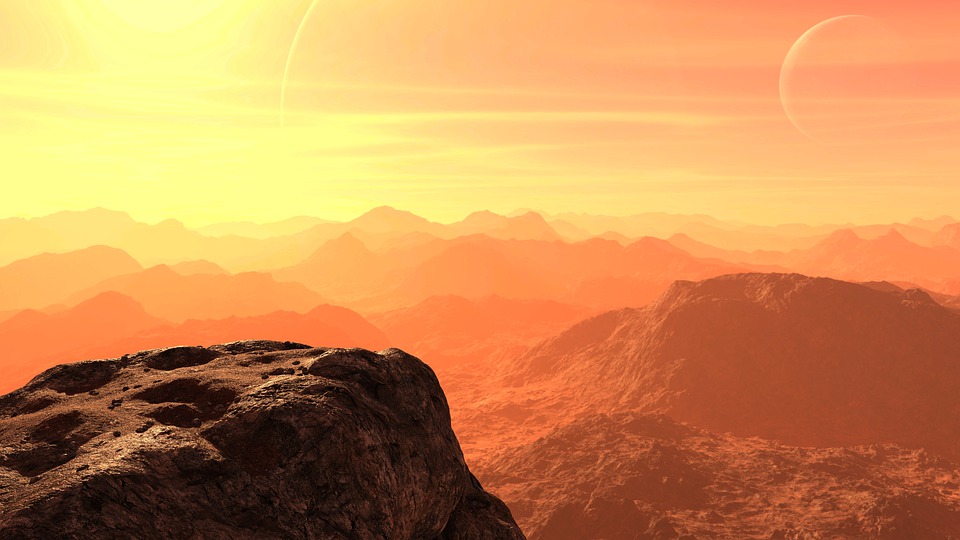
Ever since the possible discovery of life on Venus, scientists were reassured of the possibility of finding life on other planets, especially in the seemingly-inhabitable planet. An astronomer has now called for immediate action in the search for life on our neighboring planet.
Astronomer Mark A. Garlick weighed in on possible life forms on Venus and said that the search for extraterrestrial life should start from there. Garlick cited that Venus is easier to reach among the many possible places in the Solar System that could host life but have yet to be discovered. Garlick’s explanation follows the discovery of phosphine by a group of researchers from Cardiff.
“...among these worlds, it’s Venus that is easiest to reach,” said Garlick. “At an altitude of 50km, floating habitats would be the ideal launch pad from which to search for signs of life from the clouds. Perhaps our search for extraterrestrial cousins among the planets should begin there.”
It should be noted that Venus is believed to be uninhabitable due to its extreme temperatures. The planet’s atmospheric pressure measures 93 bar, similar to beneath 900 meters of water on Earth, and its sky behaves more like a fluid than a gas. This means that the planet is incredibly dense that its winds could move even small rocks. However, despite the extreme temperatures, Venus is seen as a “heat trap” on the surface as Dr. Garlick explained that at an altitude of 50 kilometers, Venus’ atmospheric pressure drops one bar which could be similar to a temperate day on Earth.
Aside from aliens on Venus, a study by NASA scientists found one quality of Jupiter’s moon Europa that may answer the question of whether or not the icy moon can also host life forms. They found that the salty compounds found in Europa produce a kind of glow when hit by radiation, but with the use of a spectrometer, they found that every ice composition they found had a different spectrum. In the varying spectrums that were found on the ice compositions, they believe that it is in the different spectrums that could shed light on whether Europa has the conditions suitable for life.







