


 Trump and Merck KGaA Partner to Slash IVF Drug Costs and Expand Fertility Coverage
  SpaceX Prioritizes Moon Mission Before Mars as Starship Development Accelerates
  FDA Pilot Program Eases Rules for Nicotine Pouch Makers
  Is space worth the cost? Accounting experts say its value can’t be found in spreadsheets
  Trump Administration to Launch Autism Initiatives Targeting Acetaminophen Use and New Treatment Options
  Lost in space: MethaneSat failed just as NZ was to take over mission control – here’s what we need to know now
  NASA and SpaceX Target Crew-11 Undocking From ISS Amid Medical Concern
  Eli Lilly’s Inluriyo Gains FDA Approval for Advanced Breast Cancer Treatment
  Neuralink Expands Brain Implant Trials with 12 Global Patients
  SpaceX’s Starship Completes 11th Test Flight, Paving Way for Moon and Mars Missions
  Astronomers have discovered another puzzling interstellar object − this third one is big, bright and fast
  Tabletop particle accelerator could transform medicine and materials science
  Blue Origin’s New Glenn Achieves Breakthrough Success With First NASA Mission


Along with exploring asteroids and other planets and phenomena in space, scientists are also looking for possible signs of life. In an effort to ultimately answer the question of whether or not we are alone in the universe, a group of experts claim to have developed the technology that could potentially help spot the presence of aliens in space.
A group of researchers recently claimed to have developed a kind of alien life-spotting device called the automated microchip electrophoresis analyzer. With this technology, they believe could be able to detect alien bio-signatures on the surfaces of other planets or meteors. This revelation comes after the discovery of a kind of gas called phosphine in the atmospheres of Venus. Phosphine is thought to be an indicator of alien life.
The general method of detecting alien life on the surfaces of other planets or celestial objects is by searching for a certain group of elements, thought to be the fundamental building blocks of life. This newly-developed device contains two microchips, one chip functioning to identify a liquid sample while the other chip will function in separating compounds from each other.
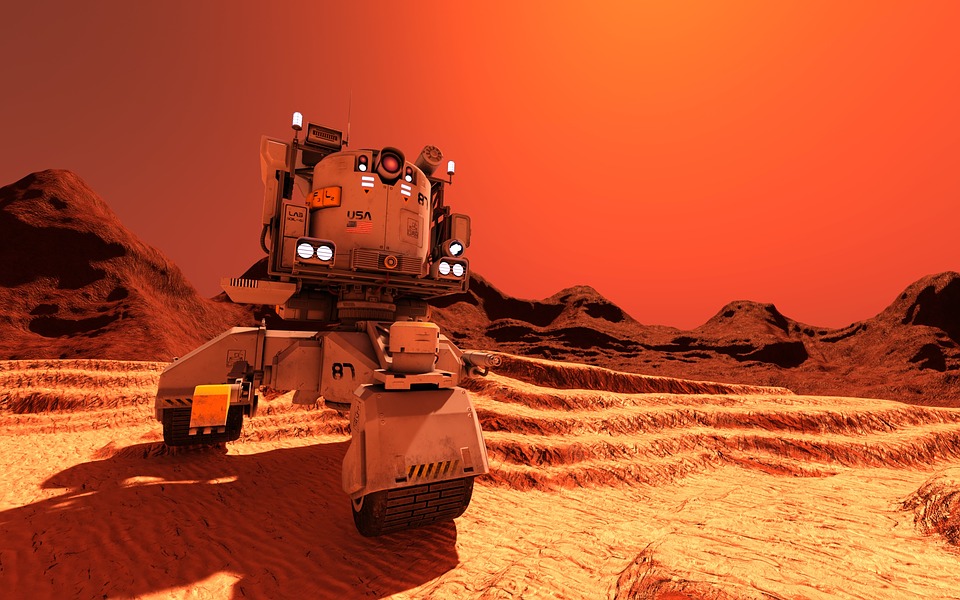
The researchers first tested this device on the Chilean desert, simulating a Mars mission. They included an analyzer to the water extractor of a remote-controlled rover based on NASA’s Curiosity Rover. The rover then drilled into the soil to collect samples which were sent to the extractor to be analyzed. Water was later added to the samples, then heat to extract the compounds. As a result, the machine was able to detect parts for every billion levels of amino acids in the soil from three of the four experiments they conducted.
Previously, another group of scientists were able to make a breakthrough as well. Researchers from the University of Warwick in the United Kingdom proposed a method called high-resolution electroscopy to be able to detect the presence of a fundamental element for life; water, or water vapors in the clouds of alien planets. This method was proposed following the challenge presented by clouds that may be present in exoplanets that keep probes or telescopes from looking past its atmospheres.







