


 China Conducts Live-Fire Drills Near Luzon as U.S.-Philippines Balikatan Exercises Expand
  DOJ Ends Probe Into Fed Chair Jerome Powell, Boosting Kevin Warsh Confirmation Prospects
  Trump Administration Dismisses Entire National Science Board, Sparking Debate Over Scientific Independence
  King Charles to Join NYC Mayor at 9/11 Memorial During U.S. State Visit
  King Charles and Queen Camilla Visit the U.S. Amid Political Tensions and Historic Milestone
  U.S. and EU Strengthen Critical Minerals Partnership to Reduce China Dependence
  Bennett and Lapid Unite to Challenge Netanyahu in Upcoming Israeli Election
  Strait of Hormuz Shipping Crisis Deepens as Traffic Plunges Amid Iran-U.S. Tensions
  US-Iran Tensions Rise as Nuclear Talks Stall and Strait of Hormuz Crisis Deepens
  White House Dinner Shooting Sparks Security Concerns and Succession Discussions
  Starmer Faces Political Pressure as Mandelson Appointment Controversy Impacts UK Markets
  Araqchi Leads Iran’s Diplomatic Push as U.S. Talks and Oil Market Tensions Rise
  US and Iran Clash at UN Over Nuclear Program and NPT Conference Role
  Bennett and Lapid Form Alliance to Challenge Netanyahu in Upcoming Israel Election
  U.S. Warns Allies Over Alleged Chinese AI IP Theft Linked to DeepSeek
  U.S. Budget Airlines Seek $2.5 Billion Government Aid Amid Rising Jet Fuel Costs
  White House Correspondents’ Dinner Shooting Raises New Security Concerns for U.S. Leaders


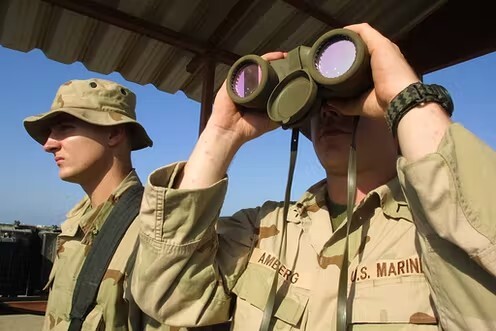
The United States is preparing to deploy approximately 200 troops to Nigeria to help train the country’s military in its fight against Islamist militant groups, according to a U.S. official. The deployment comes weeks after President Donald Trump ordered U.S. airstrikes on what he described as Islamic State-linked targets in Nigeria, signaling a possible expansion of American military involvement in West Africa.
The U.S. military confirmed last week that it had already sent a small team of troops to Nigeria, without disclosing exact numbers. This marked the first official acknowledgment of U.S. forces operating on the ground since airstrikes were carried out on Christmas Day. The additional 200 troops are expected to reinforce a limited U.S. presence already assisting Nigerian security forces with training, advisory support, and coordination.
President Trump has indicated that further U.S. military action in Nigeria remains possible. Reuters previously reported that U.S. surveillance flights have been conducted over Nigeria from neighboring Ghana since at least late November, highlighting Washington’s growing focus on the region’s security challenges. U.S. Africa Command has not yet commented publicly on the planned troop increase.
Nigeria has faced mounting pressure from Washington following accusations by Trump that the Nigerian government has failed to adequately protect Christian communities from Islamist militants operating primarily in the country’s northwest. Nigerian officials strongly reject claims of systematic persecution, emphasizing that military operations target armed groups responsible for violence against both Christians and Muslims.
Militant organizations including Boko Haram and Islamic State West Africa Province (ISWAP) have escalated attacks in recent months, targeting military convoys and civilians alike. The northwest remains a major hotspot in Nigeria’s 17-year-long Islamist insurgency, which has caused widespread displacement and insecurity.
With a population exceeding 230 million, Nigeria is nearly evenly split between Christians, who largely reside in the south, and Muslims, who dominate the north. The planned U.S. troop deployment underscores Washington’s strategic interest in stabilizing the region and supporting Nigeria’s efforts to combat extremist violence.







