


 King Charles to Join NYC Mayor at 9/11 Memorial During U.S. State Visit
  US Envoy Urges Taiwan to Approve Defense Budget Amid Rising China Tensions
  Iran Proposes Strait of Hormuz Reopening Deal Amid Stalled U.S. Talks
  U.S.-Iran Tensions Escalate as Strait of Hormuz Crisis Disrupts Global Oil Markets
  India Slams “Hellhole” Remark Linked to Trump Post, Reaffirms Strong US Relations
  U.S. Warns Allies Over Alleged Chinese AI IP Theft Linked to DeepSeek
  Strait of Hormuz Shipping Crisis Deepens as Traffic Plunges Amid Iran-U.S. Tensions
  China Conducts Live-Fire Drills Near Luzon as U.S.-Philippines Balikatan Exercises Expand
  Pope Leo Calls for Abolition of Death Penalty Amid U.S. Execution Policy Debate
  Bennett and Lapid Unite to Challenge Netanyahu in Upcoming Israeli Election
  Erdogan Condemns White House Correspondents’ Dinner Shooting, Voices Support for Trump
  Russian Drone Strike on Odesa Injures Civilians and Damages Key Infrastructure
  US-Iran Tensions Rise as Nuclear Talks Stall and Strait of Hormuz Crisis Deepens
  Federal Appeals Court Allows Texas SB4 Immigration Law Enforcement to Proceed
  U.S. and EU Strengthen Critical Minerals Partnership to Reduce China Dependence
  Trump Urges Iran to Call for Talks as War Stalemate Disrupts Oil Markets
  White House Correspondents’ Dinner Shooting Raises New Security Concerns for U.S. Leaders


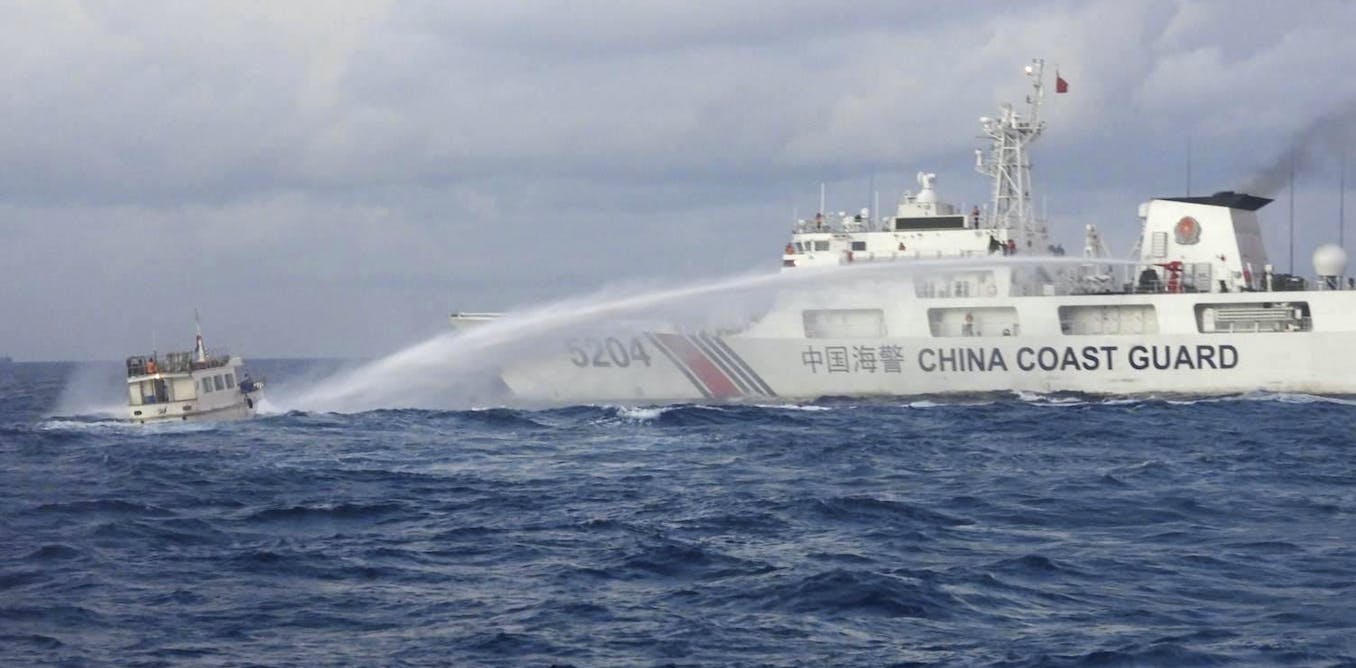
The Philippine Coast Guard (PCG) has deployed an aircraft to challenge a Chinese deep-sea research vessel spotted operating near the northern Philippines, underscoring rising maritime tensions in the West Philippine Sea and broader regional security concerns in the Asia-Pacific.
In a statement released Tuesday, the PCG said its aircraft was dispatched after the Chinese research ship, identified as the CRV Tan Suo Er Hao, was detected approximately 19 nautical miles off the coast of Cagayan province in northern Luzon. The vessel, which serves as a base for submersible operations, was observed inside the Philippines’ Exclusive Economic Zone (EEZ), raising concerns over possible unauthorized marine research activities.
According to the PCG, the pilot issued multiple radio challenges requesting the Chinese vessel to clarify whether it was conducting marine scientific research without Manila’s consent. Under Philippine law and international maritime conventions, foreign research activities within the country’s EEZ require prior authorization. The Chinese ship reportedly did not respond to any of the radio calls.
The 87.25-meter-long deep-sea research vessel had departed from China’s Hainan province earlier this month before entering the western portion of the Philippine EEZ. After initial detection near the Cagayan coast, the PCG continued monitoring the vessel as it moved eastward to about 55.8 nautical miles off Santa Ana, Cagayan.
Cagayan holds strategic importance as the northernmost province of Luzon and lies relatively close to Taiwan. The area also hosts one of nine Philippine military sites accessible to U.S. forces under the Enhanced Defense Cooperation Agreement (EDCA), adding a geopolitical dimension to the incident.
The PCG noted that the Chinese vessel was detected using Canada’s satellite-based Dark Vessel Detection system, a technology designed to track ships that may not be transmitting standard identification signals. The detection coincided with heightened regional tensions, as China conducted large-scale military drills around Taiwan, known as “Justice Mission 2025,” involving simulated strikes and blockades.
The Chinese Embassy in Manila has not yet issued a response regarding the incident. The encounter highlights ongoing concerns over maritime security, sovereignty, and freedom of navigation in Philippine waters amid increasing regional military activity.







