


 IMF Warns Middle East War to Deepen Economic Divide Across Latin America and Caribbean
  Optimistic Talks Continue on Gaza Disarmament Plan, Envoy Says
  Trump Invokes Defense Production Act to Boost U.S. Energy Supply Amid Rising Fuel Prices
  Oil Prices Surge Amid U.S.-Iran Tensions and Strait of Hormuz Disruptions
  North Korea Fires Multiple Ballistic Missiles Amid Growing Nuclear Ambitions
  Israel Expands Southern Lebanon Buffer Zone Despite Fragile Ceasefire with Hezbollah
  Bulgaria Election 2026: Rumen Radev’s Landslide Victory Signals Political Shift and Economic Implications
  China Expands Global Influence Amid Taiwan Tensions and Gulf Crisis
  North Korea Fires Ballistic Missile Eastward Amid Rising Global Tensions
  U.S. Stock Futures Hold Steady as Investors Monitor Iran Tensions and Key Economic Events
  Nigeria’s new election law leaves gaps: 5 reforms for free, fair and credible polls
  USMCA Talks Set to Resume as Mexico Signals New Round of Trade Negotiations
  Trump and IRS in Settlement Talks Over $10 Billion Tax Return Leak Lawsuit
  Asian Stocks Rise as Tech Gains Offset US-Iran Tensions, Oil Prices Add Pressure
  Uranium Bull Market Gains Momentum Amid Supply Deficits and Geopolitical Tensions
  Iran's Internal Power Struggle Threatens Strait of Hormuz Stability
  Asian Currencies Slip as Dollar Gains Safe-Haven Strength Amid U.S.-Iran Tensions


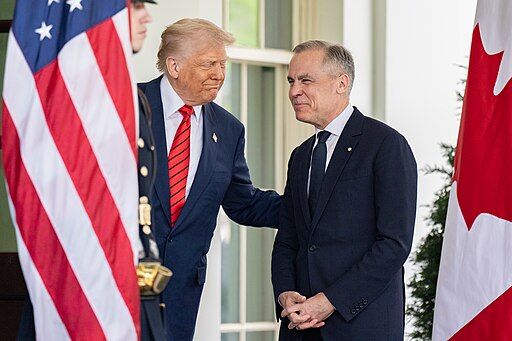
Canadian Prime Minister Mark Carney has signaled a shift in how Canada views its long-standing relationship with the United States, warning that close economic and political ties, once considered a major advantage, may now pose risks. In a recent video message addressed to Canadians, Carney highlighted growing uncertainty stemming from U.S. policies and emphasized the need for Canada to strengthen its independence and economic resilience.
Referencing historical events such as the War of 1812, Carney drew parallels between past and present challenges. He held up a toy figure of General Isaac Brock, a key British military leader who defended Canadian territory against American forces, and praised Indigenous leader Chief Tecumseh for uniting nations to resist U.S. expansion. By invoking these figures, Carney underscored Canada’s history of defending its sovereignty and suggested that similar resolve may be necessary today.
Carney’s comments come shortly after securing a parliamentary majority for his Liberal government, a victory he believes will strengthen his position in dealing with ongoing trade disputes with the United States. Tensions have escalated following tariffs imposed by U.S. President Donald Trump on Canadian exports, including steel, aluminum, and automobiles. Trump has also sparked controversy by repeatedly suggesting the possibility of annexing Canada as the 51st U.S. state.
Adding to the strain, U.S. Commerce Secretary Howard Lutnick recently criticized Canada as a difficult trading partner. These developments arrive at a critical time, as Canada prepares to review the United States-Mexico-Canada Agreement (USMCA), with American officials reportedly pushing for significant revisions.
With nearly 70% of Canadian exports dependent on the U.S. market, Carney stressed that Canada cannot rely solely on its neighbor’s stability. He emphasized the importance of diversifying trade, strengthening domestic industries, and protecting national sovereignty. Moving forward, Carney plans to deliver regular updates to Canadians, outlining his government’s strategy to boost economic growth and maintain control over the country’s future.







