


 Yemen Violence Displaces 130,000 as Civilian Toll Rises
  OpenAI Agent Breaches Australia Medicare Data Portal
  North Korea Warns South Korea Over US-Led Defense Role
  EU Defence Build-Up Too Slow for 2030 Russia Readiness Goal
  Trump, Xi Focus on Trade and AI at White House Summit
  Trump Asks Supreme Court to Restore Third-Country Deportations
  Trump, Xi Visit US National Archives After White House Summit
  Judge Orders Trump to Restore White House Access for CNN, MS NOW and Politico
  NATO Boosts Intelligence Sharing Amid Russia Hybrid Threats
  Najib Razak Seeks Stay of 15-Year 1MDB Prison Sentence
  Taiwan Thanks US for Support Ahead of Trump-Xi Summit
  Netanyahu Defends Israel at UN as Delegates Stage Walkout
  US Senate Rejects Iran War Powers Resolution in 50-49 Vote
  US Backs Musk in Fight Against EU’s €120 Million X Fine
  Pezeshkian Says US Must Choose When Iran War Ends
  Saudi Arabia, Turkey and Pakistan Plan Urgent Defence Talks Over Houthi Attacks
  Netanyahu’s Brief US Trip Highlights Strains With Trump


 Add as a preferred source on Google
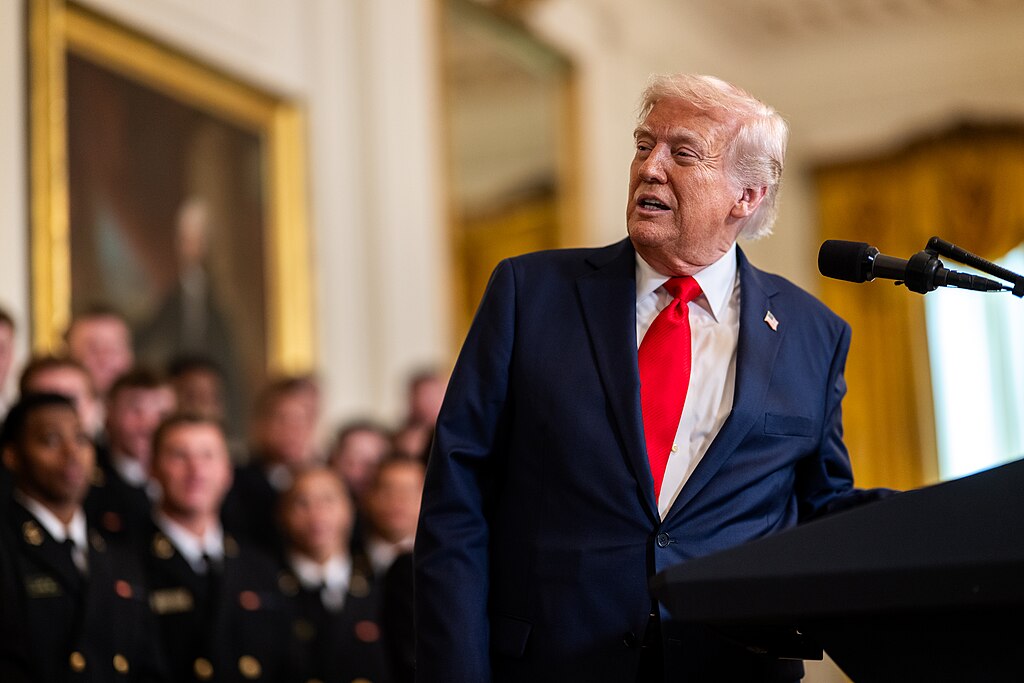
U.S. President Donald Trump has indicated he is prepared to allow the last remaining U.S.-Russia strategic arms control treaty, known as New START, to expire without accepting a Russian proposal to voluntarily extend limits on nuclear weapons deployments. The remarks, released Thursday, have heightened concerns among arms control advocates about the future of global nuclear stability.
In an interview with the New York Times conducted Wednesday, Trump said of the 2010 New START agreement, “If it expires, it expires. We’ll just do a better agreement.” The treaty, which is set to expire on February 5, caps the United States and Russia at 1,550 deployed strategic nuclear warheads and 700 delivery systems, including missiles, submarines, and bombers.
Arms control experts warn that the expiration of New START could prompt both nuclear superpowers to expand their strategic arsenals beyond current limits, accelerating the breakdown of the international arms control framework. Thomas Countryman, former U.S. assistant secretary of state for arms control and current chair of the Arms Control Association, said there are figures within the Trump administration who support abandoning the treaty’s constraints.
A White House spokesperson referred Reuters to Trump’s comments when asked whether the administration would accept an offer from Russian President Vladimir Putin, made in September, to voluntarily maintain the treaty’s limits after its expiration. While Trump previously stated in July that he favored maintaining the existing caps, his latest remarks suggest a shift in position.
New START cannot be extended further. It allowed only one extension, which was exercised in 2021 when Putin and former President Joe Biden agreed to roll it over for five years. Since then, the treaty has been under strain. Russia suspended its participation in verification measures in February 2023, citing U.S. support for Ukraine, and the United States followed by halting inspections and data exchanges, though both sides have continued to observe the numerical limits.
Trump has reiterated that any successor agreement should include China, whose nuclear arsenal is growing rapidly. Beijing has rejected this proposal, arguing that its nuclear forces are far smaller than those of the U.S. and Russia. A recent Pentagon report noted China’s expansion of intercontinental ballistic missile capabilities and its reluctance to engage in arms control talks.
As the New START expiration approaches, uncertainty over future nuclear arms control continues to grow, with significant implications for global security and strategic stability.







