


 Scott Bessent Eyed as Trump’s New AI Czar
  Trump Scales Back Endangered Species Act Protections
  U.S. Stock Futures Rise Ahead of Trump-Xi Summit, Middle East Risks Weigh
  Oil Prices Rise as U.S.-Iran Talks Fuel Diplomacy Hopes
  Vietnam Stocks Join FTSE Emerging Market Indexes, Unlocking Billions in Foreign Investment
  Canada Unveils Bill to Fast-Track Major Resource Projects
  Vietnam, US Trade Deal Could Be Signed Soon, To Lam Says
  Asia Stocks Rise on AI Demand as Oil Eases
  US Plans Two New Military Bases in Greenland Under Arctic Deal
  US, Denmark and Greenland Set to Sign Arctic Security Deal
  Zelenskiy Warns Russia Preparing Major Attack on Ukraine
  Gold Prices Hold Steady Ahead of Trump-Xi Summit, Middle East Risks
  Taiwan Vows to Advance US Arms Sales Ahead of Trump-Xi Meeting
  Kremlin Says No Grounds Yet for Ukraine Peace Talks
  Burnham Eyes UK Leadership Role in AI Ahead of Trump Meeting
  Asian Stocks Mixed Ahead of Trump-Xi Meeting


 Add as a preferred source on Google
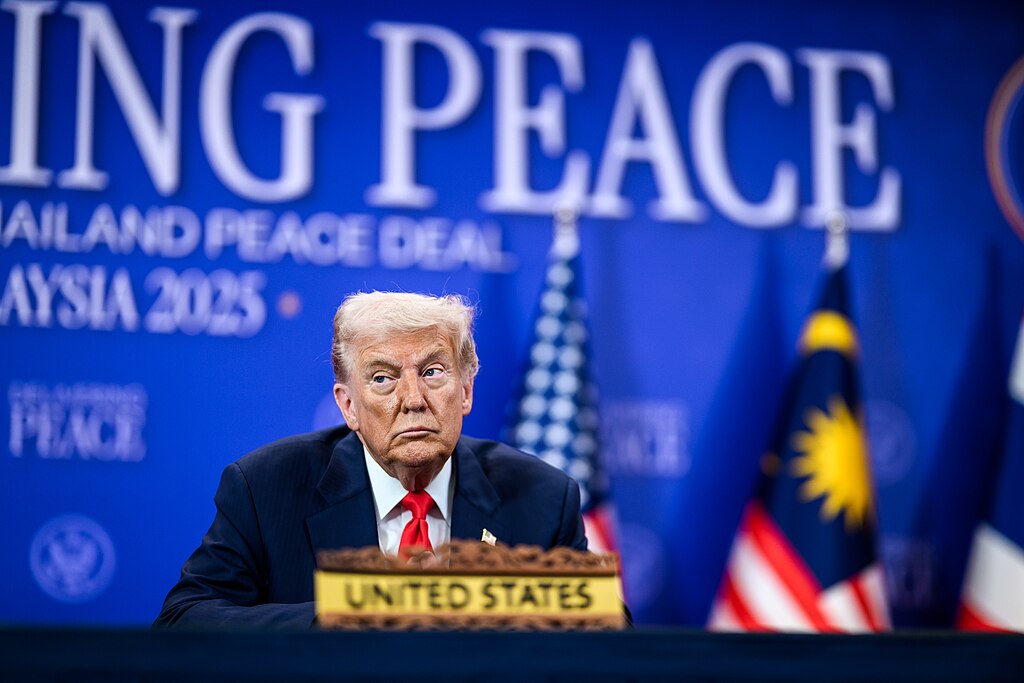
U.S. President Donald Trump has cast doubt on the future of the United States-Mexico-Canada Agreement (USMCA), saying the United States could perform better without the North American trade pact, although he remains open to signing a renewed version.
Speaking to reporters in France on Wednesday, Trump said he would prefer not to have the agreement but acknowledged that he may ultimately approve it. His remarks come as the United States, Mexico, and Canada face a July 1 deadline to either renew the trade deal or signal their intention to withdraw from it. A withdrawal process would take up to 10 years, allowing additional time for negotiations and potential revisions.
Current discussions are already underway. The Office of the U.S. Trade Representative is meeting with Mexican officials in Washington this week to address key issues, including agriculture and trade fairness. Another round of talks is scheduled to take place in Mexico City during the week of July 20.
Agricultural organizations are urging the Trump administration to extend the USMCA for another 16 years. Industry groups want continued duty-free trade for farm products, stronger protections for genetically modified corn, greater access for U.S. ethanol exports to Mexico, and improved entry into Canada’s tightly controlled dairy market.
The automotive industry is also advocating for a renewal. Matt Blunt, president of a trade group representing General Motors, Ford Motor, and Stellantis, said the agreement review presents an opportunity to strengthen North America's competitiveness against other automotive-producing nations that benefit from reciprocal trade agreements.
Since taking effect six years ago, the USMCA and its predecessor have helped create a highly integrated North American economy. The agreement supports nearly $1.6 trillion in annual trade among the three countries and remains a cornerstone of regional commerce.
Trade imbalances continue to be a major issue. In 2025, the United States recorded a $46 billion goods trade deficit with Canada and a $197 billion deficit with Mexico. Mexico has been the largest U.S. trading partner since 2023, with approximately 80% of Mexican exports destined for the U.S. market. Meanwhile, nearly 70% of Canadian exports are shipped south of the border. Together, Mexico and Canada purchase nearly one-third of all U.S. exported goods.
As negotiations continue, businesses and policymakers across North America are closely watching the future of the USMCA, which remains critical to regional trade, manufacturing, agriculture, and economic growth.







