


 Oil Prices Jump 3% as Houthi Attack Revives Supply Fears
  Gold Holds Near $4,275 as Rising Treasury Yields Fuel Fed Rate Hike Bets
  Trump, Xi Focus on Trade and AI at White House Summit
  Asian Stocks Fall as Surging Bond Yields Rattle Markets
  Fed Unveils Stablecoin Rules Under GENIUS Act
  Asian Currencies Mixed as Dollar Holds Near Two-Month High
  Gold Prices Fall as Treasury Yields Rise on Fed Rate Hike Bets
  European Stocks Fall as Bond Yields and Geopolitical Risks Weigh
  China’s ‘Lipstick King’ Says AI Won’t Replace Livestream Hosts
  Wall Street Falls as Treasury Yields Surge, Oil Rebounds on Iran Tensions
  South Korea, US Discuss Warship Building Cooperation
  US, China Extend Trade Truce to Jan. 10 Ahead of Trump-Xi Summit
  US 10-Year Treasury Yield at 6% Emerges as New Market Risk Threshold
  Fed Unveils Stablecoin Rules Under GENIUS Act
  Asian Stocks Fall as Bond Yields Surge Ahead of Trump-Xi Summit
  Japanese Bank Stocks Surge as Bond Yields Fuel Rate Hike Bets
  Russian Envoy Dmitriev Heads to US for Ukraine Talks


 Add as a preferred source on Google
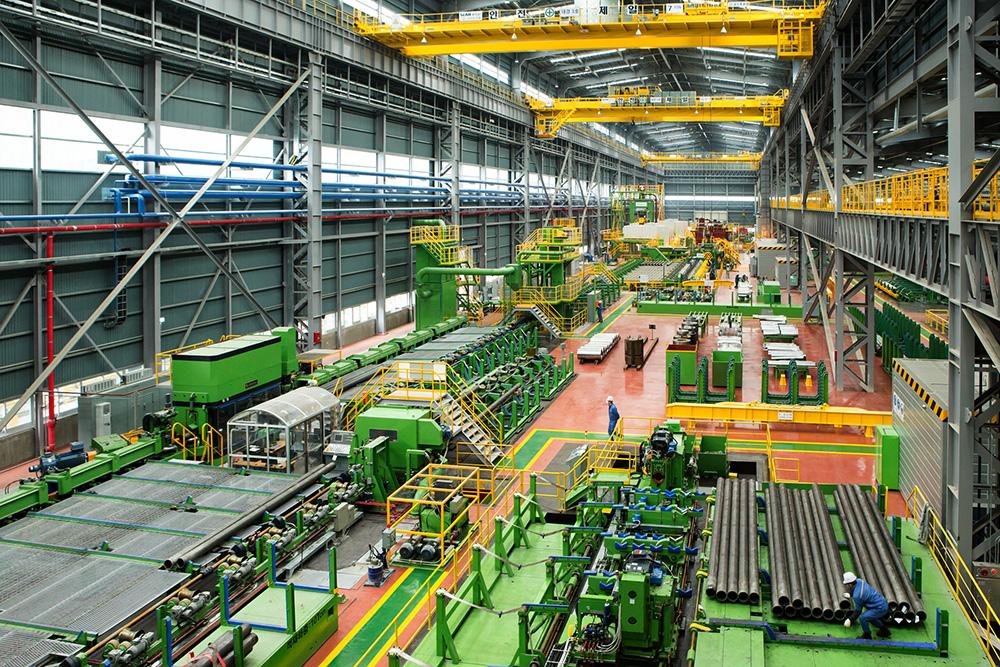
South Korea’s manufacturing sector showed its strongest momentum in nearly a year and a half in January, driven by a sharp rebound in export demand and improving business confidence, according to a private sector survey released Monday. The latest data signals a potential turning point for Asia’s fourth-largest economy after a period of slowing growth and weak global trade conditions.
The S&P Global Purchasing Managers’ Index (PMI) for South Korean manufacturers rose to 51.2 in January from 50.1 in December, marking the highest level since August 2024. A PMI reading above 50 indicates expansion, and January marked the second consecutive month the index remained in growth territory, a milestone not seen since August 2024. This sustained improvement suggests that factory activity is gaining traction after months of stagnation.
Manufacturing output increased for the first time in four months, while new orders expanded at the fastest pace since June 2024. Export orders were a key driver, posting their strongest growth since April 2021. According to the survey, demand improved notably across major markets including China, North America, and Europe, reflecting stabilizing global conditions and stronger overseas appetite for South Korean goods.
Manufacturers also expressed growing optimism about the year ahead, with business confidence reaching its highest level since May 2022. Companies cited new product launches, market diversification, and favorable conditions in strategic sectors such as automobiles and semiconductors as major factors supporting future growth. The global surge in artificial intelligence investment has particularly boosted demand for advanced chips, a cornerstone of South Korea’s export economy.
Despite this positive data, South Korea’s economy unexpectedly contracted in the final quarter of 2025, recording its steepest decline in three years due to weaker investment and exports. However, policymakers are increasingly confident about a recovery. The South Korean government recently raised its 2026 growth forecast to 2.0% from 1.8%, while the central bank has also signaled a possible upward revision to its outlook.
Additional PMI indicators reinforced the improving trend, with input purchases rising at the fastest pace since August 2024 and backlogs of work increasing to a 10-month high. Together, these signals point to strengthening demand and a more resilient manufacturing outlook for South Korea in the months ahead.







