


 Japan Private-Sector Growth Slows as Domestic Demand Weakens
  Australia Unemployment Hits Five-Year High Despite Strong Jobs Growth
  South Korea, US Discuss Warship Building Cooperation
  US, China Extend Trade Truce to Jan. 10 Ahead of Trump-Xi Summit
  US 10-Year Treasury Yield at 6% Emerges as New Market Risk Threshold
  Asian Stocks Fall as Bond Yields Surge Ahead of Trump-Xi Summit
  Wall Street Falls as Treasury Yields Surge, Oil Rebounds on Iran Tensions
  Dollar Holds Near Two-Month High as Yen Approaches 160
  Oil Prices Ease as Iran Tensions Clash With Diplomacy Hopes
  Trump, Xi Focus on Trade and AI at White House Summit
  Wall Street Ends Flat as Oil, Treasury Yields and Fed Jitters Rattle Markets
  Gold Holds Near $4,275 as Rising Treasury Yields Fuel Fed Rate Hike Bets
  Oil Prices Jump 3% as Houthi Attack Revives Supply Fears
  European Stocks Fall as Bond Yields and Geopolitical Risks Weigh
  Oil Prices Surge as U.S.-Iran Diplomacy Hopes Fade
  China’s ‘Lipstick King’ Says AI Won’t Replace Livestream Hosts


 Add as a preferred source on Google
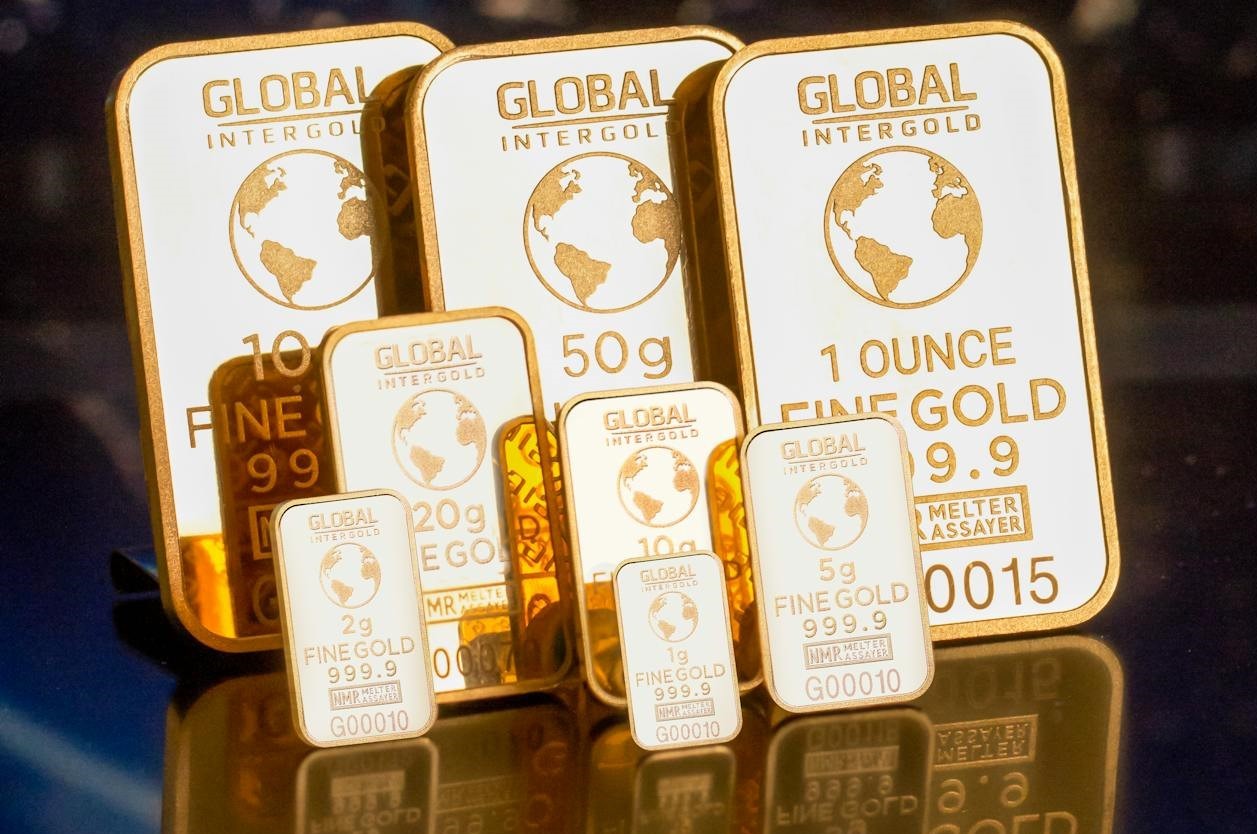
Gold prices steadied during early Asian trading on Monday after suffering steep losses last week, as investors reassessed the outlook for U.S. monetary policy, the strength of the U.S. dollar, and fading safe-haven demand. The precious metal market had been under heavy pressure following profit-taking at record highs and renewed confidence in broader financial markets.
Spot gold edged up 0.2% to $4,870.68 per ounce, while April gold futures surged nearly 3% to $4,886.31 per ounce. Despite this rebound, gold had erased nearly 10% of its value in the previous session, marking one of its sharpest single-day declines in decades. Prices also pulled back significantly from last week’s all-time high near $5,600 per ounce, reflecting the intensity of last week’s sell-off.
Other precious metals also showed signs of recovery after deep losses. Spot silver jumped almost 4% to $87.71 per ounce, while platinum prices stabilized around $2,159.79 per ounce. The broader metal market decline was largely driven by developments in U.S. monetary policy, particularly President Donald Trump’s nomination of Kevin Warsh as the next Federal Reserve Chair, set to take over after Jerome Powell’s term ends in May.
The nomination reduced policy uncertainty, which weakened gold’s appeal as a safe-haven asset and triggered widespread profit-taking. However, investors remain cautious, as Warsh is widely viewed as hawkish on inflation despite supporting lower interest rates. His skepticism toward large-scale asset purchases has raised concerns about a less accommodative Federal Reserve in the long run.
Analysts noted that extreme positioning in gold options markets amplified the sell-off, especially after gold’s strong rally through late 2025 and early 2026. A rebound in the U.S. dollar from a four-year low further pressured gold prices, as a stronger dollar typically weighs on commodities.
Still, gold remains up nearly 15% for January, supported by ongoing geopolitical uncertainty and long-term demand for safe-haven assets.







