


 Canada Unveils Bill to Fast-Track Major Resource Projects
  Scott Bessent Eyed as Trump’s New AI Czar
  Macron Challenges Trump’s Gaza Peace Claims at UN
  Trump Board of Peace Unveils $2.45 Billion Gaza Recovery Plan
  Europe Warns Russia Is Escalating Hybrid Attacks Across NATO
  Taiwan Vows to Advance US Arms Sales Ahead of Trump-Xi Meeting
  US Invites Putin to Miami G20, Opening Door to Trump Summit
  Russian Strikes Kill Eight Across Ukraine as Energy Sites Hit
  Kremlin Says No Grounds Yet for Ukraine Peace Talks
  Trump Says ‘Freedom’ Is Coming to Cuba
  South Korea, US Discuss Warship Building Cooperation
  Marco Rubio to Meet Russia’s Lavrov in New York
  Lula and Flavio Bolsonaro Tied in Brazil Runoff Poll
  Trump Says U.S.-Iran Peace Deal Near After UN Talks
  Macron, Trump Discuss Ukraine-Russia Energy Strike Moratorium
  Venezuela Promises Elections as Delcy Rodriguez Pledges Democratic Transition
  China Tightens Fentanyl Rules Ahead of Trump-Xi Summit


 Add as a preferred source on Google
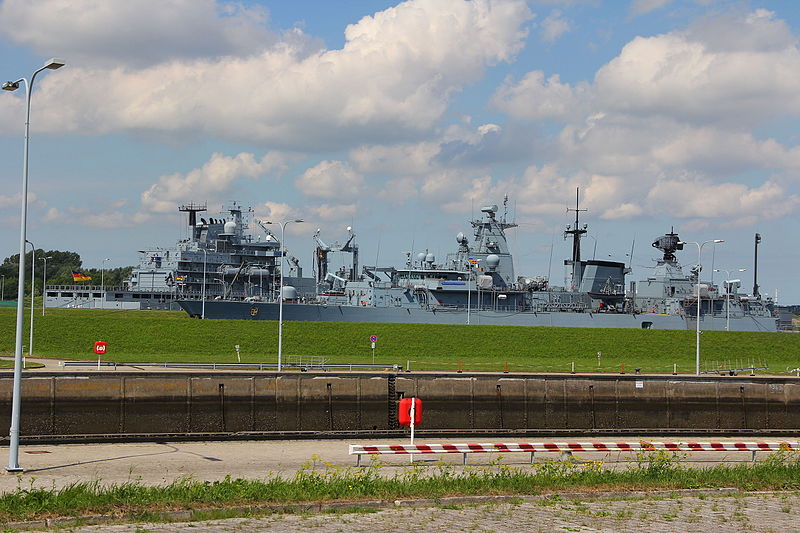
As tensions continue to mount over the South China Sea, other nations are poised to monitor the situation in an effort to prevent any full-scale war from happening. This time, Germany has now deployed a few warships into the waters for the first time in almost 20 years.
This week, Germany has deployed a warship into the South China Sea to go on a six-month mission in the Indo-Pacific. Germany’s foreign minister said that the move was to stand up for values and interests. It also comes as China insists on having sovereignty over the majority of the body of water, which an international tribunal has ruled against.
The warship called the Bayern left the Wilhelmshaven harbor with 200 soldiers on board. The ship is expected to pass through the South China Sea by December. German officials said that the ship will be adhering to common trade routes and that it is not expected to pass through the Taiwan Strait.
“The message is clear: We are standing up for our values and interests together with our partners and allies,” said Defense Minister Annegret Kramp-Karrenbauer to Reuters. “For our partners in the Indo-Pacific, it is a reality that sea routes are no longer open and secure, and that claims to territory are being applied by the law of might is right.”
“The Indo-Pacific is where the shape of the international order of the future will be decided,” said German Foreign Minister Heiko Maas. “We want to help shape it and take responsibility for the rules-based international order.”
Germany’s deployment of warships into the South China Sea follows the deployment of two UK warships that would be permanently stationed in the waters. Both countries are following the US, which has already built a naval presence in the body of water.
Meanwhile, in an interview with Express, UK Conservative MP and chair of the House of Commons Defense Select Committee Tobias Ellwood said that China does not actually want a military conflict despite its constant threats and constant boast of military strength, but there would be more of a conflict of political ideologies especially with western nations.
“Regarding military aggression, my concern is that China is not wanting to go to war, to have a battle, to be fighting in the old sense of the conventional terms,” said Ellwood. “My concern is that we are going to see a clash of political ideology. For example in the South China Sea, China is advancing its interests and it could then bump into Western interests. This is as we ourselves start to wake up and become less risk-averse in standing up for what we believe in.”







