


 France Defends Netanyahu Airspace Clearance Despite ICC Warrant
  US 10-Year Treasury Yield at 6% Emerges as New Market Risk Threshold
  Pezeshkian Says US Must Choose When Iran War Ends
  FDA Names Permanent Drug and Biologics Center Chiefs
  Yemen Violence Displaces 130,000 as Civilian Toll Rises
  US Judge Dismisses Imran Ahmed Deportation Lawsuit
  What ‘Taiwan Independence’ Means as Xi Presses Trump on US Policy
  North Korea Rejects Nuclear Test Warning, Calls Nuclear Status Irreversible
  Netanyahu Defends Israel at UN as Delegates Stage Walkout
  Xi Calls for Deeper U.S.-China AI Cooperation in Trump Talks
  ICE Agent Arrested in Minneapolis Over Venezuelan Man Shooting
  US Backs Musk in Fight Against EU’s €120 Million X Fine
  NATO Boosts Intelligence Sharing Amid Russia Hybrid Threats
  Oil Prices Ease as Iran Tensions Clash With Diplomacy Hopes
  South Korea, US Discuss Warship Building Cooperation
  Japan Private-Sector Growth Slows as Domestic Demand Weakens
  Trump Administration Removes Confederate Memorial Criticism From Arlington Website


 Add as a preferred source on Google
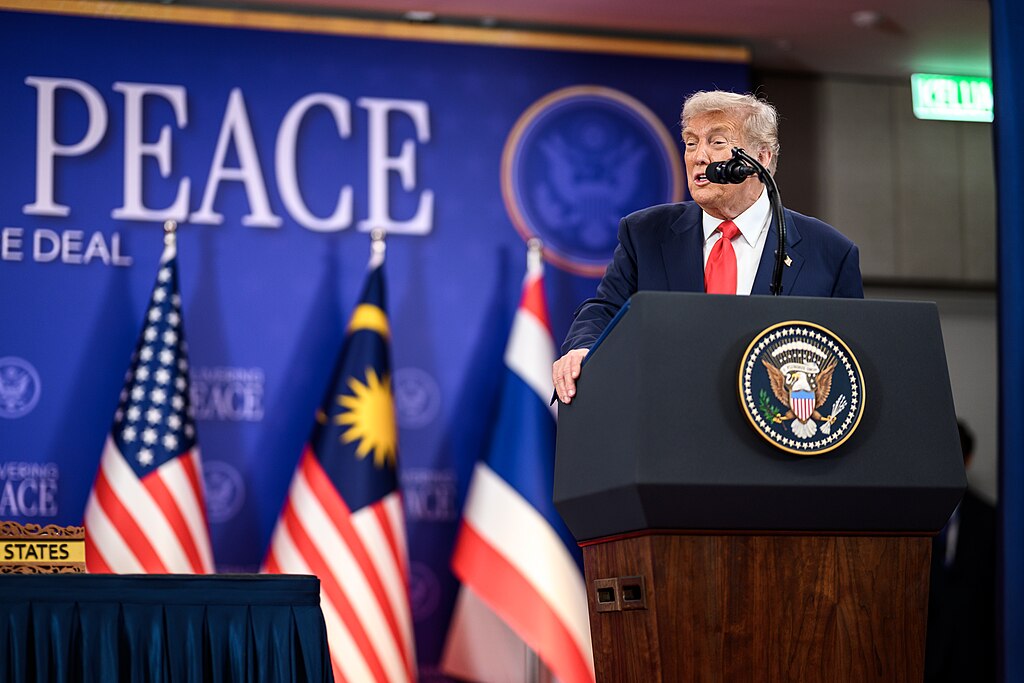
U.S. President Donald Trump has ordered a “total and complete blockade” of all sanctioned oil tankers entering and leaving Venezuela, dramatically escalating Washington’s pressure on President Nicolas Maduro’s government and directly targeting the country’s primary source of revenue. The announcement, made Tuesday on Trump’s Truth Social account, immediately rattled global energy markets and raised serious legal and geopolitical questions.
Trump justified the move by accusing the Venezuelan government of asset theft, terrorism, drug smuggling, and human trafficking, stating that the Maduro-led regime has been designated a foreign terrorist organization. However, it remains unclear how the blockade would be enforced, including whether the U.S. Coast Guard or Navy would be used to interdict vessels. The administration has already increased its military presence in the region, deploying thousands of troops and nearly a dozen warships, including an aircraft carrier.
Venezuela’s government swiftly rejected the announcement, calling it a “grotesque threat” and accusing the United States of imperialism and attempts to seize control of the country’s vast oil reserves. Tensions have been building since the U.S. seized a sanctioned tanker off Venezuela’s coast last week, effectively discouraging other vessels from loading oil. Venezuelan crude exports have since fallen sharply, worsened by a recent cyberattack that disrupted operations at state oil company PDVSA.
Oil prices reacted quickly. Brent crude rose more than 1% in Asian trading, while U.S. West Texas Intermediate crude also climbed over 1%, rebounding from its lowest close since February 2021. Market participants say prices are rising on expectations of reduced Venezuelan supply, though much depends on whether the blockade is fully implemented and whether non-sanctioned vessels are affected.
Legal experts warn the blockade could be considered an act of war under international law, while U.S. lawmakers have questioned Trump’s authority to take such action without congressional approval. Analysts estimate that if nearly one million barrels per day of Venezuelan crude are removed from the market and not offset by OPEC spare capacity, oil prices could rise by $5 to $8 per barrel, potentially fueling inflation and regional instability.
China, Venezuela’s largest oil buyer, and companies like Chevron, which operates under U.S. authorization, are closely watching developments as the standoff threatens to reshape global oil flows and deepen an already volatile crisis.







