


 NASA Resumes Cygnus XL Cargo Docking with Space Station After Software Fix
  Cogent Biosciences Soars 120% on Breakthrough Phase 3 Results for Bezuclastinib in GIST Treatment
  NASA Artemis II: First Crewed Moon Mission Since Apollo Takes Four Astronauts on 10-Day Lunar Journey
  Tabletop particle accelerator could transform medicine and materials science
  Blue Origin New Glenn Rocket Explodes During Launch Pad Test, Delaying Space Ambitions
  SpaceX’s Starship Completes 11th Test Flight, Paving Way for Moon and Mars Missions
  Trump and Merck KGaA Partner to Slash IVF Drug Costs and Expand Fertility Coverage
  FDA Adds Fatal Risk Warning to J&J and Legend Biotech’s Carvykti Cancer Therapy
  SpaceX Prioritizes Moon Mission Before Mars as Starship Development Accelerates
  Trump Administration Releases New UFO Files and Apollo Mission Records
  Trump Signs Executive Order to Boost AI Research in Childhood Cancer
  SpaceX Delays Starship V3 Launch Ahead of Potential Record IPO


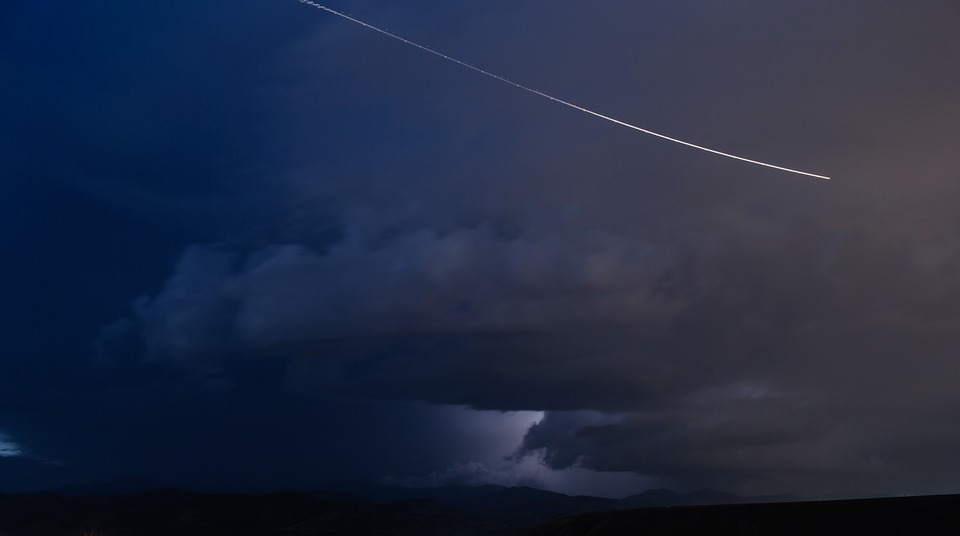
Not much is known about the incoming comet known as ATLAS, but scientists have recently kept tabs on this cosmic object as it gets closer to the sun. One observation was that the atmosphere of the comet has been growing the closer it gets.
Express reports that the comet ATLAS is moving closer and closer within the Solar System and towards the Sun. Although the actual size of the comet’s core is unknown, scientists noticed that the comet’s atmosphere was growing bigger and brighter. The estimated size of the entire body is likely several kilometers long, but the latest observations saw the comet’s core and atmosphere grow as large as 720,000 kilometers in diameter, making it half as wide as the Sun itself.
As to why or how it has been expanding over time, this is because the comet is leaving a trail of gas and debris behind as it leaves Mars’ orbit and towards Venus, passing by Earth in the process. According to Space Weather, the size of comet ATLAS falls between the Sun and Jupiter, making it a large cosmic object. “It’s not unusual for comets to grow so large. While their icy solid cores are typically mere kilometers in diameter, they can spew prodigious amounts of gas and dust into space, filling enormous volumes.”
The comet will be 0.25 astronomical units away from the Sun by May, and when it approaches the sun, it could be as bright as a waxing crescent moon as it is already as bright as an 8th or 9th magnitude star, which may still be too dim for the naked eye, but it is still brighter than predicted.
Previously, a study found that bodily fluids, such as urine, could be useful in building a base on the moon. According to the study, the urea found in urine, such as the urine from astronauts who would be sent to the moon, could be used to plasticize the concrete that will be used to build the structures on the Moon, resulting in the concrete becoming more flexible.
With this finding, the building materials that would be transported to the Moon in order to build a base would solve the logistical problems.







