


 China vs. NASA: The New Moon Race and What's at Stake by 2030
  Tabletop particle accelerator could transform medicine and materials science
  NASA's Artemis II Crew Arrives in Florida for Historic Moon Mission
  FDA Adds Fatal Risk Warning to J&J and Legend Biotech’s Carvykti Cancer Therapy
  Is space worth the cost? Accounting experts say its value can’t be found in spreadsheets
  SpaceX’s Starship Completes 11th Test Flight, Paving Way for Moon and Mars Missions
  Trump Administration to Launch Autism Initiatives Targeting Acetaminophen Use and New Treatment Options
  Eli Lilly’s Inluriyo Gains FDA Approval for Advanced Breast Cancer Treatment
  Neuralink Expands Brain Implant Trials with 12 Global Patients
  Trump and Merck KGaA Partner to Slash IVF Drug Costs and Expand Fertility Coverage
  SpaceX Pivots Toward Moon City as Musk Reframes Long-Term Space Vision
  SpaceX Delays Starship V3 Launch Ahead of Potential Record IPO


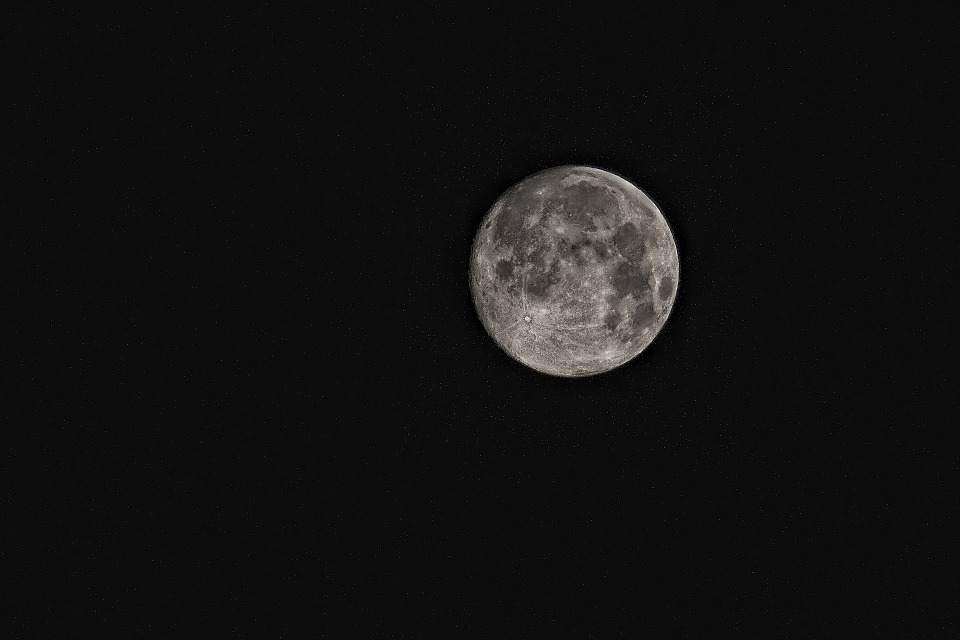
Back in February, scientists spotted a mini-moon around Earth’s orbit and predicted that it may not stay there very long. Recently, they have also confirmed that the mini-moon has now left.
The mini-moon found by astronomers back in February, referred to as 2020 CD3, was confirmed by astronomers to have left the Earth’s orbit. Spotted by researchers from the Catalina Sky Survey observatory, it has yet to be determined whether this mini-moon was simply an asteroid that got caught in the planet’s orbit or if it was a fragment from the moon itself. It is said to measure between three to six feet in diameter, making it a very small moon circling the planet. Astronomers had already revealed that CD3 was not going to stay within Earth’s orbit for very long as they have a very unstable orbit around the planet.
Although this may be the first time scientists paid close attention to CD3, scientists who have closely observed the mini-moon believe that it first entered the Earth’s orbit three years prior. CD3 is not the first mini-moon that circled Earth either as back in 2006, scientists found a near-Earth asteroid measuring nine meters in diameter circling the planet. This mini-moon was referred to as 2006 RH120, the asteroid was found to orbit the Sun, but RH120 was also known to approach Earth and the moon as well.
It was because of its constant close-approach, the gravitational pull captured RH120, and spent nine months orbiting the Earth before leaving in June of 2007.
Meanwhile, Express previously reported just how a scenario where the Earth would be pushed out of the Solar System would occur.
Although the chances of this happening are very, very slim, there is still a chance that it may happen, and according to researchers from Sharif University, it may be caused by a wandering star. According to Paul M. Sutter, “As a star nears the Solar System, it can start to change the orbit of the Earth. When the Earth and the interloper are near, our planet can get a little bit of energy, a gentle gravitational tug-of-the-leash from the foreign visitor.”
Sutter then explained the consequences that may occur should that happen. He explained that even as the Earth leaves the Solar System, not all life on the planet will die. “But we have to be really, really clever because almost all life on Earth derives its energy from the sunlight and photosynthesis.”







