


 Macron, Trump Discuss Ukraine-Russia Energy Strike Moratorium
  US Officials Split Over Response to Israeli West Bank Settlements
  US Invites Putin to Miami G20, Opening Door to Trump Summit
  Sudan Rejects US Legitimacy Remarks, Defends Sovereignty
  Scott Bessent Eyed as Trump’s New AI Czar
  Trump Says U.S.-Iran Peace Deal Near After UN Talks
  Burnham Eyes UK Leadership Role in AI Ahead of Trump Meeting
  Trump Board of Peace Unveils $2.45 Billion Gaza Recovery Plan
  Gaza Faces Evacuation Crisis as War-Damaged Buildings Risk Collapse
  US, China Extend Trade Truce to Jan. 10 Ahead of Trump-Xi Summit
  Trump Says ‘Freedom’ Is Coming to Cuba
  China Tightens Fentanyl Rules Ahead of Trump-Xi Summit
  South Korea, US Discuss Warship Building Cooperation
  Lula and Flavio Bolsonaro Tied in Brazil Runoff Poll
  Russian Envoy Dmitriev Heads to US for Ukraine Talks
  Russian Strikes Kill Eight Across Ukraine as Energy Sites Hit
  Taiwan Vows to Advance US Arms Sales Ahead of Trump-Xi Meeting


 Add as a preferred source on Google
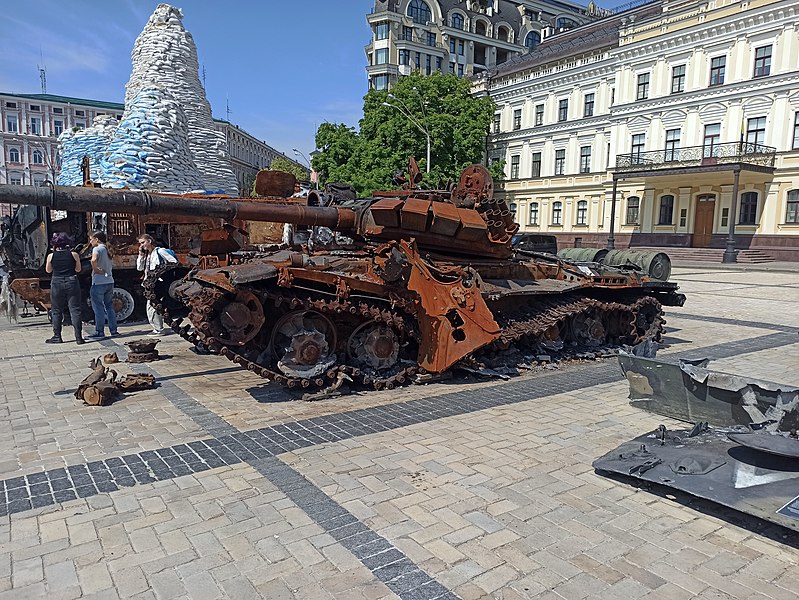
This week, Ukraine is set to commemorate its 31st year of independence from Soviet rule as well as defend itself in the sixth consecutive month of the ongoing war Russia has waged on the nation. Kyiv announced that independence day celebrations and rallies are not allowed in light of a potential Russian attack.
Kyiv this week banned independence day celebrations, citing a warning of US officials that Russia may plan an attack on the same day. Ukrainian President Volodymyr Zelenskyy has recently warned that Russia may attempt to do “something particularly ugly” in the midst of Ukraine’s celebrations of independence from the Soviet Union.
A US official also told Reuters this week that Russia was planning on increasing its offensive to target civilian infrastructure and government establishments in the coming days, based on obtained intelligence.
This led officials in the capital to ban public events related to Ukraine’s independence day from Monday to Thursday.
While Kyiv is far from the front lines where Russian forces have been bombarding Ukraine’s southern and eastern regions, it is rarely hit by Russian missiles when Ukraine launched a counteroffensive to Russia’s attempt on the ground to seize the capital back in March.
Other parts of Ukraine have also restricted public gatherings related to independence day. In the Russian-occupied Kharkiv, Mayor Ihor Terekhov announced an extended overnight curfew to be effective from Tuesday to Thursday.
In Mykolaiv in southern Ukraine, regional governor Vitaliy Kim said officials planned a precautionary order for residents to work from home on Tuesday and Wednesday and urged residents not to gather in large groups.
Meanwhile, Japanese Prime Minister Fumio Kishida told his cabinet ministers to continue with their diplomatic responses against Russia, including sanctions, while continuing to support Ukraine, in coordination with the G7 countries, according to Japanese finance minister Shunichi Suzuki Tuesday.
“We will continue to work closely with G7 and international community following the prime minister’s instructions and respond appropriately,” said Suzuki, who added that the ministers did not discuss any new sanctions to be imposed on Russia in line with the sanctions already imposed by the West.







