


 Rosenblatt Starts Nokia at Buy on AI Networking Growth
  Meta Partners With Shopify to Bring Shop Pay Checkout to Muse AI
  Trump Plans Federal AI Force and AI Czar
  US Northeast Airports Resume Operations After Telecom Outage Disrupts Thousands of Flights
  Cathie Wood Backs AI Slowdown as Safety Concerns Grow
  DOJ Will Investigate AI-Related Crimes, Attorney General Blanche Says
  Scott Bessent Eyed as Trump’s New AI Czar
  Big AI wants to slow down AI research. Is it a safety pause or a strategic retreat?
  Physicists zoom into the birth of cosmic rainstorms with new CERN study
  Burnham Eyes UK Leadership Role in AI Ahead of Trump Meeting
  Apple Pay Set for India Launch With Axis Bank
  OpenAI Urges US-Led Global Standards for Frontier AI
  SK Hynix, Intel Discuss U.S. Memory Chip Production Deal
  US Federal Register Drops Alibaba Qwen AI Search Tool
  Hyundai CEO Warns Chinese Automakers Could Disrupt US Market
  MediaTek Unveils 2nm Dimensity 9600 Pro AI Chip
  AI is supercharging money scams – here’s what you can do to protect yourself


 Add as a preferred source on Google
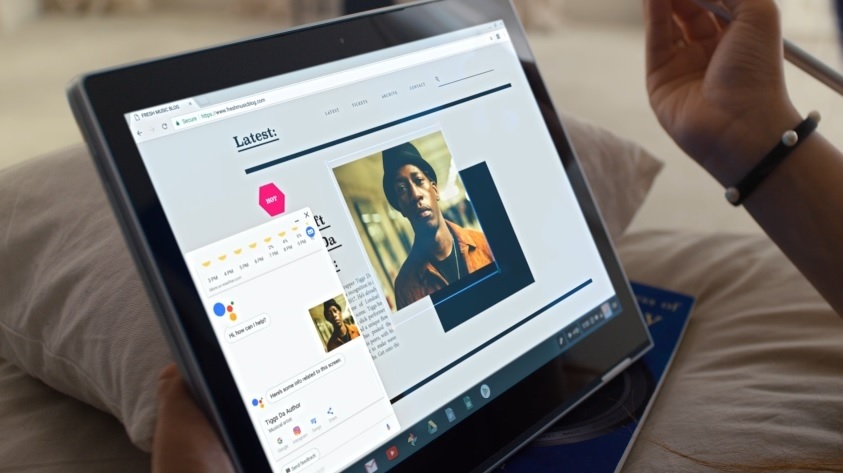
Chromebooks enthusiasts have been waiting for a while for Google to unveil the direct follow-up to its tablet-laptop hybrid that the rumor mill has been calling the Pixelbook 2. If a recent benchmark test result is to be believed, the company might just fulfill their wishes with a twist.
Pixelbook 2 release date, specs: What to expect
Google’s Chrome OS-powered devices have so far all been powered by Intel processors. But if the series of Geekbench tests are to be believed, the sought-after Pixelbook 2 might become the company’s first flagship Chromebooks with AMD Ryzen processors.
Four different devices, all named “Google Zork,” appeared on Geekbench this week all equipped with a 4-core Ryzen 7 3700C and a Radeon Vega graphics card. This is an interesting development considering that a device codenamed “Zork” was first reported last year by About Chromebooks.
Geekbench listings are typically good sources of information leaks about upcoming devices. However, Chromebook fans should still take this with a pinch of salt. Notebook Check suggests, considering all listings were posted on April 1, this might just be a convoluted way to prank those who have been wanting to see Pixelbook 2 happen.
On the other hand, it is also not far-fetched for Google to finally release a follow-up to the 2017 Pixelbook. It has been essentially delayed for two years now after the company opted to launch the Pixel Slate in 2018 and Pixelbook Go last year.
Why the 2019 Pixelbook Go is NOT the Pixelbook 2
With Samsung joining the Chromebook competition, Google might be finally convinced it is time to release the much-awaited Pixelbook 2 with premium specs and features that would rival the Galaxy Chromebook. In case Google is going to announce the Pixelbook 2 this year, the device might be unveiled sometime in fall along with other devices.
Tech fans should not be mistaken as the Pixelbook Go is not an ample replacement for the Pixelbook 2. For one, the Pixelbook Go lacks the 2-in-1 form factor that Google’s premium Chromebook introduced in 2017. As Pixelbook Go’s name suggests, it is Google’s way of introducing a device marketed toward people always on-the-go as it sports a lightweight design.







