


 Volkswagen Shares Slide After 2026 Profit Outlook Cut
  Synthetic data could ease people’s concerns about privacy breaches. But who gets to create it?
  Gold Slides to $4,262 as Hawkish Fed Rate Hike Triggers Technical Breakdown
  Prysmian, Rio Tinto Supply Low-Carbon Cables for Amazon Ohio Data Center
  FAA Allows Boeing to Sell 35 More 777F Freighters Beyond 2028
  Burnham Eyes UK Leadership Role in AI Ahead of Trump Meeting
  What is Zionism? The different meanings of a contested term
  Scott Bessent Eyed as Trump’s New AI Czar
  Trump Bans CNN, MS NOW and Politico From White House
  Novo Nordisk Weighs Direct NYSE Listing to Boost U.S. Profile
  Paramount Skydance Faces $30 Million Film Penalty in Warner Bros. Deal
  Qualcomm Gains on $60B Amazon AI Chip Deal
  Meta CEO Zuckerberg Backs Independent AI Safety Reviews Over Development Slowdown
  Trump Plans Federal AI Force and AI Czar
  SoftBank Launches $11 Billion Bond Sale to Fund OpenAI Investment


 Add as a preferred source on Google
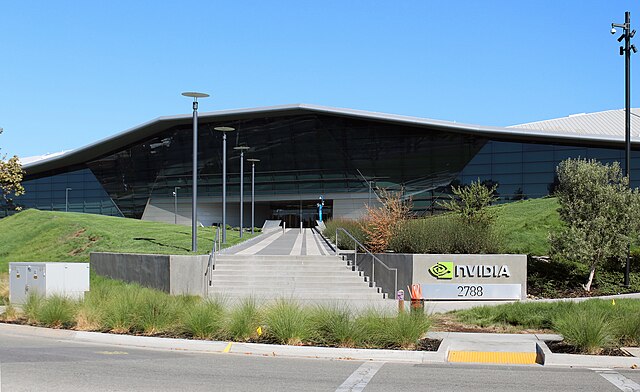
Morgan Stanley has raised its price targets for Nvidia and Broadcom following a series of industry meetings in Asia and the U.S. that highlighted accelerating AI demand and tightening semiconductor supply. Analysts noted that both companies are positioned for meaningful growth next year as customers face increasing challenges securing the AI hardware needed to support rapidly expanding workloads.
According to analysts led by Joseph Moore, Nvidia is expected to maintain its dominant share of the AI accelerator market, with competitive threats appearing “overstated.” The firm emphasized that the primary concern among customers is obtaining sufficient supply, particularly ahead of Nvidia’s upcoming Vera Rubin platform. With data center revenue projected to remain supply-constrained through 2026, Morgan Stanley now believes Nvidia is on track to reach revenue levels previously outlined by its management. The bank lifted its price target from $235 to $250, noting that while it still sits below CEO Jensen Huang’s highly publicized “$500 billion in five quarters” projection, momentum remains strong.
Broadcom also received an upgraded price outlook as demand for Google’s Tensor Processing Unit (TPU) ecosystem continues to strengthen. Suppliers across analog, memory, and ODM segments reported upward revisions to TPU unit builds, especially heading into 2027. Despite Google’s pursuit of a homegrown TPU developed with Mediatek—which Morgan Stanley cites as a potential long-term risk—the bank remains optimistic. It raised Broadcom’s target price from $409 to $443, supported by improved ASIC revenue forecasts of $27.2 billion in 2026 and $59.5 billion in 2027, alongside rising CoWoS output expectations.
The broader semiconductor landscape is experiencing severe strain across back-end and front-end capacity, including high-bandwidth memory and advanced 3- to 5-nanometer wafers. Cloud providers are adopting what analysts describe as a “gold rush mentality” in memory procurement. Meanwhile, general-purpose server CPU demand remains resilient, with AMD gaining market share as Intel struggles to expand supply. Additional industry tailwinds include progress at Astera Labs and minimal impact from China’s localization efforts on major U.S. chipmakers.







