


 Trump Says ‘Freedom’ Is Coming to Cuba
  US Invites Putin to Miami G20, Opening Door to Trump Summit
  Venezuela Promises Elections as Delcy Rodriguez Pledges Democratic Transition
  Vietnam, US Trade Deal Could Be Signed Soon, To Lam Says
  Macron, Trump Discuss Ukraine-Russia Energy Strike Moratorium
  US, China Extend Trade Truce to Jan. 10 Ahead of Trump-Xi Summit
  US Officials Split Over Response to Israeli West Bank Settlements
  Zelenskiy Warns Russia Preparing Major Attack on Ukraine
  Canada Unveils Bill to Fast-Track Major Resource Projects
  Scott Bessent Eyed as Trump’s New AI Czar
  Trump Administration Plans Faster FDA Reviews for Smoke-Free Nicotine Products
  South Korea, US Discuss Warship Building Cooperation
  China Tightens Fentanyl Rules Ahead of Trump-Xi Summit
  Gaza Faces Evacuation Crisis as War-Damaged Buildings Risk Collapse
  Trump Meets Venezuela’s Delcy Rodriguez at UN Assembly
  Trump Board of Peace Unveils $2.45 Billion Gaza Recovery Plan
  Trump Says U.S.-Iran Peace Deal Near After UN Talks


 Add as a preferred source on Google
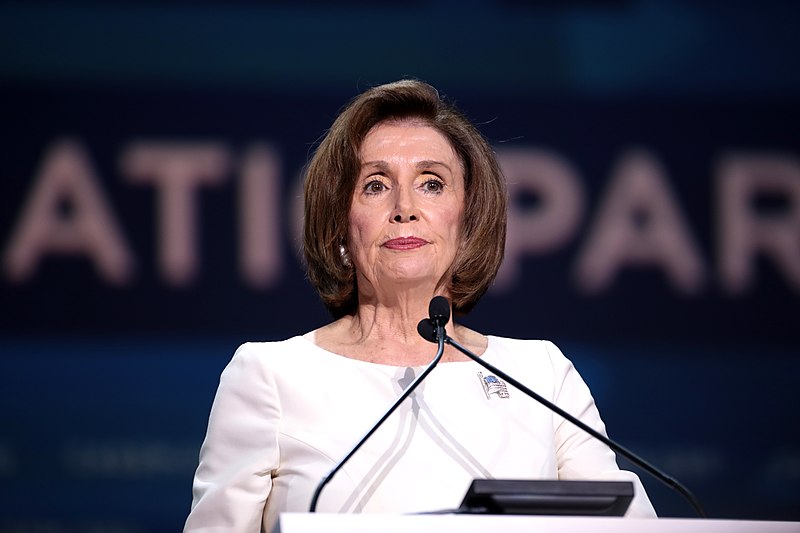
All eyes are on the House to vote on two major proposals that would put forth a big portion of US President Joe Biden’s agenda to the public. House Speaker Nancy Pelosi said that the House will not vote on a spending package higher than the $3.5 trillion budget resolution.
In a “Dear Colleague” letter, Pelosi said that the House will not vote on a spending package that would be higher than the $3.5 trillion proposal sent by Biden and the Senate Democrats. However, Pelosi noted that the respective panels in the House and the Senate are reviewing the bills for possible Byrd rule violations that could change the top-line number.
“The President and Senate Democrats sent us a budget resolution with a cap of $3.5 trillion. I have promised Members that we would not have House Members vote for a bill with a higher top-line than would be passed in the Senate. Hopefully, that will be at the $3.5 trillion number,” Pelosi said in the letter.
“Our legislation is being reviewed by the House and Senate Budget Committees for possible Byrd violation challenges in order to narrow our exposure in a Byrd bath. The House and Senate are already in agreement on most of the bills,” Pelosi added. “We must be prepared for adjustments according to the Byrd rule and an agreed to number.”
Pelosi’s letter follows internal debates among Democrats regarding the price tag for the budget resolution as some Democratic lawmakers are opposed to the $3.5 trillion price tag. Back in July, Senate Majority Leader Chuck Schumer and Senate Budget Committee chair Bernie Sanders announced that they reached a deal regarding the budget resolution proposal. The $3.5 trillion resolution would go into social programs as part of the Democratic-led infrastructure bill.
Meanwhile, Pelosi and the House Democrats introduced a bill this week that looks to limit presidential powers by addressing the list of complaints made against twice-impeached former president Donald Trump during his presidency. The bill, also known as the Protecting Democracy Act, would bring in reforms that would adjust the requirements and restrictions regarding the compliance with congressional subpoenas and pardons, as well as the independence of the inspector general, and transitions between presidential administrations among many others.
“Donald Trump made this legislation a necessity, but this is bigger than about any one particular president,” said Rep. Adam Schiff, who is the bill’s lead sponsor. “The former president trampled many of our sacred norms and institutions, violating laws, and breaking long-standing precedent with shocking ease.”







