


 Lula Meets Mamdani in New York as Elections Approach
  Trump Scales Back Endangered Species Act Protections
  Paramount-Warner Bros $110 Billion Deal Draws Antitrust Backlash
  US, Denmark and Greenland Set to Sign Arctic Security Deal
  Macron, Trump Discuss Ukraine-Russia Energy Strike Moratorium
  Vietnam, US Trade Deal Could Be Signed Soon, To Lam Says
  UK, Mauritius Seek Diego Garcia Base Deal
  China Tightens Fentanyl Rules Ahead of Trump-Xi Summit
  Burnham Eyes UK Leadership Role in AI Ahead of Trump Meeting
  Zelenskiy Warns Russia Preparing Major Attack on Ukraine
  Trump Meets Venezuela’s Delcy Rodriguez at UN Assembly
  Zelenskiy Meets CIA Chief John Ratcliffe at Ireland’s Shannon Airport
  Russian Strikes Kill Eight Across Ukraine as Energy Sites Hit
  Marco Rubio to Meet Russia’s Lavrov in New York
  Iran Vows ‘Crushing’ Response as US Talks Continue
  Trump to Press Xi on Release of US Nuclear Expert Held in China
  Taiwan Vows to Advance US Arms Sales Ahead of Trump-Xi Meeting


 Add as a preferred source on Google
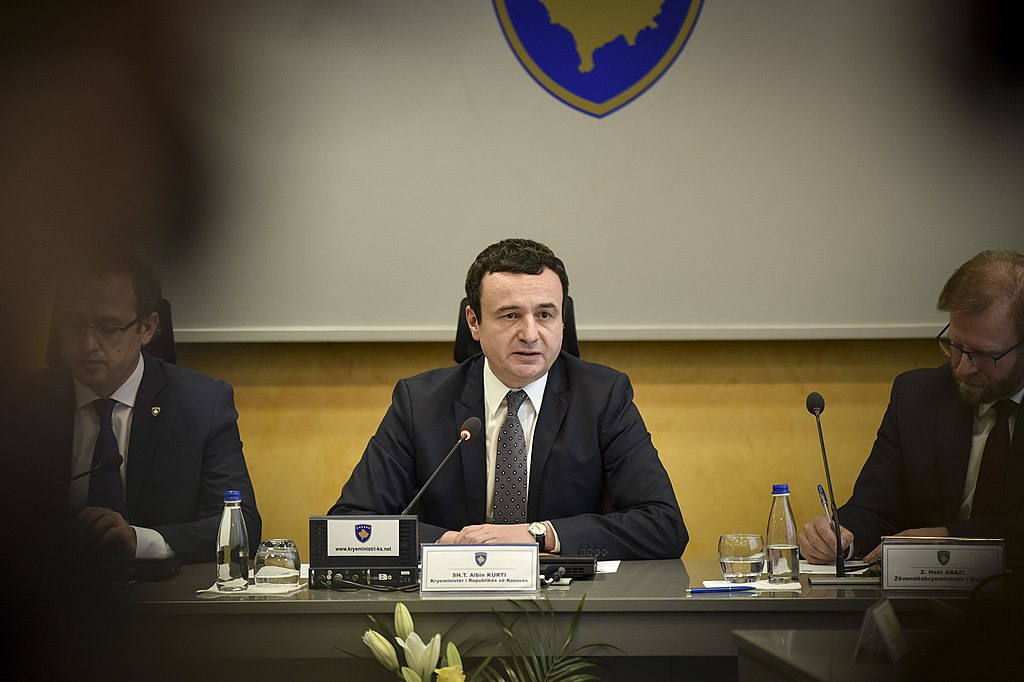
Prime Minister Albin Kurti’s Vetevendosje party emerged as the leading force in Kosovo’s 2026 parliamentary election, securing the largest share of votes but failing to obtain the outright majority needed to end the country’s prolonged political deadlock.
With nearly all ballots counted, official election results showed Vetevendosje receiving approximately 43% of the vote. While the result confirms the party’s dominant position in Kosovo politics, it leaves Kurti dependent on coalition partners to form a new government. The Democratic Party of Kosovo followed with around 21%, while the Democratic League of Kosovo captured roughly 18%.
The election marked Kosovo’s third parliamentary vote in just 18 months, highlighting the ongoing political instability in one of Europe’s youngest nations. The Balkan country has struggled to maintain a fully functioning government after deep divisions among political parties prevented lawmakers from electing a parliamentary speaker and a new president. The political impasse ultimately led to the dissolution of parliament and another snap election.
Despite winning a majority in previous elections, Kurti’s administration was unable to secure enough support to elect a president, a process that requires a two-thirds parliamentary majority. The latest result means political negotiations will once again be essential to establish a stable government and advance key reforms.
Voter turnout fell below 37%, compared with 45% in the previous election, reflecting growing frustration among citizens over repeated elections and ongoing political uncertainty. Many voters expressed hopes that political leaders would set aside differences and work together to improve governance and living standards.
Kosovo continues to pursue membership in the European Union, but political instability has slowed reform efforts and delayed access to important EU funding. The EU has repeatedly encouraged Kosovo’s leaders to strengthen democratic institutions and accelerate reforms necessary for future integration.
Since coming to power in 2021, Kurti’s Vetevendosje party has promoted a nationalist and welfare-focused agenda while maintaining a pro-Western foreign policy stance. The party remains opposed to making additional concessions to Serbia, keeping relations between the two countries strained despite ongoing international efforts to normalize ties.
More than 900 candidates from 17 political parties and three coalition groups competed for seats in Kosovo’s 120-member parliament. The election also highlighted the influence of Kosovo’s large diaspora community, many of whom live in Western Europe and have traditionally supported Kurti’s party.







