


 Netanyahu Takes Aim at Mamdani as Israel Election Nears
  Russian Envoy Dmitriev Heads to US for Ukraine Talks
  Taiwan Vows to Advance US Arms Sales Ahead of Trump-Xi Meeting
  Trump Administration Plans Faster FDA Reviews for Smoke-Free Nicotine Products
  South Korea, US Discuss Warship Building Cooperation
  US Invites Putin to Miami G20, Opening Door to Trump Summit
  Mexico-US Trade Talks Delayed to October as Tariff Negotiations Continue
  Europe Warns Russia Is Escalating Hybrid Attacks Across NATO
  Kremlin Says No Grounds Yet for Ukraine Peace Talks
  China Tightens Fentanyl Rules Ahead of Trump-Xi Summit
  US Officials Split Over Response to Israeli West Bank Settlements
  Lula and Flavio Bolsonaro Tied in Brazil Runoff Poll
  Taiwan Thanks US for Support Ahead of Trump-Xi Summit
  Trump Meets Venezuela’s Delcy Rodriguez at UN Assembly
  Marco Rubio to Meet Russia’s Lavrov in New York
  US, China Extend Trade Truce to Jan. 10 Ahead of Trump-Xi Summit
  Iran Vows ‘Crushing’ Response as US Talks Continue


 Add as a preferred source on Google
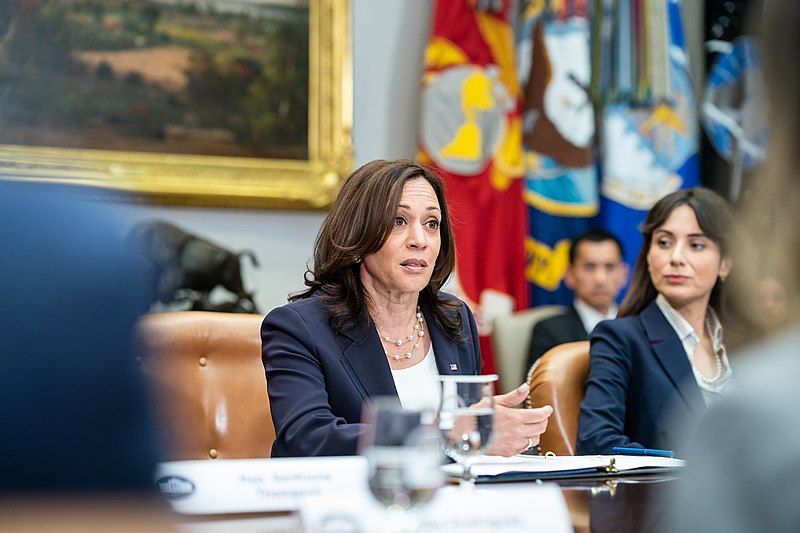
This coming week would be US Vice President Kamala Harris’s visits to Vietnam and Singapore as her second overseas engagement as vice president. Experts believe that her upcoming visits to the Southeast Asian region would help improve ties between the US and the countries within the continent.
Experts say that Harris’s upcoming visits as vice president following other diplomatic visits from the US will help President Joe Biden compete for influence in the region with China. A White House spokesperson revealed that Harris will be visiting the regional financial center in Singapore as well as Vietnam. Harris’s spokesperson Symone Sanders said that the vice president will be discussing climate change, security, the pandemic, and the efforts in the rules-based international order.
Harris is the next US figure to reach out to Southeast Asia following Defense Secretary Lloyd Austin’s visits to Singapore, Vietnam, the Philippines, and Secretary of State Antony Blinken’s virtual meeting with his counterparts in a summit with the Association of Southeast Asian Nations.
The “rules-based international order” is often used by US officials to refer to advocating a free and open South China Sea. China has claimed sovereignty over the majority of the waters, but an international tribunal ruled against the claims citing the lack of legal basis. China’s claim also overlaps with the claims of the surrounding countries over parts of the waters dubbed their Exclusive Economic Zones.
Biden’s policy, according to Asia-Pacific Pathways to Progress Foundation research fellow Aaron Rabena is “meant to coordinate policies in a way, like make sure they are aligned with the US agenda in the region, and the exploration of further areas of cooperation.”
Another expert has said that the Southeast Asian nations will eventually ask for a more concrete commitment from the US than what the Biden administration is presenting so far.
Meanwhile, Reuters reports that Mexico will be receiving 1.75 million doses of the Moderna COVID-19 vaccine from the US in the coming weekend, according to Mexican Foreign Minister Marcelo Ebrard. The announcement follows Mexico’s authorization of the vaccine for emergency use.
This follows last week’s announcement by the Mexican government that Harris had promised to send 3.5 million Moderna vaccine doses and an additional five million AstraZeneca doses.







