


 US Invites Putin to Miami G20, Opening Door to Trump Summit
  Venezuela Promises Elections as Delcy Rodriguez Pledges Democratic Transition
  US Officials Split Over Response to Israeli West Bank Settlements
  US, China Extend Trade Truce to Jan. 10 Ahead of Trump-Xi Summit
  Mexico-US Trade Talks Delayed to October as Tariff Negotiations Continue
  China Tightens Fentanyl Rules Ahead of Trump-Xi Summit
  OpenAI Agent Breaches Australia Medicare Data Portal
  Zelenskiy Warns Russia Preparing Major Attack on Ukraine
  Trump Meets Venezuela’s Delcy Rodriguez at UN Assembly
  Lula and Flavio Bolsonaro Tied in Brazil Runoff Poll
  Russian Envoy Dmitriev Heads to US for Ukraine Talks
  Macron Challenges Trump’s Gaza Peace Claims at UN
  Sudan Rejects US Legitimacy Remarks, Defends Sovereignty
  Trump Says ‘Freedom’ Is Coming to Cuba
  Russian Strikes Kill Eight Across Ukraine as Energy Sites Hit
  Judge Orders Trump to Restore White House Access for CNN, MS NOW and Politico
  Europe Warns Russia Is Escalating Hybrid Attacks Across NATO


 Add as a preferred source on Google
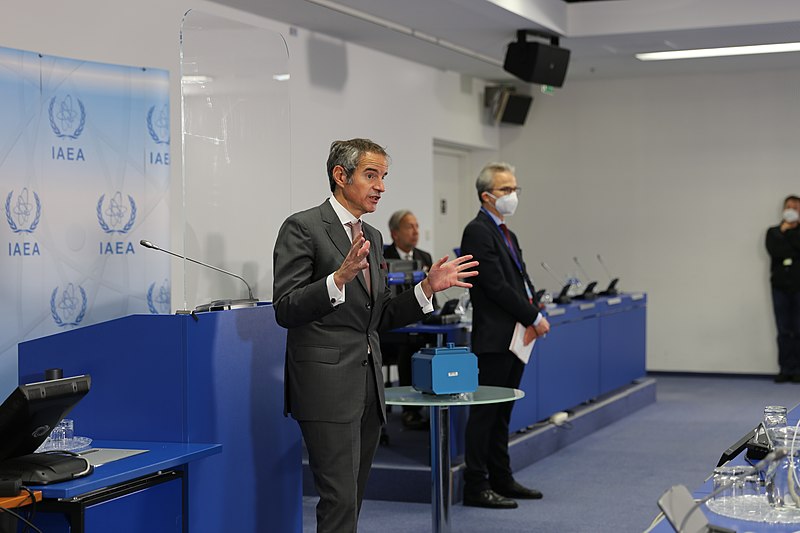
Talks between Iranian officials and Western powers regarding the revival of the 2015 nuclear deal appear to be reaching an end, with some signs of a breakthrough. Iranian officials recently held discussions with the UN’s atomic watchdog IAEA as an agreement between both sides appears to be on the horizon.
International Atomic Energy Agency Director-General Rafael Grossi met with Iranian Foreign Minister Hossein Amir Abdollahian and Iran’s nuclear chief Mohammad Eslami in Tehran Tuesday. The main agenda for both sides during the meeting was regarding Iran’s nuclear program and the safeguards of the watchdog’s probes. This included the sites where undeclared radioactive materials were found years back.
Following the meeting, Grossi told reporters that even with the issues regarding IAEA’s safeguards and the Joint Comprehensive Plan of Action being parallel with each other, both are closely related. However, both Grossi and Eslami showed signs of understanding mutual cooperation on the matter.
“It would be difficult to imagine that such an important return to such a comprehensive agreement like JCPOA would be possible if the agency and Iran would not see eye-to-eye on how to resolve these important safeguards issues,” said Grossi.
Eslami said the agency would be provided with documentation on the “remaining issues” by the third Iranian calendar month, which would be in late May.
Iran has long maintained that its nuclear program is to be used for peaceful purposes, with no intention of developing an arsenal of nuclear explosives. Tehran said that the issue of potential military dimensions of its nuclear program should be put to rest as it had already been resolved in the original JCPOA discussions.
Despite an agreement and a revival of the 2015 nuclear deal appearing to draw near, the current crisis in Ukraine as Russia continues its offensive. With Russia’s invasion of Ukraine drawing sets of sanctions and widespread condemnation, Tehran recently made clear that it will not allow foreign powers to impact national interests.
This follows the comments by Russian Foreign Minister Sergey Lavrov, saying that the West must present a written guarantee that the sanctions on Russia will not hinder its trading and cooperation with Iran.







