


 Russian Envoy Dmitriev Heads to US for Ukraine Talks
  Taiwan Thanks US for Support Ahead of Trump-Xi Summit
  US Officials Split Over Response to Israeli West Bank Settlements
  Judge Orders Trump to Restore White House Access for CNN, MS NOW and Politico
  China Tightens Fentanyl Rules Ahead of Trump-Xi Summit
  Trump Board of Peace Unveils $2.45 Billion Gaza Recovery Plan
  Trump Administration Plans Faster FDA Reviews for Smoke-Free Nicotine Products
  Iran Vows ‘Crushing’ Response as US Talks Continue
  Trump Meets Venezuela’s Delcy Rodriguez at UN Assembly
  Macron Challenges Trump’s Gaza Peace Claims at UN
  Trump to Press Xi on Release of US Nuclear Expert Held in China
  Kremlin Says No Grounds Yet for Ukraine Peace Talks
  Zelenskiy Warns Russia Preparing Major Attack on Ukraine
  Europe Warns Russia Is Escalating Hybrid Attacks Across NATO
  Russian Strikes Kill Eight Across Ukraine as Energy Sites Hit
  Ghana Says Western Support Growing for Slave Trade Reparations
  Taiwan Vows to Advance US Arms Sales Ahead of Trump-Xi Meeting


 Add as a preferred source on Google
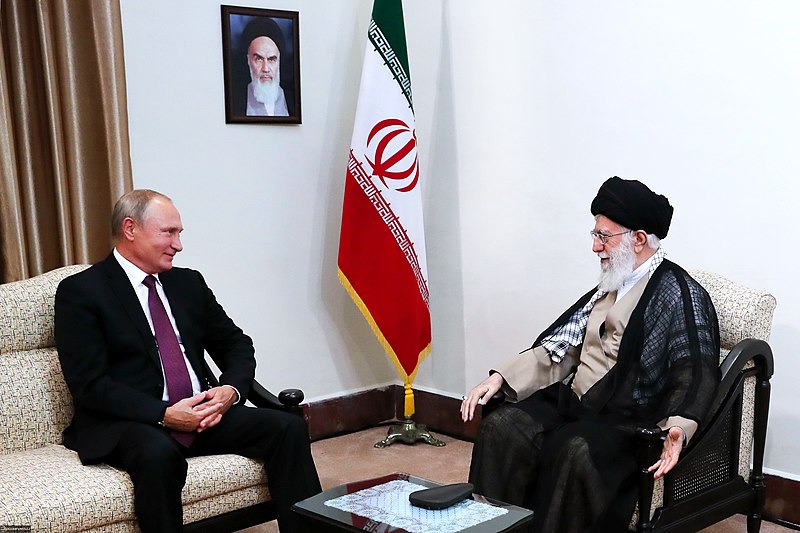
Many countries have condemned the invasion of Ukraine as Russian dictator Vladimir Putin continues to wage war on the democratic nation. Iran has also opposed the conflict, but according to its Supreme Leader Ali Khamenei, the policies of the West have brought on the current crisis.
In a televised speech Tuesday, Khamenei touched on the ongoing crisis in Ukraine, as Russian troops continue to attempt invading Ukraine but are met with fierce resistance from Ukrainian troops and civilians.
The Iranian leader said that the country opposes the military conflict but pinned the blame of the crisis on the policies of the US and the West, saying that Ukraine has become a “victim” to such policies.
Khamenei said that the “mafia regime” of the US has brought on a lot of tensions in the world. The Iranian leader cited the creation of the Islamic State militant group or ISIS and intervening in the affairs of other countries, such as forcing regime changes and installing pro-West politicians in power. Khamenei did not mention Russia in his remarks in his one-hour speech.
Khamenei went on to say that there are two lessons to be learned from the ongoing crisis in Ukraine by governments and people around the world: The importance of popular support and that the West cannot be trusted. Khamenei described the support for pro-western politicians and administrations as a “mirage.”
The Iranian leader went on to claim that if the Ukrainian people fully supported their government, they would not be in their current situation today.
Khamenei’s remarks, pinning the blame of the Ukraine crisis on the West, echo the statement released by the Iranian foreign ministry. Iran’s foreign minister Hossein Amir Abdollahian said his first reaction shortly when Russia took the step to invade Ukraine was that it was“rooted in NATO’s provocations.”
Amir Abdollahian tweeted that Iran does not think war is a solution and called for an immediate ceasefire to find a “political and democratic solution” to the conflict. Foreign ministry spokesperson Saeed Khatibzadeh said, “the Eurasia region is on the verge of entering a pervasive crisis” due to the NATO movements led by the US.







