


 Trump Meets Venezuela’s Delcy Rodriguez at UN Assembly
  Gaza Faces Evacuation Crisis as War-Damaged Buildings Risk Collapse
  Sudan Rejects US Legitimacy Remarks, Defends Sovereignty
  US Invites Putin to Miami G20, Opening Door to Trump Summit
  Zelenskiy Warns Russia Preparing Major Attack on Ukraine
  US, China Extend Trade Truce to Jan. 10 Ahead of Trump-Xi Summit
  Russian Envoy Dmitriev Heads to US for Ukraine Talks
  China Tightens Fentanyl Rules Ahead of Trump-Xi Summit
  US Officials Split Over Response to Israeli West Bank Settlements
  Trump Administration Plans Faster FDA Reviews for Smoke-Free Nicotine Products
  Marco Rubio to Meet Russia’s Lavrov in New York
  Venezuela Promises Elections as Delcy Rodriguez Pledges Democratic Transition
  Macron Challenges Trump’s Gaza Peace Claims at UN
  Trump Says ‘Freedom’ Is Coming to Cuba
  Trump Board of Peace Unveils $2.45 Billion Gaza Recovery Plan
  Ghana Says Western Support Growing for Slave Trade Reparations
  Netanyahu Takes Aim at Mamdani as Israel Election Nears


 Add as a preferred source on Google
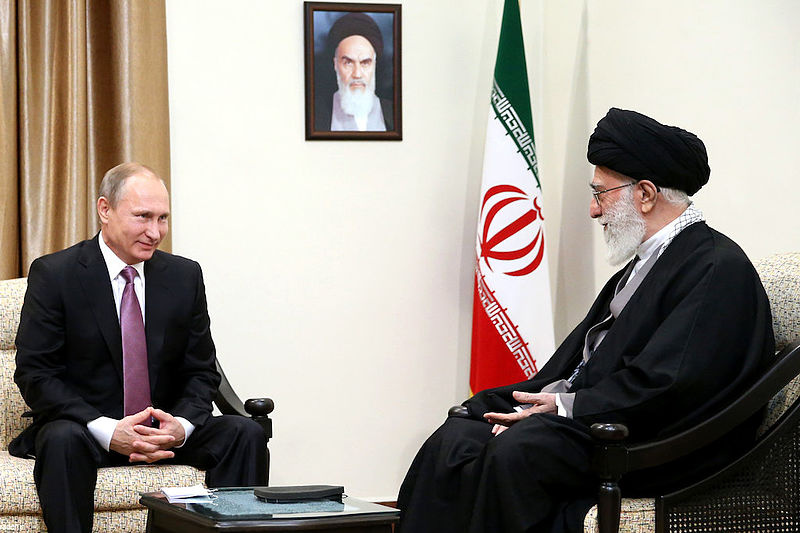
Iran has also spoken out regarding the current conflict occurring in Ukraine as Russian leader Vladimir Putin ordered an invasion into the democratic country. Tehran has said it opposes war but has pinned the blame on NATO for the conflict.
In an initial response to Russia’s invasion of Ukraine, Iranian foreign minister Hossein Amirabdollahian says the invasion of Ukraine by Russian forces is “rooted in NATO” provocations. Despite pinning the blame on the alliance, Iran has opposed the war that has taken place.
Amirabdollahian posted on Twitter that Iran does not view war as a solution and called for an immediate ceasefire to come to a “political and diplomatic solution.” The Iranian foreign ministry spokesperson also issued a longer statement but echoed that of Amirabdollahian’s comments. Spokesman Saeed Khatibzadeh said that due to the US and NATO’s movements, “the Eurasia region is on the verge of entering a pervasive crisis.”
While the Iranian foreign ministry has released similar statements in the past, the country’s President Ebrahim Raisi along with other top officials has steered clear of commenting. It is likely due to Iran’s ties with Russia, the strained relations with the US, and the developments occurring in the Middle East.
Iran’s ties with Russia have strengthened in recent years, and according to the German Institute for International and Security Affairs visiting fellow Hamidreza Azizi, while Iran does not condemn Russia’s foreign aggressions, it also does not recognize the territories that Moscow seizes. Azizi explained that this was the case during the Georgian war in 2008 and Russia’s annexation of Crimea in 2014.
This week, Iran also signed 14 major deals with Qatar during Raisi’s visit. The agreements ranged from trade, energy, culture, the economy, and diplomatic cooperation. According to Iranian state media outlet IRNA, Raisi also met and spoke with businesspeople and investors during his two-day visit to Doha.
In the meeting with the Qatari emir, Raisi also discussed the ongoing nuclear talks between the country and the West in an effort to revive the 2015 nuclear deal. Other regional issues were on the agenda in the meeting between the two leaders.







