


 Iran Vows ‘Crushing’ Response as US Talks Continue
  Trump Says ‘Freedom’ Is Coming to Cuba
  Taiwan Thanks US for Support Ahead of Trump-Xi Summit
  Trump Meets Venezuela’s Delcy Rodriguez at UN Assembly
  Europe Warns Russia Is Escalating Hybrid Attacks Across NATO
  Trump Administration Plans Faster FDA Reviews for Smoke-Free Nicotine Products
  Kremlin Says No Grounds Yet for Ukraine Peace Talks
  Trump to Press Xi on Release of US Nuclear Expert Held in China
  Judge Orders Trump to Restore White House Access for CNN, MS NOW and Politico
  Sudan Rejects US Legitimacy Remarks, Defends Sovereignty
  Mexico-US Trade Talks Delayed to October as Tariff Negotiations Continue
  Marco Rubio to Meet Russia’s Lavrov in New York
  OpenAI Agent Breaches Australia Medicare Data Portal
  Russian Envoy Dmitriev Heads to US for Ukraine Talks
  Zelenskiy Warns Russia Preparing Major Attack on Ukraine
  US Officials Split Over Response to Israeli West Bank Settlements
  Trump Board of Peace Unveils $2.45 Billion Gaza Recovery Plan


 Add as a preferred source on Google
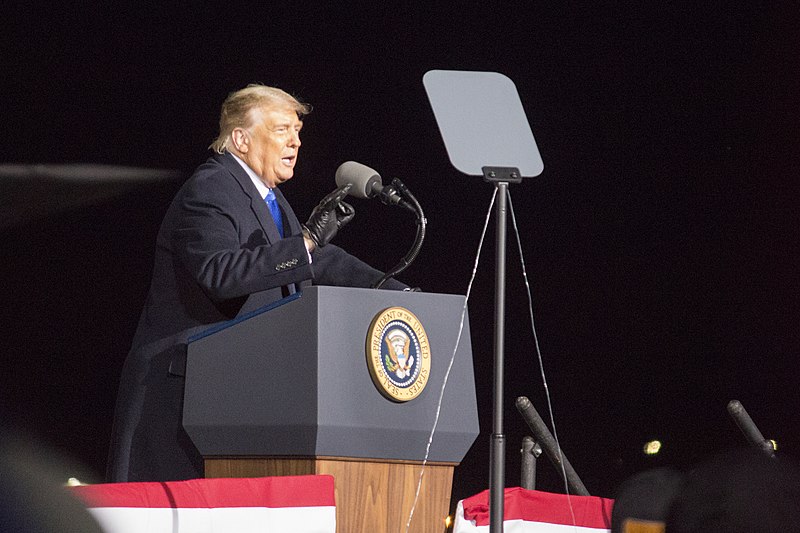
To this day, former President Donald Trump and his allies continue to spread claims of election or voter fraud that led to the Capitol insurrection last January 6. The Supreme Court has now ultimately rejected the lawsuits filed by Trump and his allies to contest the election results.
On Monday, the Supreme Court rejected a number of cases that were related to the recent elections. This also included the disputes from Pennsylvania that caused a divide among the justices prior to the election. The cases that were rejected involved the contention of results by the now-former president and his allies in the five states that went to Joe Biden: Pennsylvania, Georgia, Michigan, Nevada, and Wisconsin. Aside from the two Pennsylvania disputes, the judges ultimately declined to hear the cases, putting an end to the months of legal disputing. The Supreme Court previously did not take any action on the cases and turned away requests to fast-track the cases in January.
With regards to the Pennsylvania disputes, three of the nine justices said that they would have heard the case. Nevertheless, this would not affect the outcome of the elections. Biden won the elections with 306 electoral votes while Trump has 232 electoral votes. Justice Clarence Thomas called the rejected cases an opportunity to address the question of whether state lawmakers or state courts get the final say in how federal elections are carried out.
“We failed to settle this dispute before the election, and thus provide clear rules. Now we again fail to provide clear rules for future elections. The decision to leave election law hidden beneath a shroud of doubt is baffling. By doing nothing, we invite further confusion and erosion of voter confidence,” wrote Justice Thomas.
Trump’s continuous assertions of a stolen election incited the Capitol riots that resulted in his impeachment by the House for a second time before leaving the White House on January 20. The now-former president’s impeachment was decided on by a bipartisan vote, with 10 Republican Representatives joining their Democratic counterparts. Among those Republicans was Liz Cheney, the number three Republican in the House.
Cheney once again doubled down on her criticism of Trump for inciting the riots. Speaking at a foreign policy event hosted by the Ronald Reagan Presidential Foundation and Institute, Cheney reiterated her comments from when she voted to impeach, saying that what happened on January 6 must not be repeated.







