


 Europe Warns Russia Is Escalating Hybrid Attacks Across NATO
  OpenAI Agent Breaches Australia Medicare Data Portal
  Mexico-US Trade Talks Delayed to October as Tariff Negotiations Continue
  South Korea, US Discuss Warship Building Cooperation
  Australia Unemployment Hits Five-Year High Despite Strong Jobs Growth
  RBI Uses $10 Billion Currency Swaps to Drain Excess Rupee Liquidity
  Netanyahu Takes Aim at Mamdani as Israel Election Nears
  North Korea Warns South Korea Over US-Led Defense Role
  U.S. Treasury Yields Surge as 30-Year Hits 22-Year High
  Kremlin Says No Decision Yet on Putin-Trump December Summit
  US, China Extend Trade Truce to Jan. 10 Ahead of Trump-Xi Summit
  Asian Currencies Mixed as Dollar Holds Near Two-Month High
  France Defends Netanyahu Airspace Clearance Despite ICC Warrant
  US Stock Futures Fall as Treasury Yields Surge Ahead of Trump-Xi Summit
  US Senate Rejects Iran War Powers Resolution in 50-49 Vote
  Sudan Rejects US Legitimacy Remarks, Defends Sovereignty
  Pezeshkian Says US Must Choose When Iran War Ends


 Add as a preferred source on Google
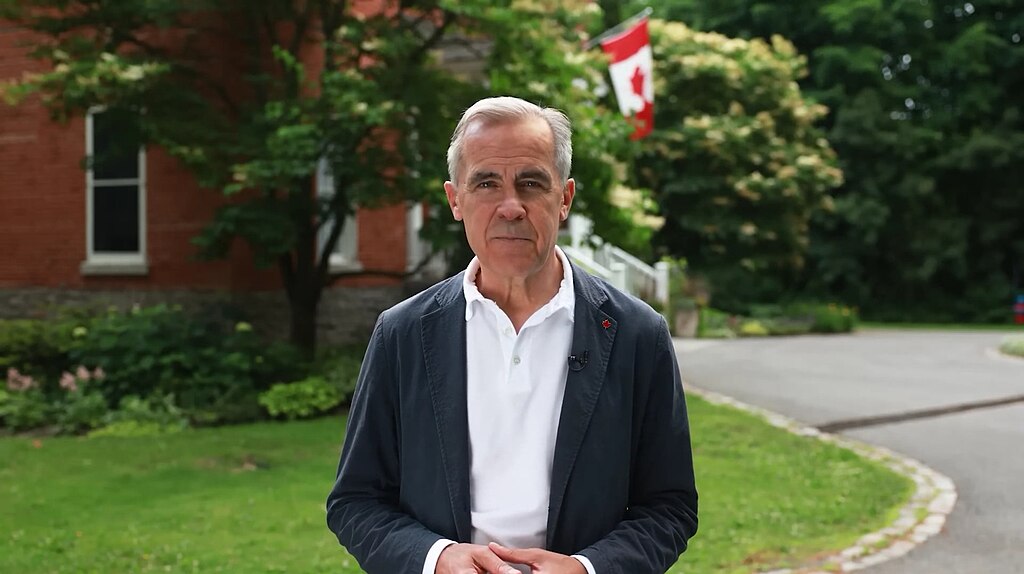
Australia and Canada have signed a series of new agreements aimed at strengthening cooperation on critical minerals, a move designed to secure global supply chains and reduce dependence on China. Canadian Prime Minister Mark Carney announced the agreements during a speech to Australia’s parliament on Thursday, marking the final day of his three-day visit to the country.
The new deals include collaboration within the G7 critical minerals alliance, a Canada-led initiative focused on diversifying and stabilizing the production and supply of essential minerals used in semiconductors, clean energy technologies, and defense systems. Carney described the alliance as one of the largest groups of trusted democratic nations with significant mineral reserves, emphasizing its role in ensuring reliable access to strategic resources. Although specific details of the agreements were not disclosed, the partnership signals deeper cooperation between two of the world’s leading resource exporters.
Western governments have increasingly prioritized securing critical mineral supply chains as geopolitical tensions rise and reliance on China remains high. China currently dominates the production and processing of several key minerals vital to advanced technology manufacturing and military applications. By strengthening partnerships between allied nations, policymakers hope to create a more resilient and diversified global supply network.
Canada and Australia are well positioned to play a major role in this effort. Together, the two countries produce roughly one-third of the world’s lithium and uranium and more than 40% of global iron ore. Canadian Energy and Mining Minister Tim Hodgson recently told Reuters that Canada supports the creation of a production alliance or a buyers’ club to address concentrated supply risks rather than relying solely on price controls.
Australia has also taken steps to boost its own mineral security strategy. The government recently committed A$1.2 billion (about $850 million) to establish a national critical minerals stockpile, initially focusing on strategic materials such as antimony and gallium.
The visit also highlighted broader cooperation between the two nations. Carney’s Asia-Pacific tour includes stops in Japan and India, with the Australian leg focused on strengthening ties between what both leaders described as “middle powers” navigating a rapidly changing global order. Australian Prime Minister Anthony Albanese welcomed Carney’s address, noting it was the first time a Canadian leader had spoken before Australia’s parliament since 2007.
Both governments signaled that cooperation will expand beyond minerals to include defense, maritime security, trade, and artificial intelligence. Carney emphasized that in an era of increasing geopolitical rivalry, partnerships between democratic nations are essential to maintaining economic stability and global security.







