


 Iran Vows ‘Crushing’ Response as US Talks Continue
  Carney Condemns Belleville Synagogue Shooting That Wounded Police Officer
  Lula and Flavio Bolsonaro Tied in Brazil Runoff Poll
  Trump Board of Peace Unveils $2.45 Billion Gaza Recovery Plan
  Kremlin Says No Grounds Yet for Ukraine Peace Talks
  US, Japan and South Korea Back Taiwan Ahead of Trump-Xi Summit
  Trump Scales Back Endangered Species Act Protections
  Paramount-Warner Bros $110 Billion Deal Draws Antitrust Backlash
  Russian Strikes Kill Eight Across Ukraine as Energy Sites Hit
  Trump to Press Xi on Release of US Nuclear Expert Held in China
  Burnham Eyes UK Leadership Role in AI Ahead of Trump Meeting
  UK, Mauritius Seek Diego Garcia Base Deal
  Vietnam, US Trade Deal Could Be Signed Soon, To Lam Says
  Macron, Trump Discuss Ukraine-Russia Energy Strike Moratorium
  Trump Says U.S.-Iran Peace Deal Near After UN Talks
  Trump Says ‘Freedom’ Is Coming to Cuba
  Trump Administration Prepares Sanctions Against Entire ICC


 Add as a preferred source on Google
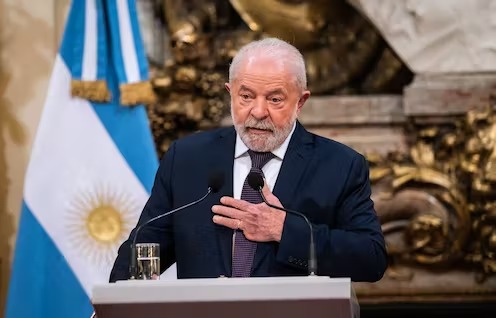
As Brazil prepares for its October presidential election, a growing number of young voters are moving away from the left, signaling a major political shift that could influence the country's future. Many who once supported President Luiz Inácio Lula da Silva and the Workers' Party are now leaning toward right-wing candidates, driven by concerns over the economy, corruption, and public safety.
Ricardo de Lima Filho, a 34-year-old video game translator, represents this changing trend. After voting for left-wing candidates throughout his adult life, including Lula in the 2022 presidential runoff, he now plans to support a conservative candidate. He believes Brazil has struggled with slow economic growth, rising crime, and recurring corruption scandals despite years of Workers' Party leadership.
Although Lula continues to maintain strong nationwide support, recent opinion polls indicate that voters aged 16 to 34 are the only demographic where disapproval of his administration outweighs approval. Surveys also reveal that young Brazilians are among the most conservative youth populations in Latin America, with young men showing the strongest support for right-leaning politics.
Political analysts say this trend is fueled less by ideology and more by dissatisfaction with economic opportunities. While access to higher education has expanded significantly over the past decade, many university graduates have not experienced the financial gains they expected. Inflation-adjusted earnings remain below 2014 levels, leaving many young professionals frustrated with stagnant wages and limited career growth.
Right-wing presidential hopeful Renan Santos has gained attention by appealing to these concerns. His campaign focuses on tackling corruption, strengthening public security, and promoting market-oriented economic policies. Santos has also attracted younger supporters by presenting himself as a fresh political alternative rather than part of Brazil's traditional establishment.
Meanwhile, the Workers' Party is working to reconnect with younger voters through discussions on affordable housing, labor reforms, climate change, and expanded public services. Lula has acknowledged the frustrations of Brazil's youth and continues encouraging them to stay politically engaged rather than abandon the democratic process.
The rise of conservative young voters reflects a broader global trend seen in countries such as the United States, South Korea, and several European nations. As Brazil heads toward another closely watched election, the preferences of younger generations could play a decisive role in shaping the nation's political landscape and determining whether the country continues under left-wing leadership or embraces a new conservative direction.







