


 US Senate Rejects Iran War Powers Resolution in 50-49 Vote
  Yemen Violence Displaces 130,000 as Civilian Toll Rises
  US Officials Split Over Response to Israeli West Bank Settlements
  Trump Asks Supreme Court to Restore Third-Country Deportations
  Judge Orders Trump to Restore White House Access for CNN, MS NOW and Politico
  US, China Extend Trade Truce to Jan. 10 Ahead of Trump-Xi Summit
  Russian Envoy Dmitriev Heads to US for Ukraine Talks
  Kremlin Says No Decision Yet on Putin-Trump December Summit
  OpenAI Agent Breaches Australia Medicare Data Portal
  Europe Warns Russia Is Escalating Hybrid Attacks Across NATO
  EU Defence Build-Up Too Slow for 2030 Russia Readiness Goal
  Abbas Reaffirms November 28 Palestinian Elections
  South Korea, US Discuss Warship Building Cooperation
  Pezeshkian Says US Must Choose When Iran War Ends
  Sudan Rejects US Legitimacy Remarks, Defends Sovereignty
  NATO Boosts Intelligence Sharing Amid Russia Hybrid Threats
  Gaza Faces Evacuation Crisis as War-Damaged Buildings Risk Collapse


 Add as a preferred source on Google
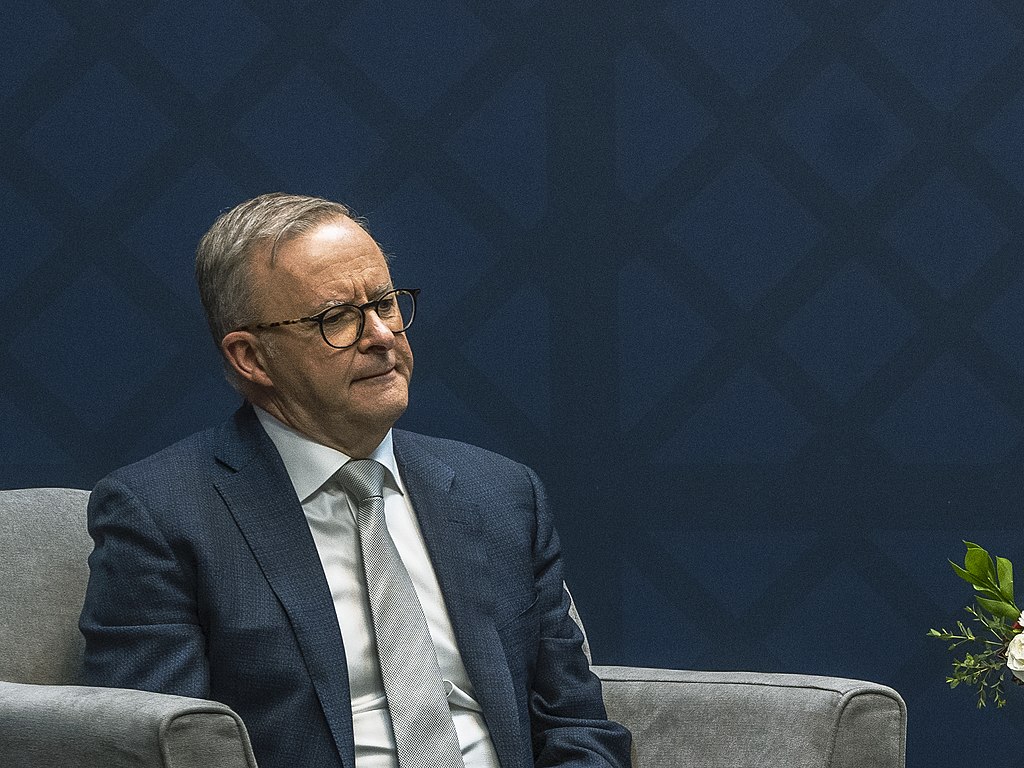
Australian Prime Minister Anthony Albanese has responded positively to a newly brokered ceasefire between the United States, Israel, and Iran, while expressing concern over the alarming language used by President Donald Trump during the lead-up to the agreement.
The ceasefire was announced by Trump just under two hours before his self-imposed deadline, which had threatened devastating strikes on Iranian civilian infrastructure if Tehran refused to reopen the Strait of Hormuz. Earlier that same day, Trump issued a stark warning on social media suggesting an entire civilization could fall by nightfall — language that drew widespread unease from international leaders, including Albanese.
Speaking to Sky News, the Australian Prime Minister acknowledged the ceasefire as a welcome development but made clear that Trump's inflammatory statements were deeply troubling. Albanese stated that such language from the leader of the United States was inappropriate and would understandably raise concerns among global allies and the broader international community.
Australia had initially backed U.S. military action against Iran in the early stages of the conflict, but Albanese has gradually distanced himself from the administration's approach in recent weeks. He called on all parties to pursue de-escalation and urged Trump to provide clearer strategic objectives for the ongoing military campaign.
The diplomatic friction between the two allied nations became more visible this week when Trump publicly criticized Australia during a press conference, accusing it of failing to provide adequate support. He grouped Australia alongside Japan and South Korea as countries that, in his view, did not contribute sufficiently to the effort.
Despite the tension, Albanese appears committed to maintaining Australia's independent foreign policy stance, balancing its alliance with Washington while advocating for measured, responsible international diplomacy during one of the most volatile geopolitical crises in recent memory.







