


 NASA's Artemis II Mission: First Crewed Lunar Journey Since Apollo
  Trump Administration Releases New UFO Files and Apollo Mission Records
  FDA Pilot Program Eases Rules for Nicotine Pouch Makers
  Blue Origin’s New Glenn Achieves Breakthrough Success With First NASA Mission
  Trump Signs Executive Order to Boost AI Research in Childhood Cancer
  China vs. NASA: The New Moon Race and What's at Stake by 2030
  Trump Administration to Launch Autism Initiatives Targeting Acetaminophen Use and New Treatment Options
  SpaceX’s Starship Completes 11th Test Flight, Paving Way for Moon and Mars Missions
  Neuralink Expands Brain Implant Trials with 12 Global Patients
  Trump and Merck KGaA Partner to Slash IVF Drug Costs and Expand Fertility Coverage
  Blue Origin New Glenn Rocket Explodes During Launch Pad Test, Delaying Space Ambitions


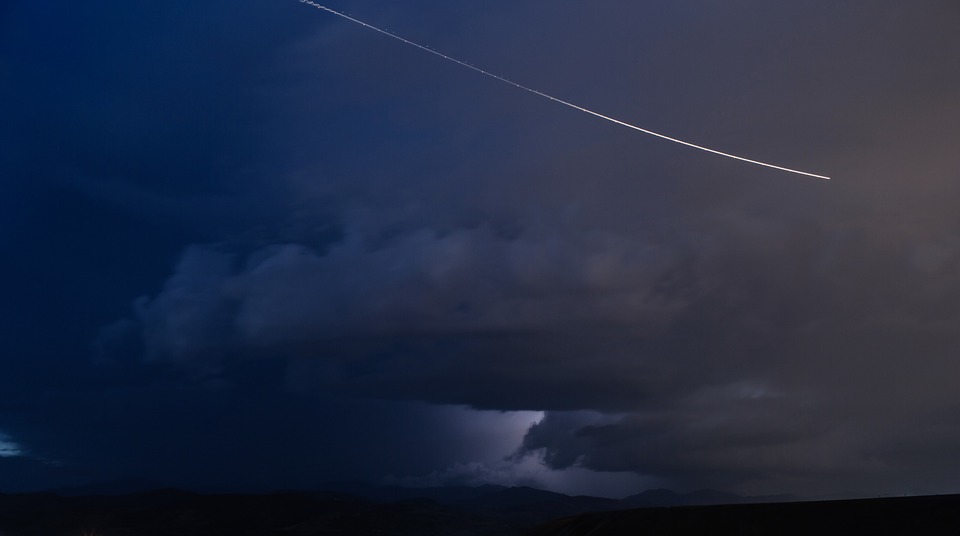
As far as defense goes, the Earth only has the atmosphere to provide the protection. However, an incident involving an asteroid making it past the atmosphere may suggest that the atmosphere is not the only defense the planet has.
Express reports that back in 2017, researchers from the Desert Fireball Network of Curtin University in Australia witnessed a fireball fly over the skies that was burning longer than usual before disappearing. It reportedly took 90 seconds until the fireball vanished, having experienced a change in trajectory. The researchers believe that the Earth behaved like a slingshot, deflecting the asteroid and ejecting it back into space.
The scientists analyzed the footage from the incident to determine the asteroid’s velocity, trajectory, and energy. According to lead researcher Patrick Shober, this was the first time they recorded a slingshot event. “The 2017 fireball was extraordinary on two fronts - the extended length of time it spent in our atmosphere, producing a brilliant 90-second light show, and the fact that it didn’t crash-land on Earth, but was flung back into space,” said Shober.
The researchers predict that the asteroid will be approaching Jupiter by 2025. By that time, the asteroid will spend around 200 years in an orbit near the giant planet.
Speaking of asteroids, one particular rock that agencies are closely monitoring nowadays is 1998 OR2, which is due to make an approach to Earth by the end of the month. In fact, OR2 is already visible on telescopes, like the one in the Virtual Telescope Project. Dr. Gianluca Masi took a photo of OR2 that is already hurtling towards Earth from 10 million miles away.
OR2 measures between 1.8 to 4.1 kilometers in diameter, with NASA classifying it as a potentially hazardous object or PHO. With its size, OR2 can cause disasters on a global scale should it collide with Earth, similar to that of the asteroid that caused the extinction of the dinosaurs that was believed to have measured 10 kilometers in diameter.
Asteroid OR2 will approach Earth on the 29th of April and Dr. Masi says that by the time it approaches Earth, it will be bright enough for even smaller telescopes to pick up. OR2 will get as close as 6.29 million kilometers from Earth.







