


 Blue Origin New Glenn Rocket Explodes During Launch Pad Test, Delaying Space Ambitions
  FDA Adds Fatal Risk Warning to J&J and Legend Biotech’s Carvykti Cancer Therapy
  NASA Partners with Katalyst to Save Swift Observatory with Innovative Docking Mission
  China vs. NASA: The New Moon Race and What's at Stake by 2030
  Cogent Biosciences Soars 120% on Breakthrough Phase 3 Results for Bezuclastinib in GIST Treatment
  Eli Lilly’s Inluriyo Gains FDA Approval for Advanced Breast Cancer Treatment
  Trump Signs Executive Order to Boost AI Research in Childhood Cancer
  Trump and Merck KGaA Partner to Slash IVF Drug Costs and Expand Fertility Coverage
  Neuralink Plans High-Volume Brain Implant Production and Fully Automated Surgery by 2026


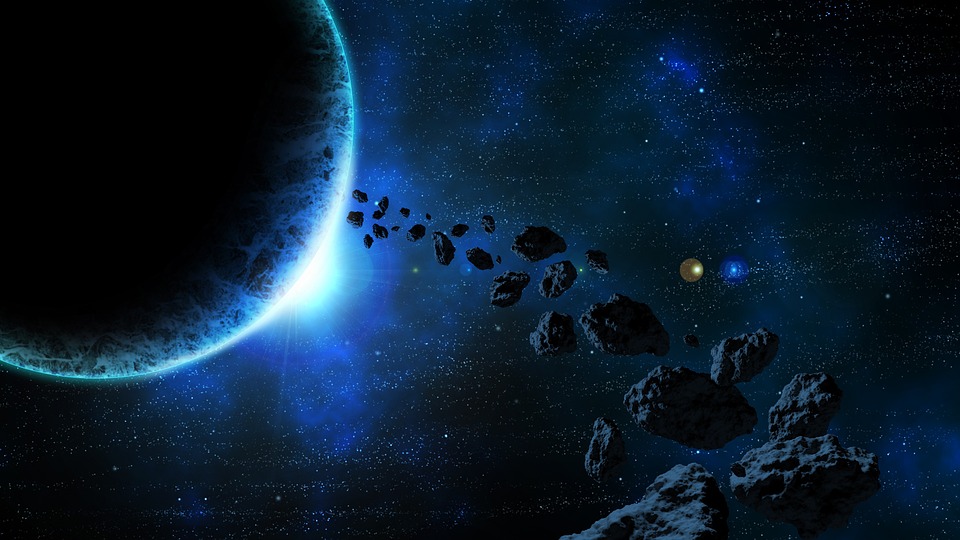
While there are asteroids that are relatively smaller, there are asteroids that are a lot larger, and then there are asteroids that are large enough to destroy an entire continent. NASA recently shared a photo of two major asteroids that are moving in the asteroid belt.
Express reports that the agency released a photo of the major asteroids named Klotho and Lina, which are both found in the asteroid belt between Mars and Jupiter. Both of these asteroids are referred to as such because of their sheer size. Lina is 60 kilometers in diameter and takes 2,000 days for it to completely go around the sun. Asteroid Klothos, on the other hand, measures 82 kilometers in diameter but takes less time to orbit around the sun than Lina, at 1,596 days only.
With the use of the NEOWISE telescope, NASA said regarding the photo, “Appearing as strings of orange dots, the brightest sets of dots belong to asteroids Klotho and Lina. Both orbit out in the main asteroid belt between Mars and Jupiter, while smaller, more distant asteroids can also be seen passing through the image.”
Fortunately, the asteroids that are found in the asteroid belt do not pose a threat to Earth. This is because of Jupiter’s very strong gravitational pull that can redirect the trajectory of an asteroid and keep it in place. But there are some theories that Jupiter’s gravitational pull also draws in loose comets, asteroids, and meteors. NASA has also stated that Jupiter’s presence actually protects Mercury, Venus, Earth, and Mars from asteroid collisions.
Meanwhile, as space agencies all over the world plan to explore other planets such as Mars, alien enthusiasts suddenly claim that there may be some extra-terrestrial life found in an asteroid. This claim comes after spotting what appeared to be an alien base found on the space rock known as Eros.
Alien hunter Scott C. Waring noticed a cube-like object on the asteroid while looking through NASA images of the asteroid and claimed that this was something created by extra-terrestrials. “The funny thing about it is that even NASA noticed this alien structure on the asteroid, but still didn’t have the realization of what it actually was - an alien structure.”







