


 Sudan Rejects US Legitimacy Remarks, Defends Sovereignty
  Mexico-US Trade Talks Delayed to October as Tariff Negotiations Continue
  Kremlin Says No Decision Yet on Putin-Trump December Summit
  North Korea Warns South Korea Over US-Led Defense Role
  Yemen Violence Displaces 130,000 as Civilian Toll Rises
  EU Defence Build-Up Too Slow for 2030 Russia Readiness Goal
  Judge Orders Trump to Restore White House Access for CNN, MS NOW and Politico
  Trump, Xi Focus on Trade and AI at White House Summit
  France Defends Netanyahu Airspace Clearance Despite ICC Warrant
  Russian Missile and Drone Attack on Kyiv Kills Two, Damages Maternity Hospital
  Abbas Reaffirms November 28 Palestinian Elections
  Taiwan Thanks US for Support Ahead of Trump-Xi Summit
  North Korea Rejects Nuclear Test Warning, Calls Nuclear Status Irreversible
  What ‘Taiwan Independence’ Means as Xi Presses Trump on US Policy
  US Senate Rejects Iran War Powers Resolution in 50-49 Vote
  Trump Asks Supreme Court to Restore Third-Country Deportations
  Najib Razak Seeks Stay of 15-Year 1MDB Prison Sentence


 Add as a preferred source on Google
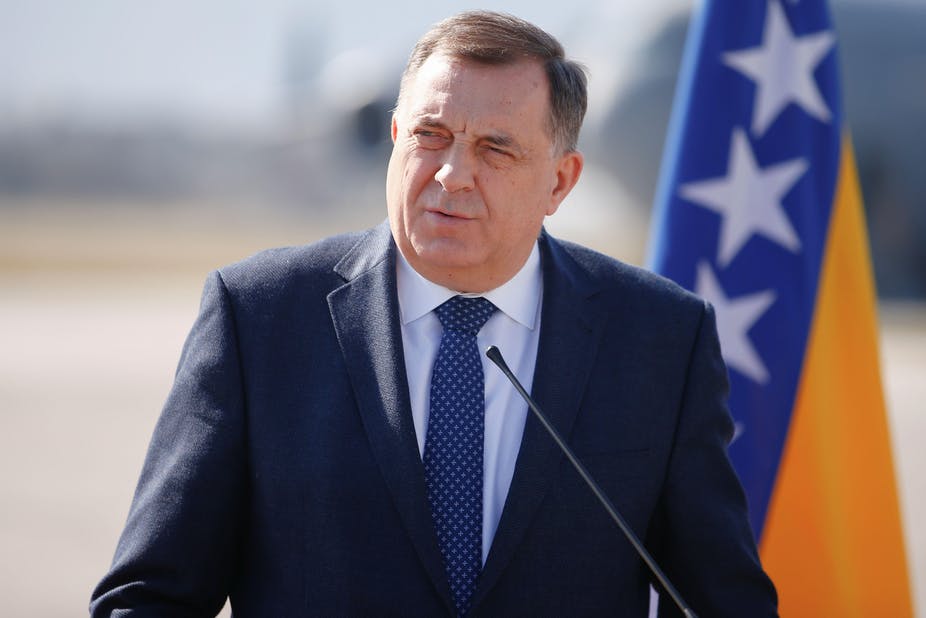
A close ally of Bosnian Serb separatist leader Milorad Dodik has claimed victory following a partial rerun of the Republika Srpska presidential election held on Sunday, a vote ordered due to irregularities in the original election conducted last November. Sinisa Karan, a senior member of the ruling Alliance of Independent Social Democrats (SNSD), emerged as the winner once again, reaffirming his position in a contest that has drawn significant political attention within Bosnia and Herzegovina.
The rerun election was limited in scope, taking place at just 136 polling stations and involving approximately 85,000 eligible voters. Despite covering only a small portion of the electorate, the repeat vote was seen as potentially decisive because the November election results were extremely close. Bosnia’s central election commission is expected to publish preliminary official results later on Sunday, though early declarations already point to Karan’s confirmed win.
Karan’s opponent, Branko Blanusa of the Serb Democratic Party, conceded defeat but raised concerns about the integrity of the electoral process. Blanusa accused the ruling SNSD party of vote buying and what he described as “election engineering,” claims that echo long-standing criticisms of electoral practices in the Serb Republic. Blanusa, a university professor and political newcomer backed by much of the Serb opposition, said the process highlighted systemic problems rather than a fair democratic contest.
Speaking after the vote, Karan declared himself president of all citizens of Republika Srpska and pledged to continue the political direction established by Dodik. Karan, a former government minister, campaigned on maintaining Dodik’s separatist agenda, which has repeatedly stalled political reforms at the state level in Bosnia.
The November election was initially triggered after Milorad Dodik, the region’s former president, was removed from office and banned from politics for six years for defying rulings issued by an international peace envoy and Bosnia’s constitutional court. Bosnia and Herzegovina remains divided into two autonomous entities, Republika Srpska and the Federation of Bosniaks and Croats, governed under a fragile central authority.
Karan’s presidential term will run until the next general election scheduled for October, a period likely to be marked by continued political tension and debate over Bosnia’s future direction.







