


 American Airlines CEO to Meet Pilots Union Amid Storm Response and Financial Concerns
  Lee Seung-heon Signals Caution on Rate Hikes, Supports Higher Property Taxes to Cool Korea’s Housing Market
  Nvidia, ByteDance, and the U.S.-China AI Chip Standoff Over H200 Exports
  Nikkei 225 Hits Record High Above 56,000 After Japan Election Boosts Market Confidence
  DBS Expects Slight Dip in 2026 Net Profit After Q4 Earnings Miss on Lower Interest Margins
  Global PC Makers Eye Chinese Memory Chip Suppliers Amid Ongoing Supply Crunch
  Washington Post Publisher Will Lewis Steps Down After Layoffs
  Kroger Set to Name Former Walmart Executive Greg Foran as Next CEO
  Taiwan Says Moving 40% of Semiconductor Production to the U.S. Is Impossible
  Vietnam’s Trade Surplus With US Jumps as Exports Surge and China Imports Hit Record
  Russian Stocks End Mixed as MOEX Index Closes Flat Amid Commodity Strength
  Asian Currencies Stay Rangebound as Yen Firms on Intervention Talk
  TrumpRx Website Launches to Offer Discounted Prescription Drugs for Cash-Paying Americans
  Dow Hits 50,000 as U.S. Stocks Stage Strong Rebound Amid AI Volatility
  Hims & Hers Halts Compounded Semaglutide Pill After FDA Warning
  Australian Pension Funds Boost Currency Hedging as Aussie Dollar Strengthens
  Indian Refiners Scale Back Russian Oil Imports as U.S.-India Trade Deal Advances


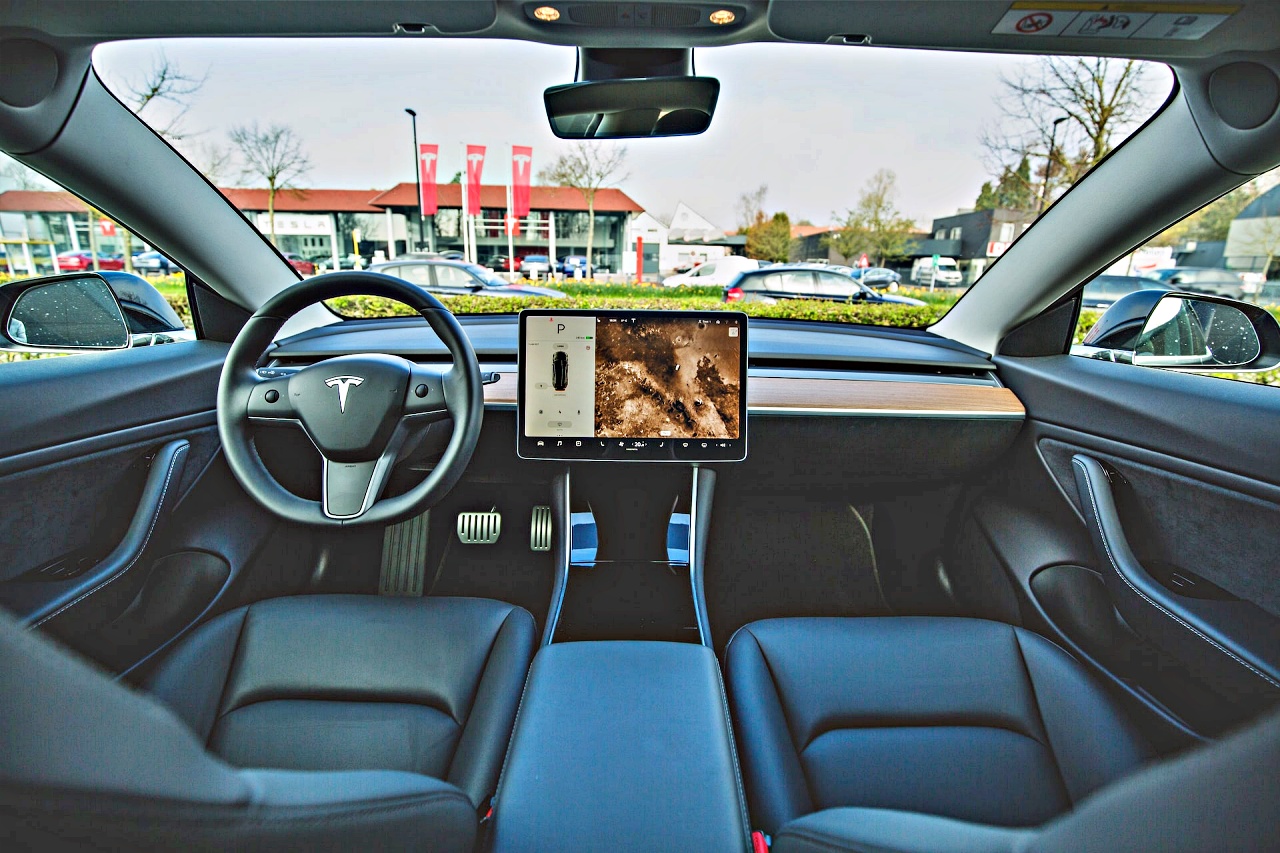
Tesla automotive firm has been fined in South Korea for allegedly posting false advertising that has misled buyers. The country’s Fair Trade Commission (FTC) imposed a KRW2.85 billion or around $2.2 million penalty, which was announced on Tuesday, Jan. 3.
The South Korean anti-trust regulator said Tesla exaggerated the driving range of its electric vehicles and categorized this as an erroneous advertisement. The FTC said that the EV maker did not inform car owners about the sharp drop in mileage when the EVs are driven at sub-zero temperatures. It also said that the company exaggerated the car’s charging speed.
The FTC said that with the misinformation in their ads, both Tesla and Tesla Korea are deceiving the buyers in the country. The penalty that was handed down by the commission was assessed based on the company’s advertising materials, including those on its official website.
The ads were released on August 2019 and included battery performance details which stated that Tesla electric vehicles could drive more than their driving range on a single charge. The FTC said this claim is not true because the numbers posted are inaccurate. Moreover, the driving range of Tesla EVs always drops in cold weather by up to 50.5%, and this is not what it has advertised online.
“The EV maker advertised the car can drive ‘more than’ 446 kilometers once fully charged, however, the battery performed much lower than the company promoted in most conditions,” The Korea Herald quoted the FTC as saying, citing the carmaker’s long-range Model 3 unit.
The agency said that, in reality, the Tesla car is only able to run up to 220.7 kilometers on a single charge while in cold temperatures. The actual number is not even half of the posted information on the ads.
The local anti-trust regulator also pointed out that Tesla used the terms “more than” and “kilometers” instead of “up to” and “miles” in referring to the distance that can be covered by the battery on a single charge.
Finally, the Korean watchdog said Tesla EVs could not be charged within just 15 to 50 minutes to run for “hundreds of kilometers.” The FTC said this claim might be true for some of the company’s Superchargers, but these were not yet available in the country at the time when the ads were released on August 2019, as per The Korea Economic Daily.
Photo by: Bram Van Oost/Unsplash













