


 Yandex Data Center Hit by Drone Strike as Russia-Ukraine Cyber Infrastructure Attacks Escalate
  Trump Defends Russian Diesel Deal Amid US Sanctions Backlash
  Elon Musk Donates $366 Million to 2026 US Midterms
  Panama Declares Emergency After 7.7 Earthquake Triggers 200 Aftershocks
  Trump Sanctions International Criminal Court, Sparking EU Backlash
  Jordan Bardella Antisemitism Allegations Threaten Le Pen’s Campaign
  Trump Plans White House Shake-Up of Key AI Safety Agency
  Mahmoud Abbas Postpones Palestinian Elections to September 2027
  Zelenskiy Offers Russia Energy Truce Amid Trump Pressure
  UK Finance Minister Healey Calls for Fiscal Discipline Amid Global Risks
  Brazil Election: Lula and Bolsonaro Rally Ahead of October 25 Runoff
  Russian Strikes Kill Six in Ukraine, Including Three in Kharkiv
  Trump Announces Russia-Ukraine Energy Ceasefire Amid U.S. Pressure on Kyiv
  JD Vance Questions Pentagon Plan to Livestream Fort Hood Shooter’s Execution
  Most Americans Oppose Election Betting on Prediction Markets, Poll Finds
  NATO Commander Warns Russia of Devastating Response to Attack


 Add as a preferred source on Google
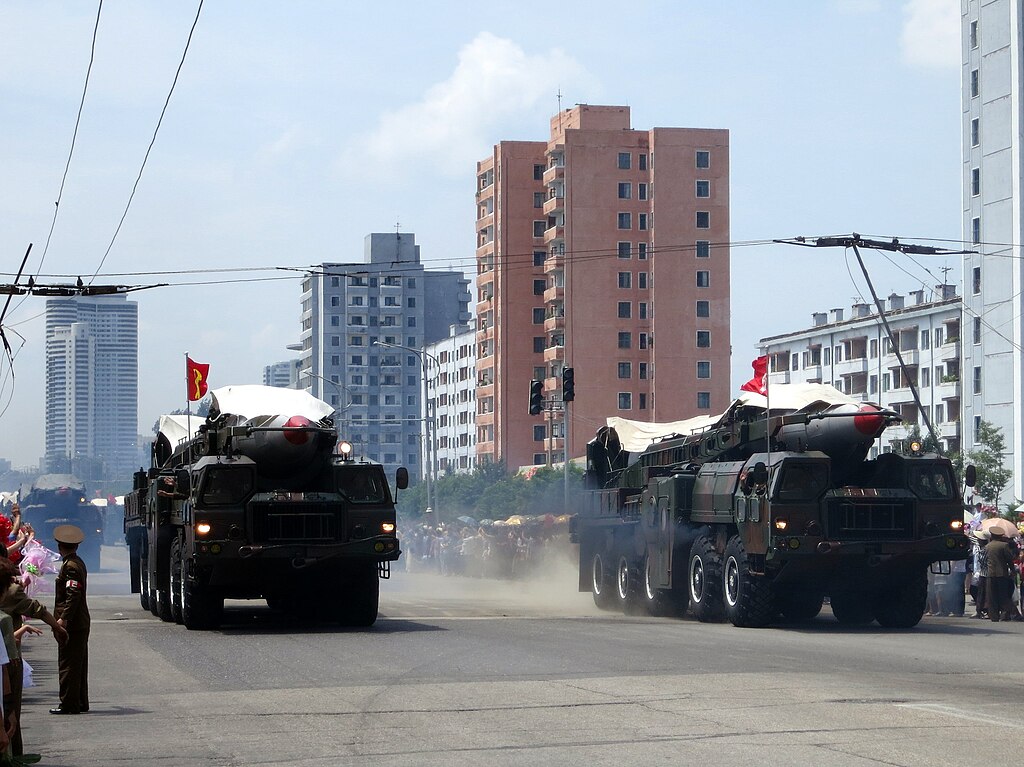
North Korea launched multiple ballistic missiles toward the sea off its eastern coast on Monday, escalating tensions with South Korea following Seoul’s recent hypersonic missile test. The launches marked Pyongyang’s fourth missile test in a month.
South Korea’s Joint Chiefs of Staff reported that the missiles were fired around 9:20 a.m. local time (0020 GMT) from an area near Pyongyang. The weapons appeared to include different missile types, with at least one traveling more than 900 kilometers (559 miles).
Japan’s coast guard initially detected two suspected ballistic missiles, both of which reportedly landed at sea. The US Pacific Command confirmed awareness of the launches but said they posed no immediate danger to American personnel, territory, or regional allies.
South Korea’s National Security Office held an emergency meeting, condemning North Korea’s missile activities as violations of United Nations Security Council resolutions. Officials urged Pyongyang to immediately halt further launches.
The latest missile tests follow growing military tensions on the Korean Peninsula, with both countries demonstrating advanced weapons capabilities.
Last week, South Korean President Lee Jae Myung supervised the country’s first hypersonic missile test, an unusual public demonstration involving a sitting president.
South Korean military officials suggested Monday’s launches were intended to demonstrate North Korea’s military strength in response to Seoul’s successful hypersonic weapons test.
North Korea previously launched a ballistic missile on October 3. State media KCNA reported that leader Kim Jong Un personally supervised the test of a hypersonic missile.
Unlike conventional ballistic missiles, which generally follow predictable trajectories after their powered flight phase, hypersonic weapons can travel faster than five times the speed of sound and may maneuver during flight.
The escalating military activity also follows a September border mine explosion that injured three South Korean soldiers. Seoul blamed North Korea for planting the explosives, while Pyongyang rejected the allegations and accused its neighbor of provocations.
North Korea has conducted more than 10 missile tests this year despite UN sanctions imposed since 2006 to restrict its nuclear weapons and ballistic missile programs.
Song Seong-jong, a Daejeon University professor and former South Korean defense official, suggested Pyongyang’s intensified weapons testing could strengthen Kim Jong Un’s negotiating position ahead of a potential summit with US President Donald Trump.







